
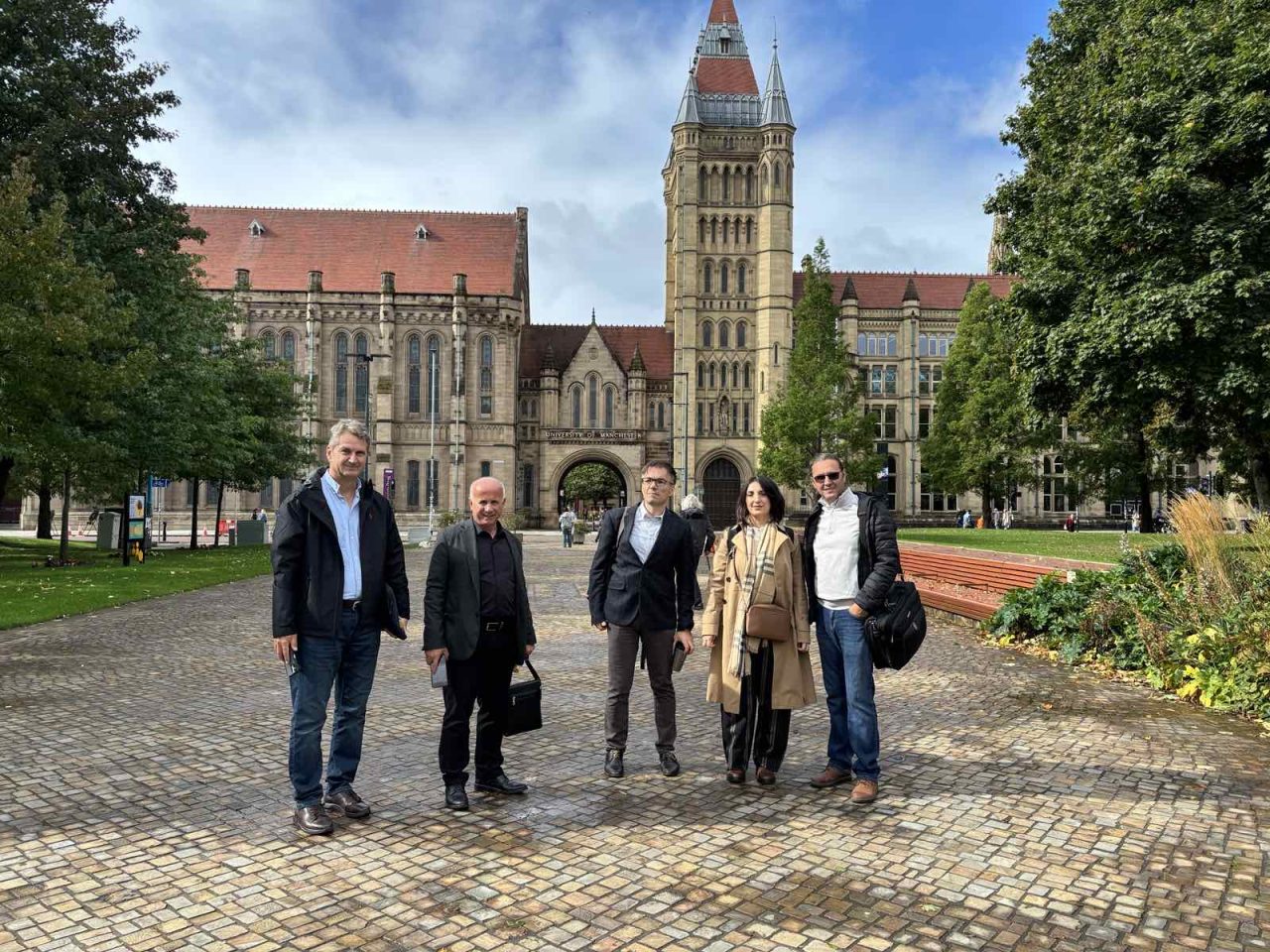
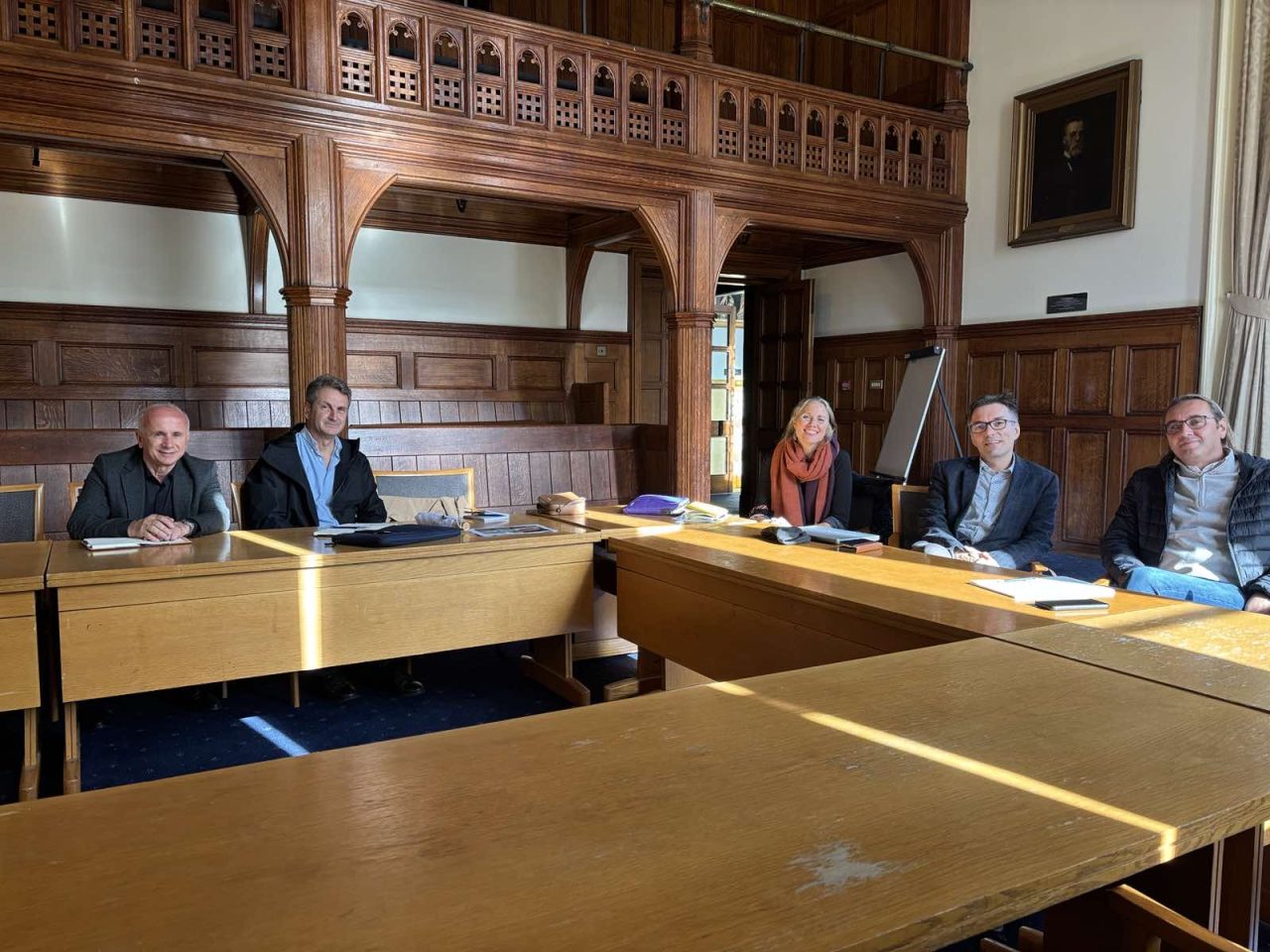
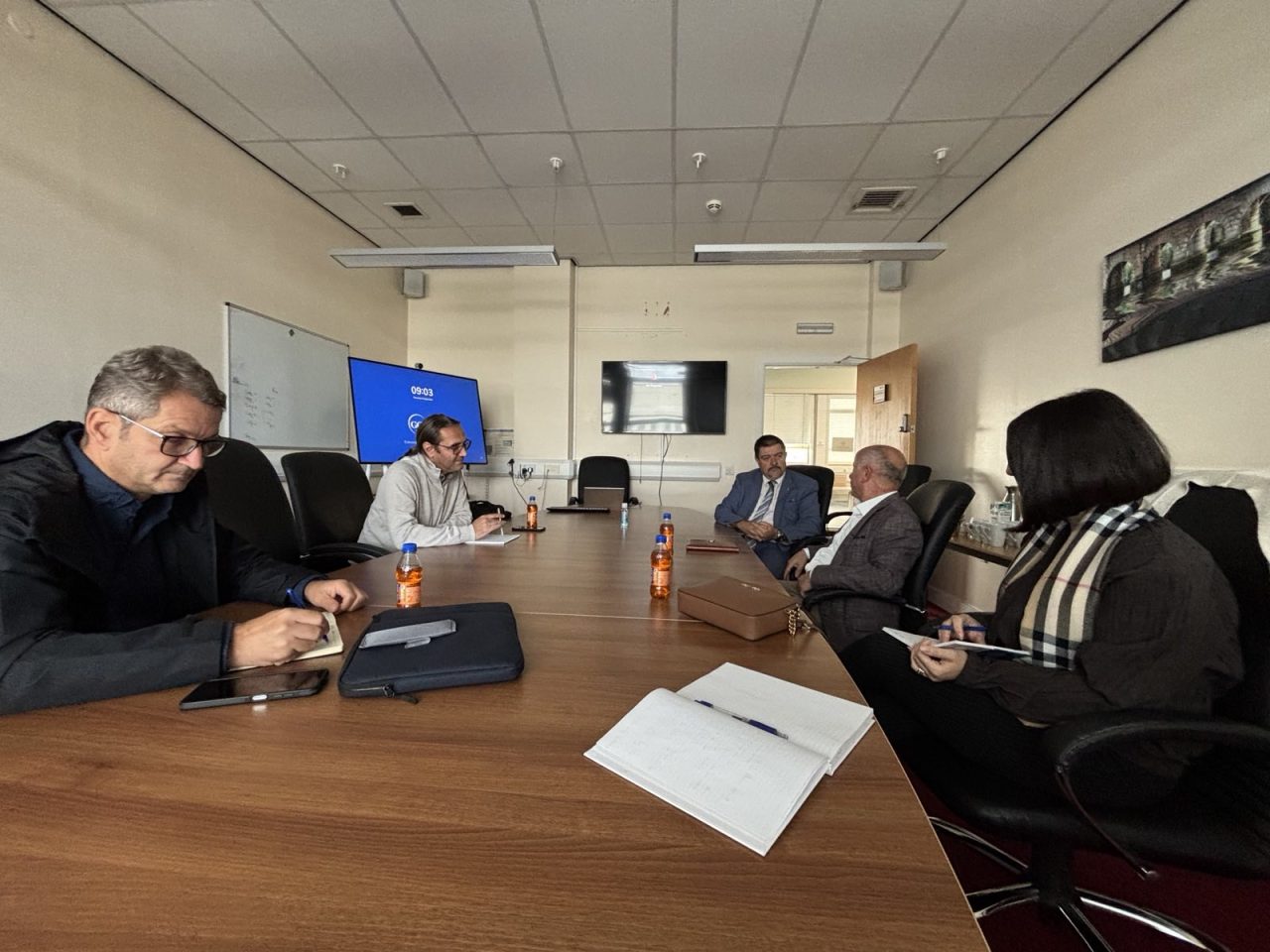
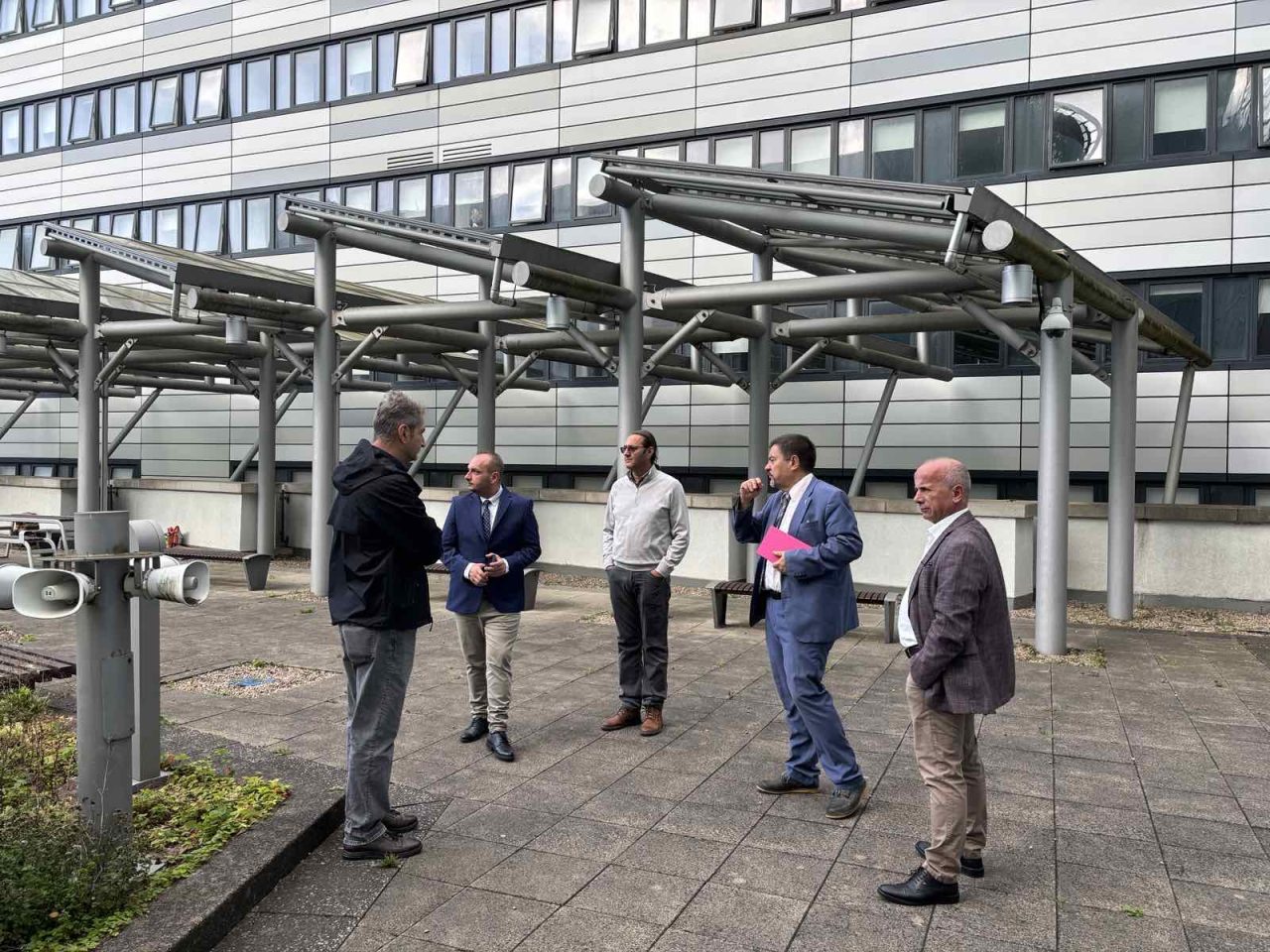
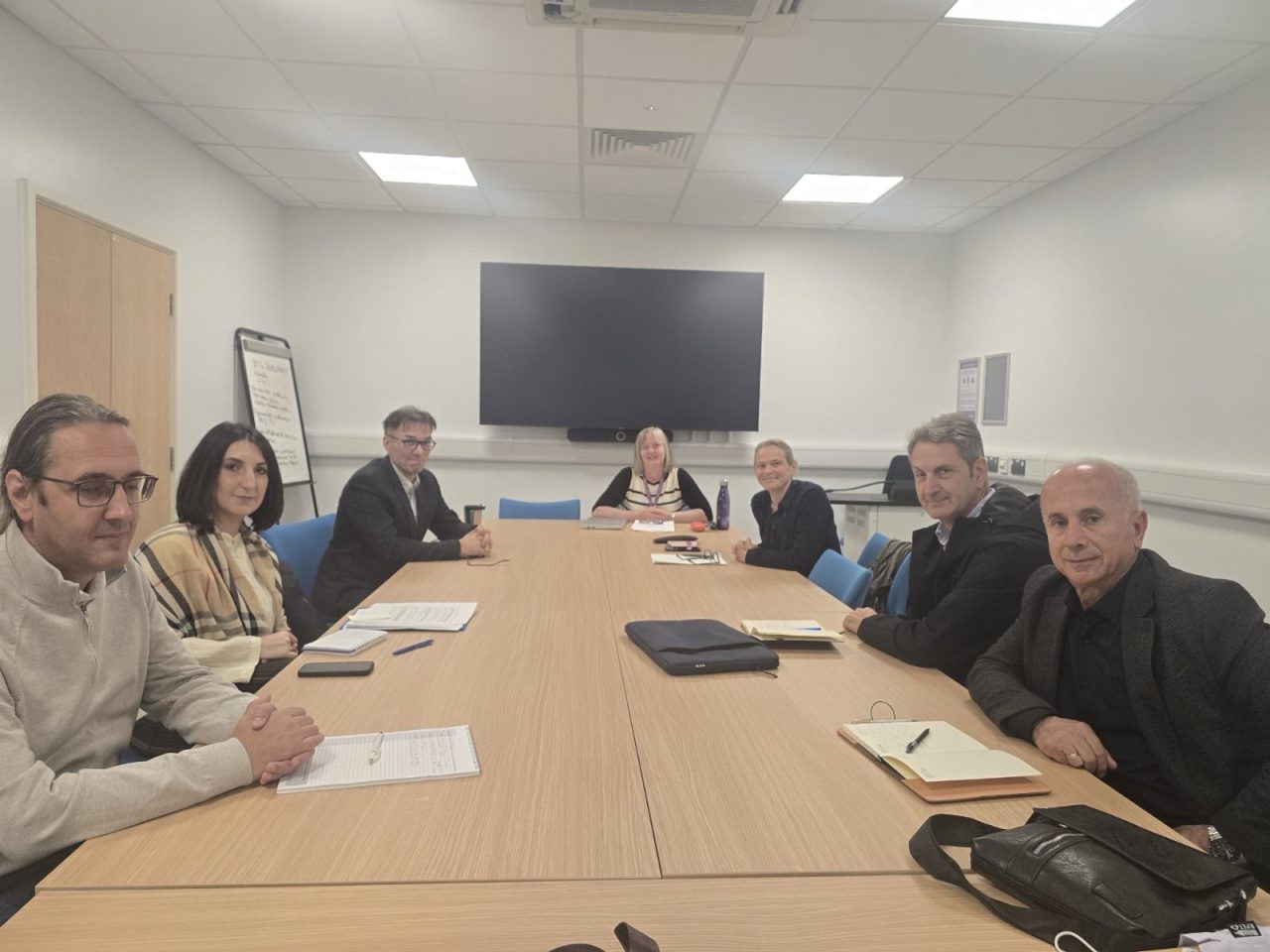
From September 15–19, 2025, the Dean of the Faculty of Mathematical and Natural Sciences at the University of Tetova, Prof. Dr. Alit Ibraimi, and the Vice-Dean of the Faculty of Applied Sciences, Prof. Dr. Kujtim Elezi, visited the University of Manchester and Glasgow Caledonian University in the United Kingdom. These visits were carried out within the framework of the project “Supporting Brain Gain Diaspora Engagement Initiatives in North Macedonia,” initiated by the International Organization for Migration (IOM) and supported by the Ministry of Foreign Affairs of the Republic of North Macedonia. The main goal of the visit was to foster collaboration between local and UK universities, as well as to strengthen institutional networking in the field of research and academic exchange.
At the University of Manchester, the delegation was welcomed by Professor Stefan Bouzarovski, a professor of human geography at the Urban Institute, who gave a detailed presentation on the history and development of the university. As part of the visit, meetings were also held with Professor Pam Qualter, Research Lead at the School of Environment, Education and Development; Louise Gorton, Research Support Manager; Professor Jen O’Brien, Teaching Lead for Sustainability; and Mags Bradbury, Head of Social Responsibility and Civic Engagement.
The delegation then visited Glasgow Caledonian University, where they were welcomed by Professor Slobodan Mickovski, Professor of Construction and Environmental Management. Professor Mickovski provided an overview of the university’s history, its unique characteristics, and its development over the years. During the visit, the delegation held meetings with several university representatives, including Professor Craig Thomson, Associate Dean for Research; Seth Thomson, representative from Research Data Management; Dr. Nigel Craig, representative from the Department of Academic Structures and Portfolios; and Dr. Alejandro Gonzales-Olluri, Programme Lead for Accreditation and Quality Assurance.
These meetings resulted in several important recommendations for our academic institutions, including: the establishment of research centers to ensure continuous quality and oversight in the research process; the creation of dedicated structures for financial management of research, aimed at securing and distributing funds as well as publishing research outcomes; and the development of new pathways for inter-university collaboration, such as staff and student exchanges, joint lectures, and research visits.
This visit contributes to advancing the internationalization of higher education in the country and to building strong partnerships with academic institutions in the United Kingdom.