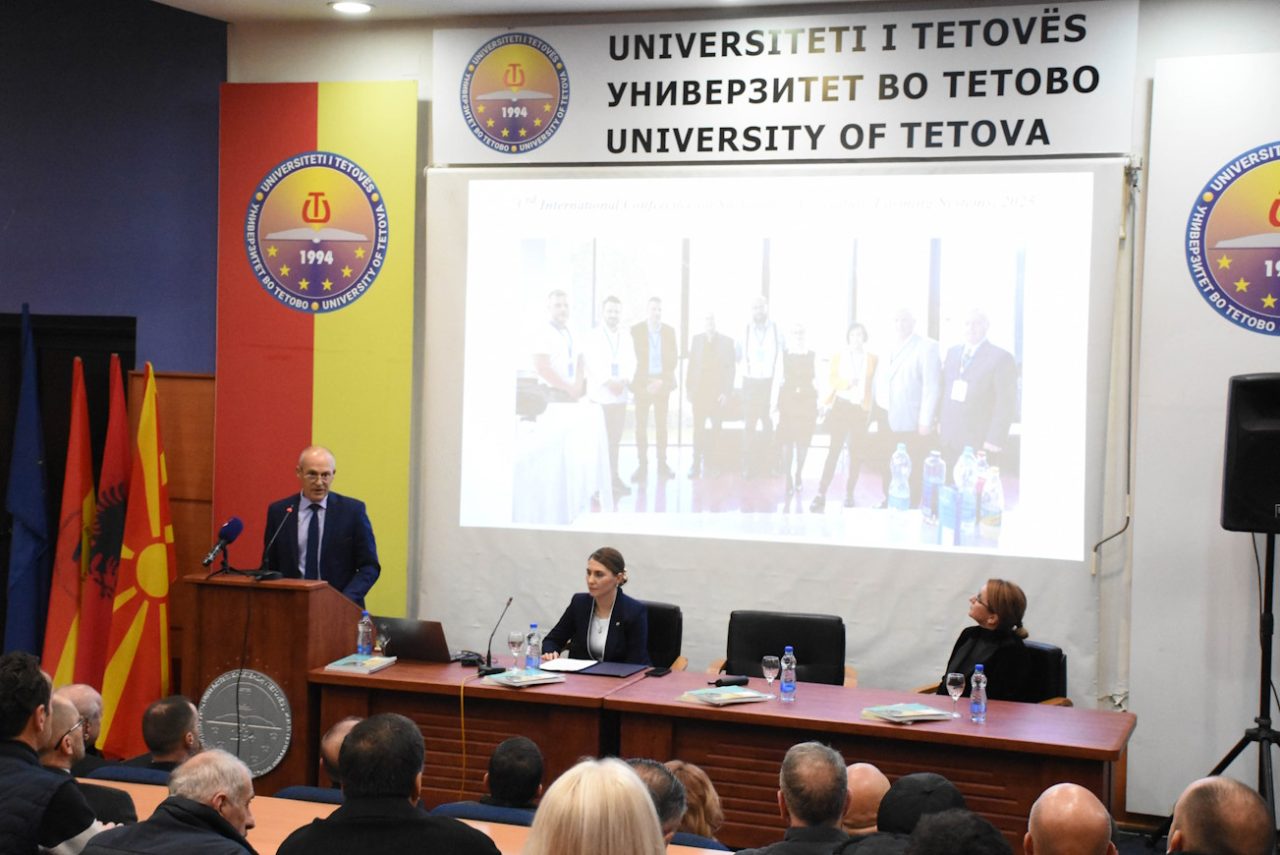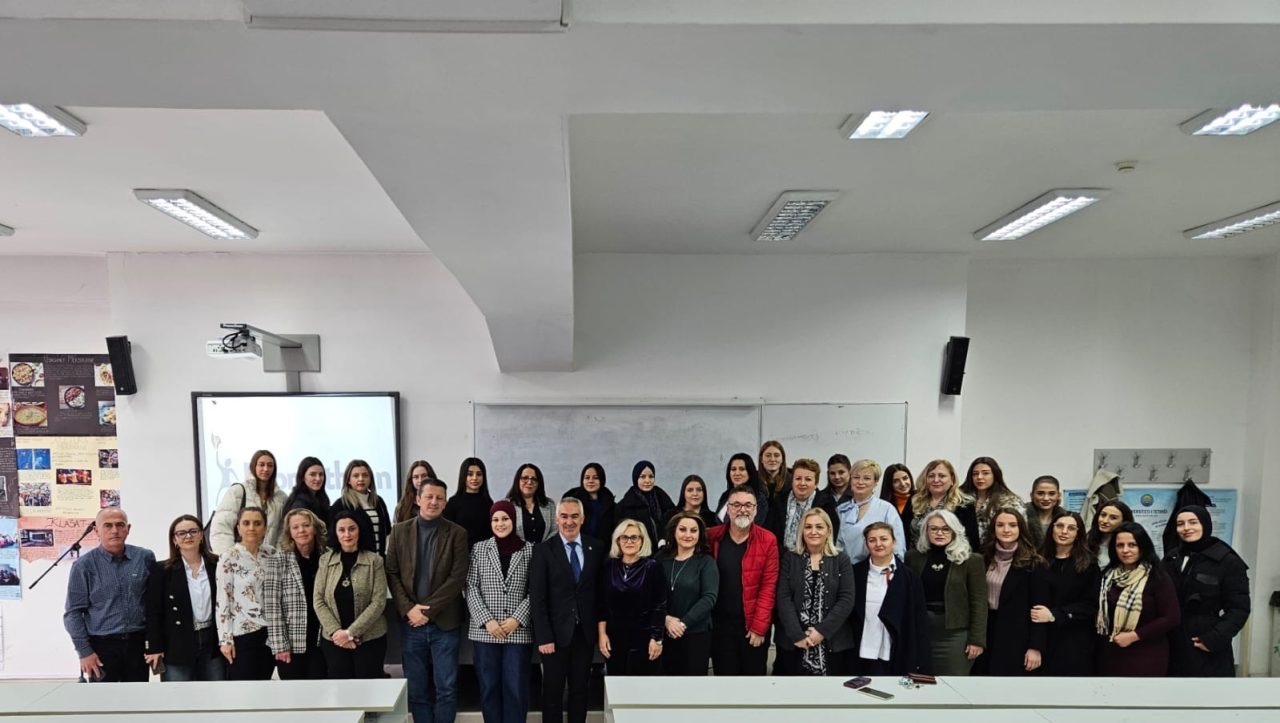

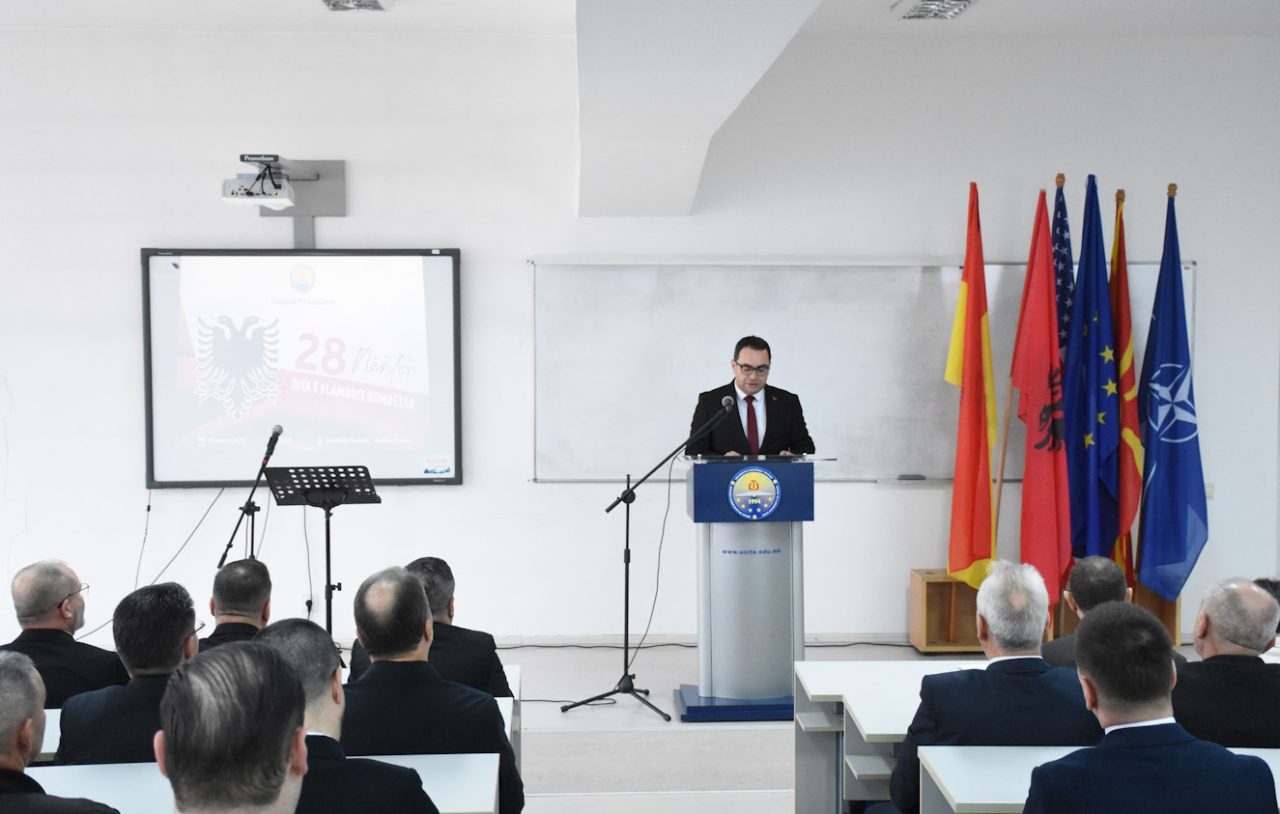
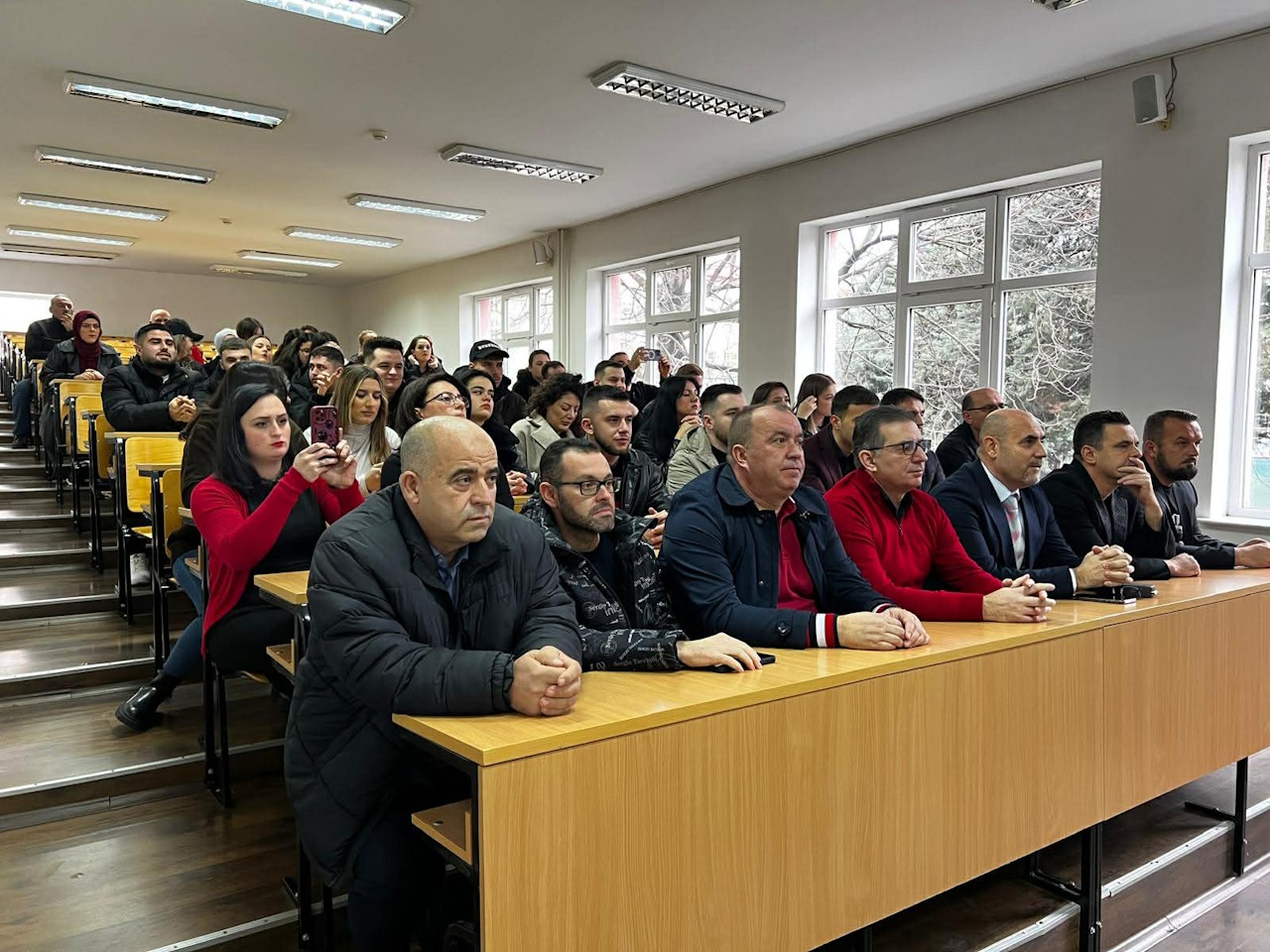
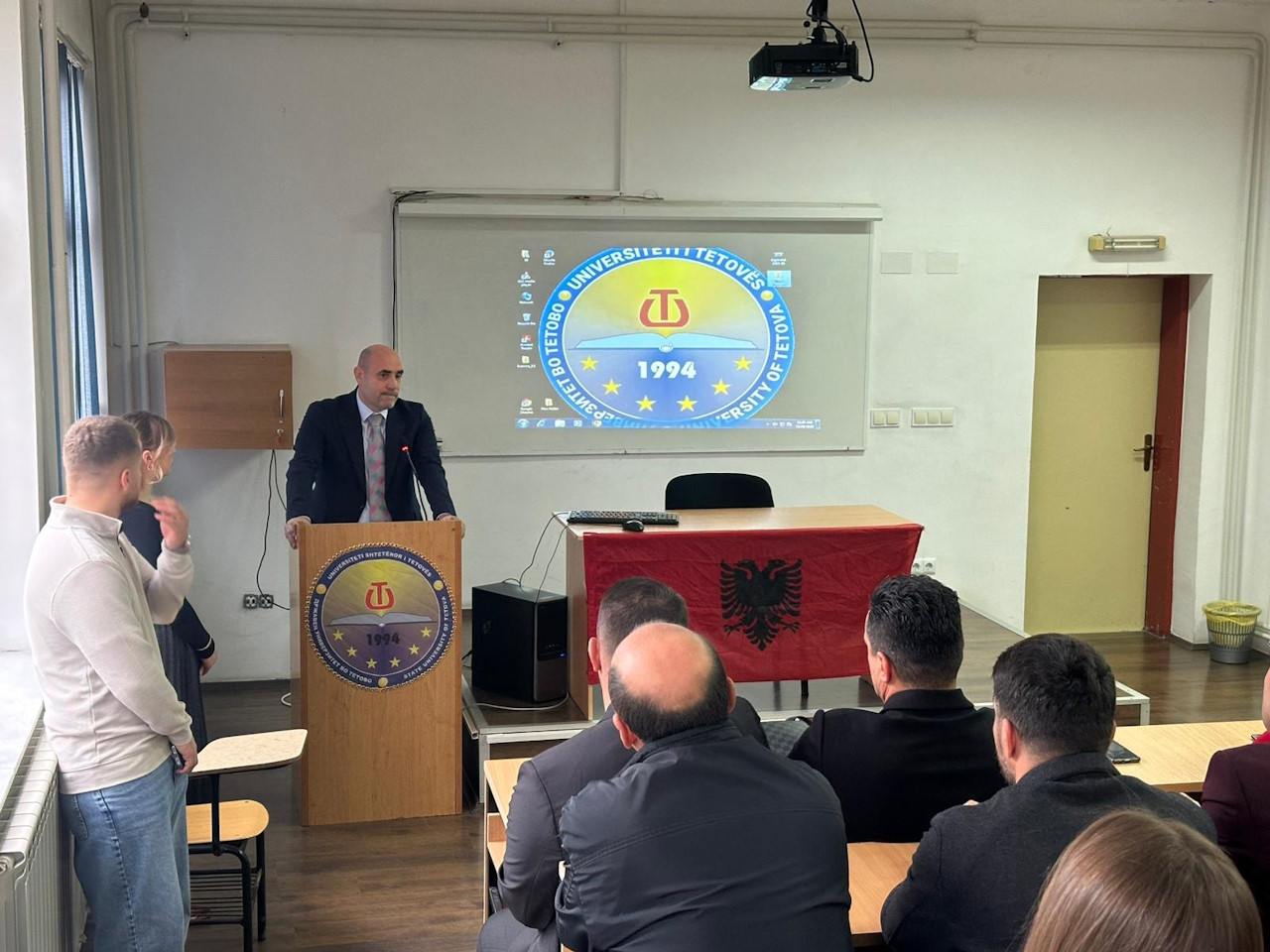
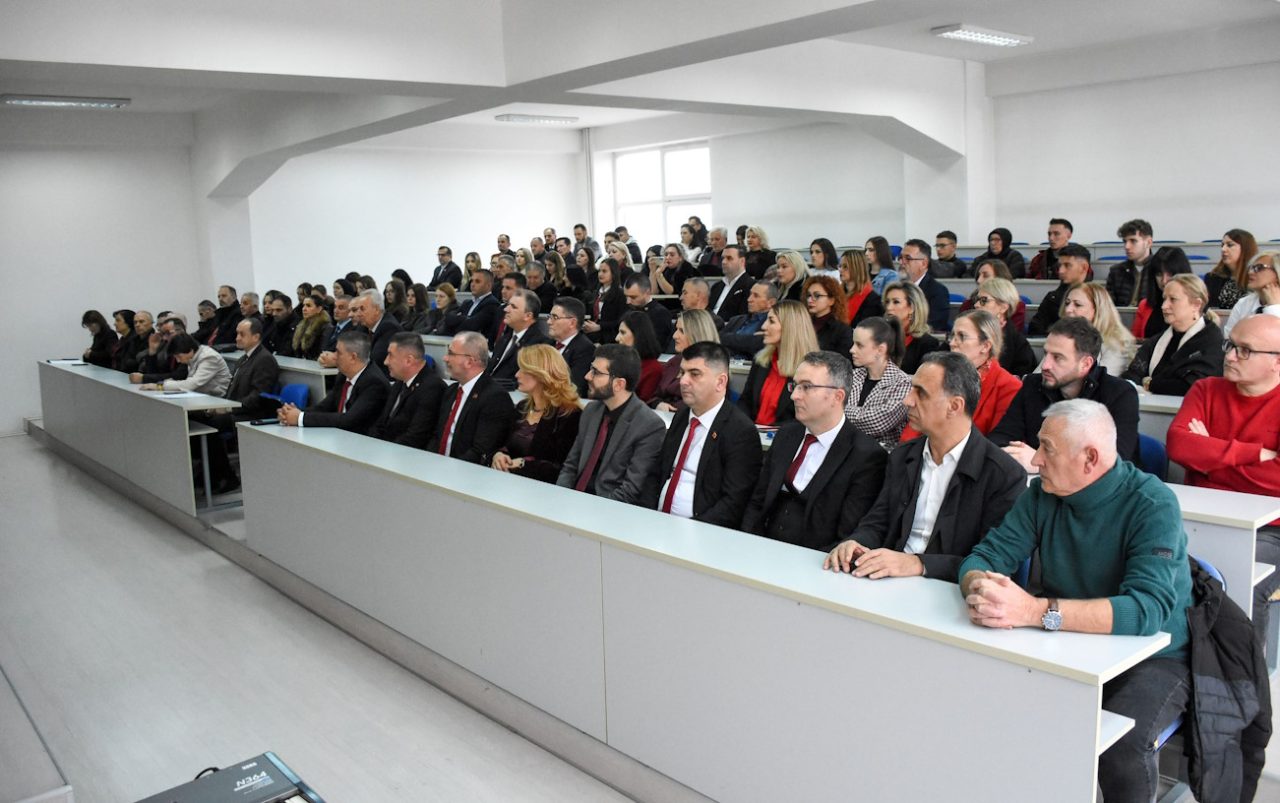
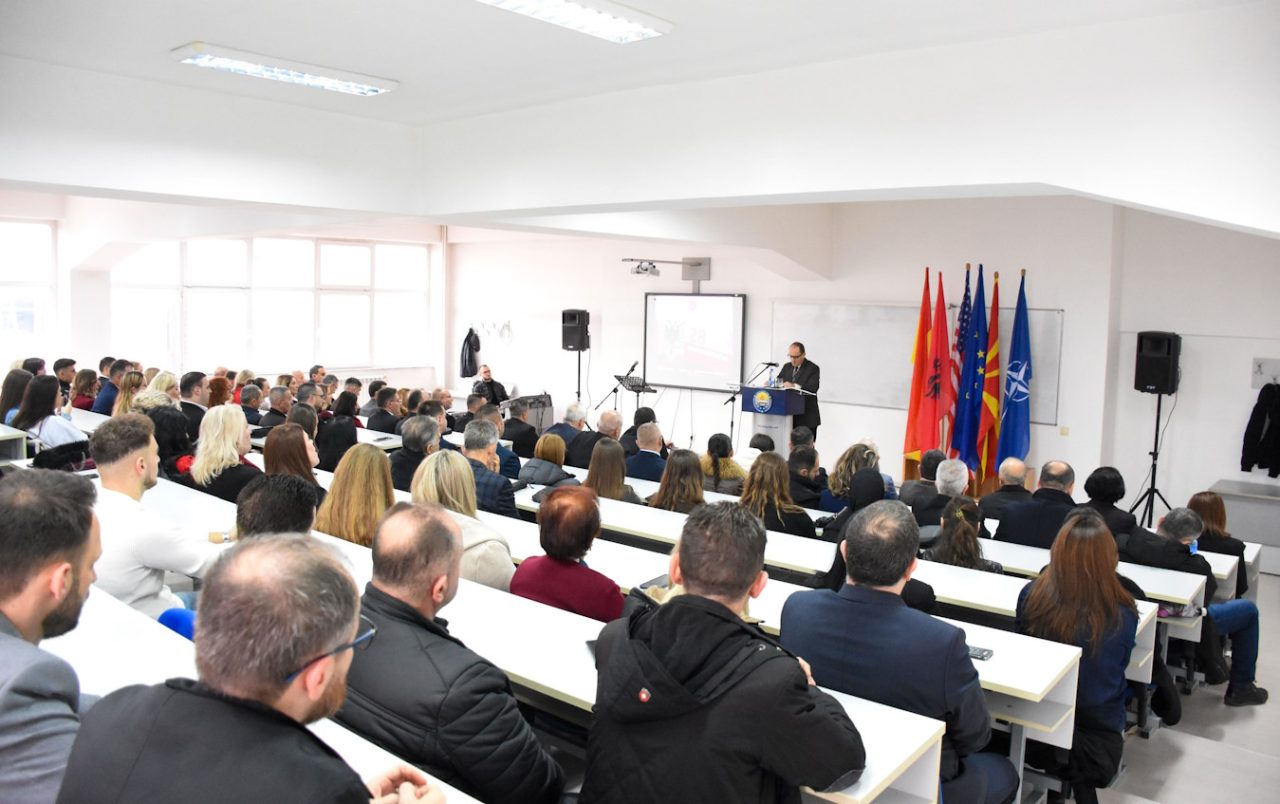
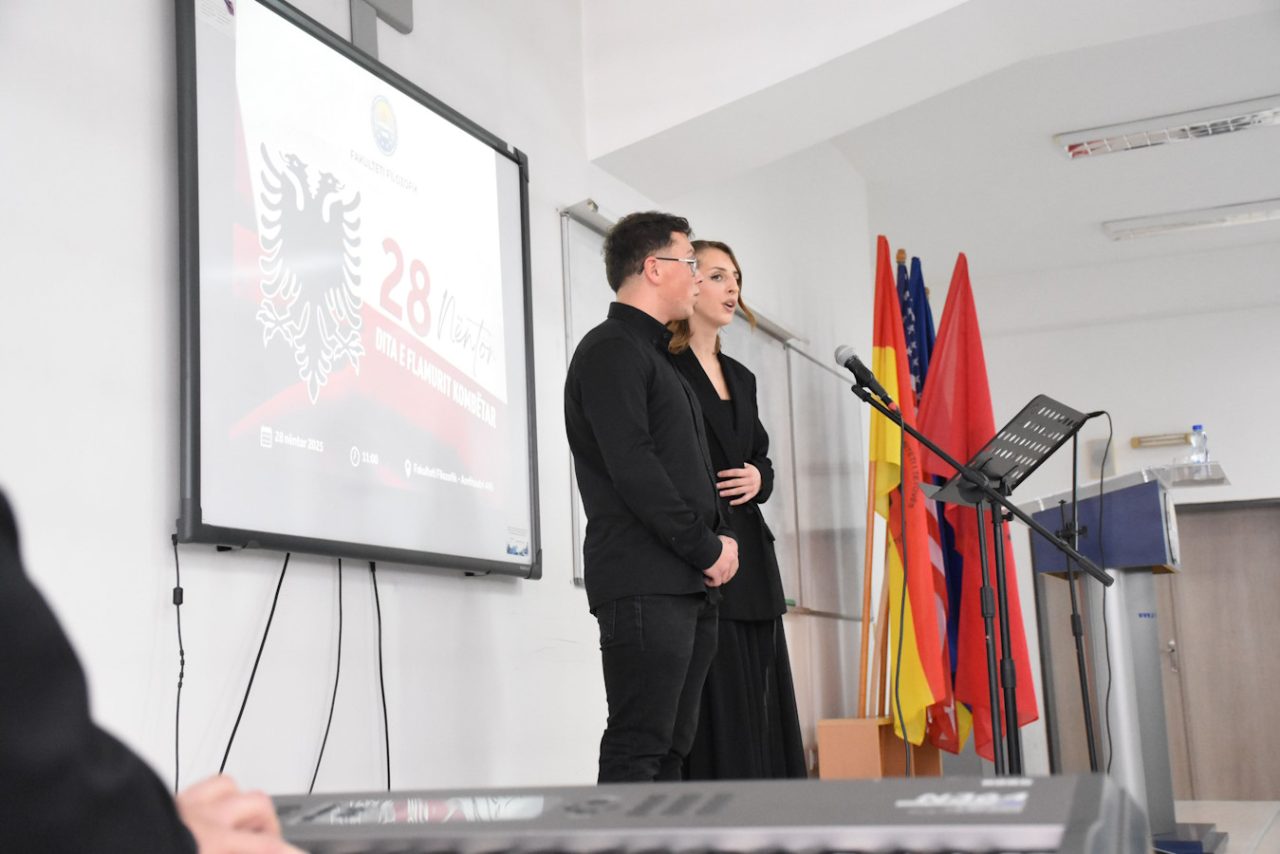
Faculty of Philosophy of the University of Tetova through a solemn academy marked November 28th – Albania’s Flag and Independence Day. This historic date marks the cornerstone of our identity and statehood, and carries exceptional historical, cultural, and national significance. The event was attended by the leadership of the University of Tetova, professors, historians, students, and other guests.
Dean of the Faculty of Philosophy, Prof. Dr. Kushtrim Ahmeti, in his speech said that in the Albanian historical calendar, November 28th marks the beginning of a long and difficult journey toward freedom. This sacred day is connected to two major moments in our history: November 28, 1443, when the flag of Kastrioti was raised in Kruja, and November 28, 1912, when Ismail Qemali declared the Independence of Albania in Vlora, giving life to the modern Albanian state.
“The act of declaring Independence in 1912 was the culmination of centuries-long efforts to protect the territory, identity, and right of self-determination of the Albanian people, and it represents the cornerstone of the political existence of the Albanian nation. The observance of this important date each year brings us back to a necessary reflection on the historical destiny of our nation, which, inevitably, is also tied to the individual fate and responsibility of each one of us. November 28 is not merely a symbolic date; it is historical consciousness, collective memory, and a commitment to the future. It is the day that unites us in our shared belonging”, – said the Dean of the Faculty of Philosophy, Prof. Dr. Kushtrim Ahmeti.
The presentation dedicated to November 28th was presented by the Professor of the Department of History of the Faculty of Philosophy, Prof. Dr. Qerim Dalipi. He stated that in October–November 1912, the status quo in the Balkans was disrupted. The Serbian, Montenegrin, and Greek armies broke the resistance of the Ottoman forces and Albanian volunteers and advanced deep into Albanian territory. On this occasion, they massacred thousands of innocent Albanians. Under such circumstances, even though the diplomatic circles of the Great Powers informed Ismail Qemali in November, during his stay in Vienna, that they supported Albania’s autonomy, this held no meaning for him. Consequently, on November 28, 1912, the National Assembly was held in Vlora, which elected Ismail Qemali as its president. The delegates signed the historic document declaring the independence of Albania, and the national flag was subsequently raised in front of thousands of people gathered outside the Assembly’s seat. With this, centuries-long efforts for freedom and independence were crowned.
Similarly, through a solemn ceremony, November 28 was also observed at the Faculty of Business Administration of the University of Tetova in Kumanovo. The organizers at this academic unit emphasized that this day symbolizes the birth of the Albanian state and represents the pride, sacrifice, and centuries-long aspirations for freedom. The solemn academy at the Faculty of Philosophy concluded with an artistic performance prepared by students of the Faculty of Arts: Rinesa Krasniqi, Alban Shahini, and Hadim Misimi. For Albanians around the world, November 28 is more than just a celebration; it is a living reminder of their roots, unity, and commitment to the future.