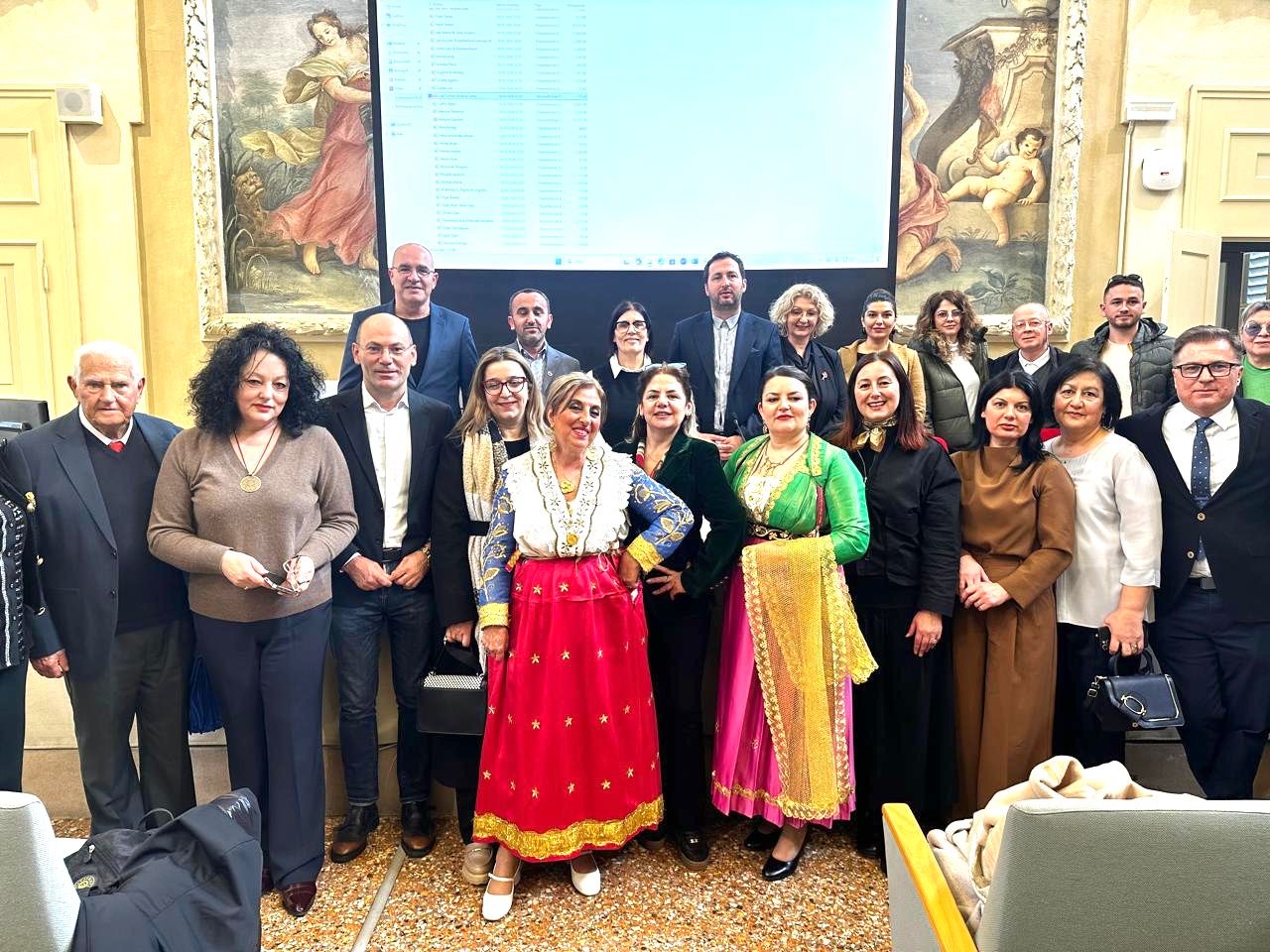

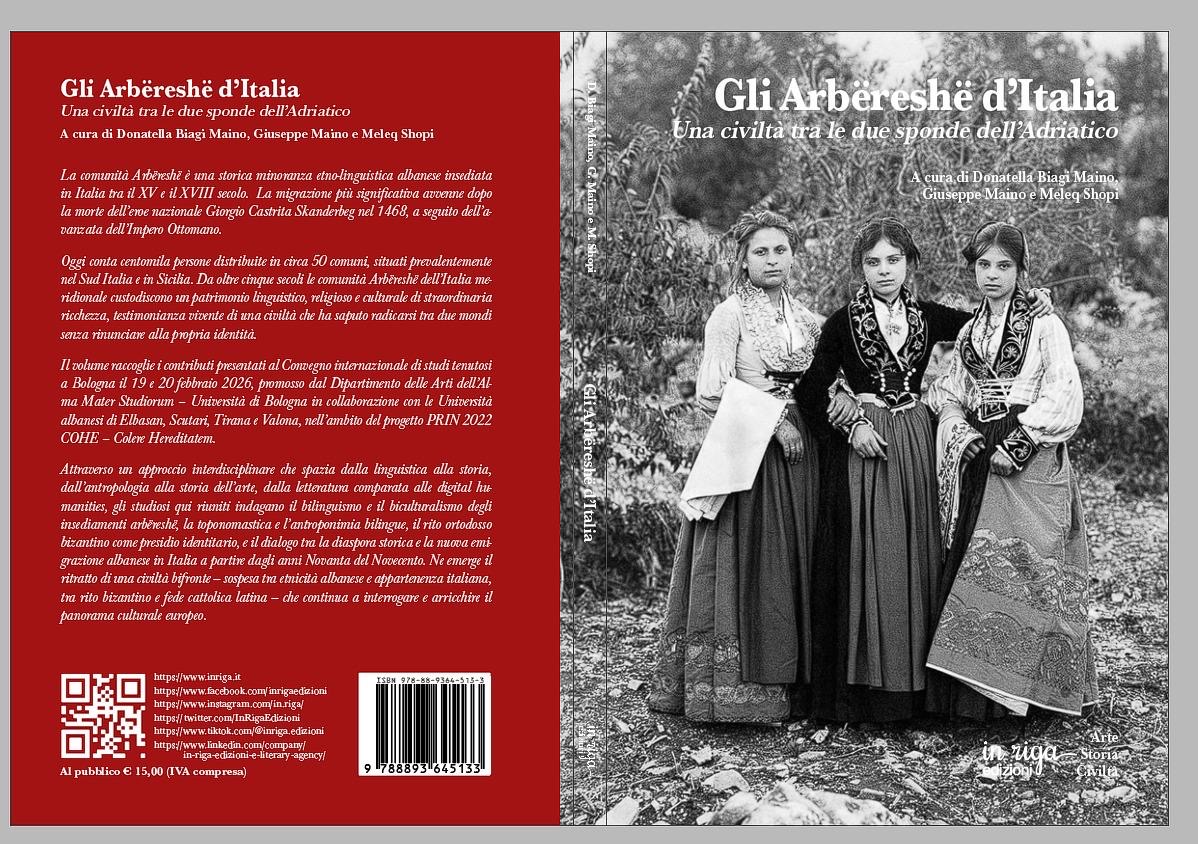
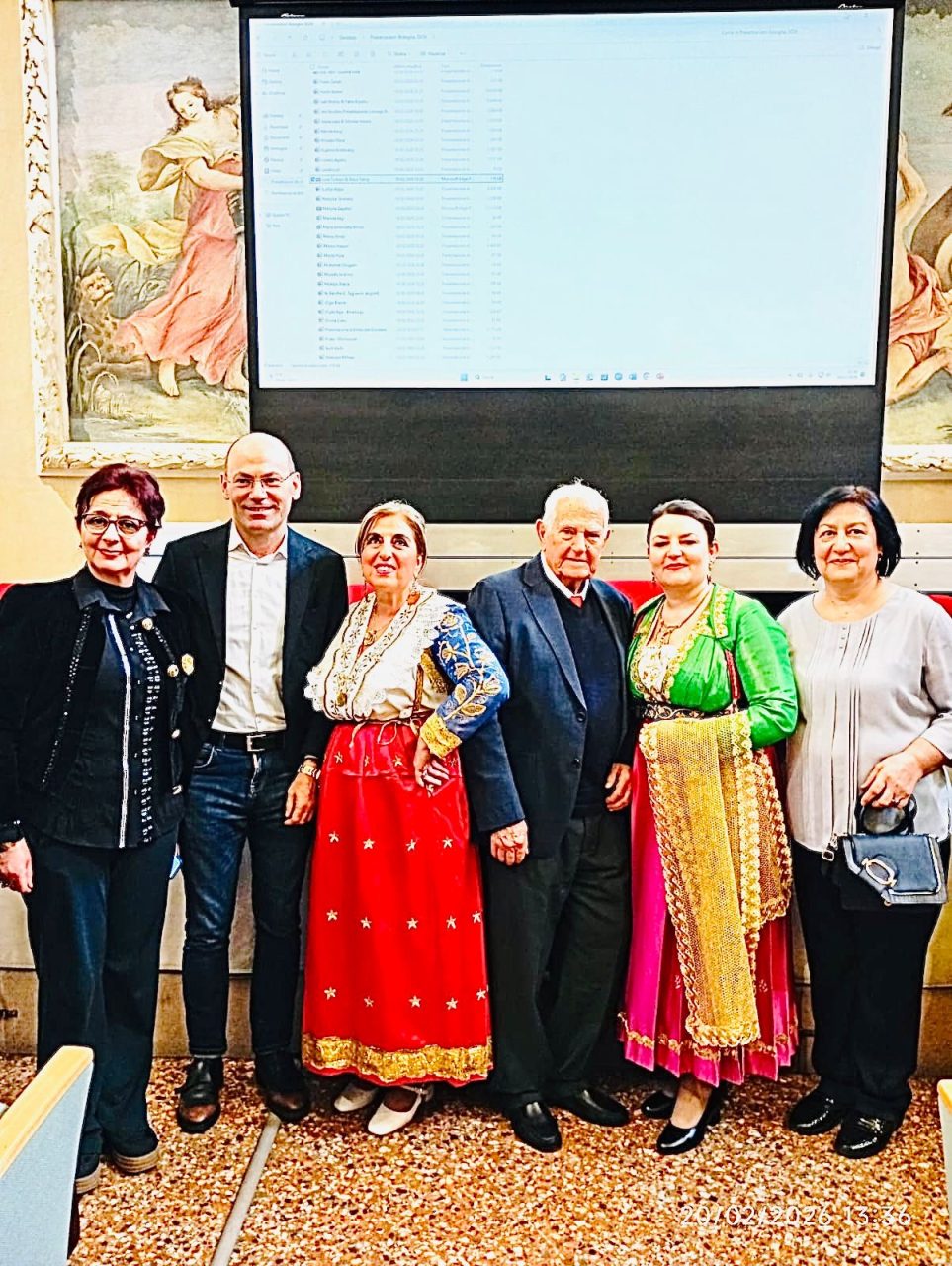
Dean of the Faculty of Philology at the University of Tetova, Prof. Dr. Emine Shabani, participated in the Bologna Conference titled “The Arbëresh of Italy – A civilization between the two shores of the Adriatic”. This conference (held at Palazzo Marescotti, Department of the Arts, Via Barberia 4, Bologna, Italy) highlighted the valuable heritage of the Arbëresh communities, which for centuries have preserved their language, customs, and the historical memory of their Albanian origin, building a strong cultural bridge between Albania and Italy.
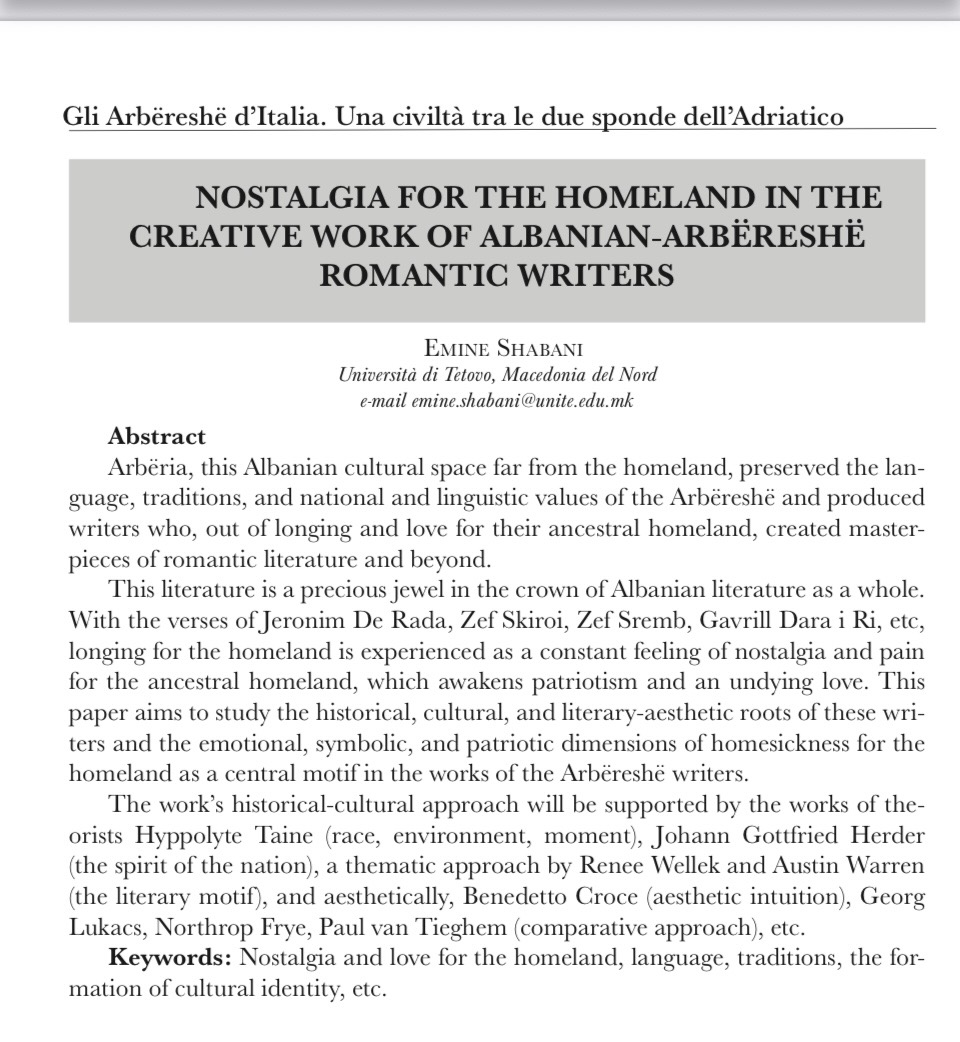
At this conference, the Dean of the Faculty of Philology, Prof. Dr. Emine Shabani, presented the topic: “Nostalgia for the homeland in the creative works of the Albanian-Arbëresh Romantic Writers”, where she focused on analyzing the feeling of longing as a central motif in the literary creativity of 19th-century Arbëresh authors. In her presentation, she emphasized that Arbëresh Romantic literature was not merely an aesthetic expression, but also a powerful act of identity and historical consciousness. The longing for the lost homeland—for distant Arbëria, appears as a collective emotion that permeates the poetry and prose of this period. Within this framework, the Dean analyzed the works of Jeronim De Rada, one of the most important figures of Arbëresh Romanticism, especially his well-known poem Këngët e Milosaos, in which love for the homeland intertwines with the historical fate of the nation.She also focused on the literary work of Gavril Dara i Riu and his epic vision in the work Kënga e Sprasme e Balës, where historical memory and the myth of the lost homeland take on symbolic dimensions. In her presentation, the Dean argued that longing in Arbëresh literature is not merely individual nostalgia, but a mechanism of cultural survival. Through poetry, the Arbëresh preserved the Albanian language, national myths, and the figure of the hero, turning literature into a form of spiritual resistance. The Arbëresh Romantic writers idealized their distant homeland, transforming it into a mythical space where history, legend, and the hope for national rebirth intertwine.
The conference created a fruitful space for discussion on the role of the diaspora in preserving identity and on the importance of cultural dialogue between the two shores of the Adriatic. According to the professor, this participation was an opportunity to share reflections on the power of literature as a bearer of historical memory and as evidence of the unbroken spiritual connection between the Arbëresh and their homeland of origin.