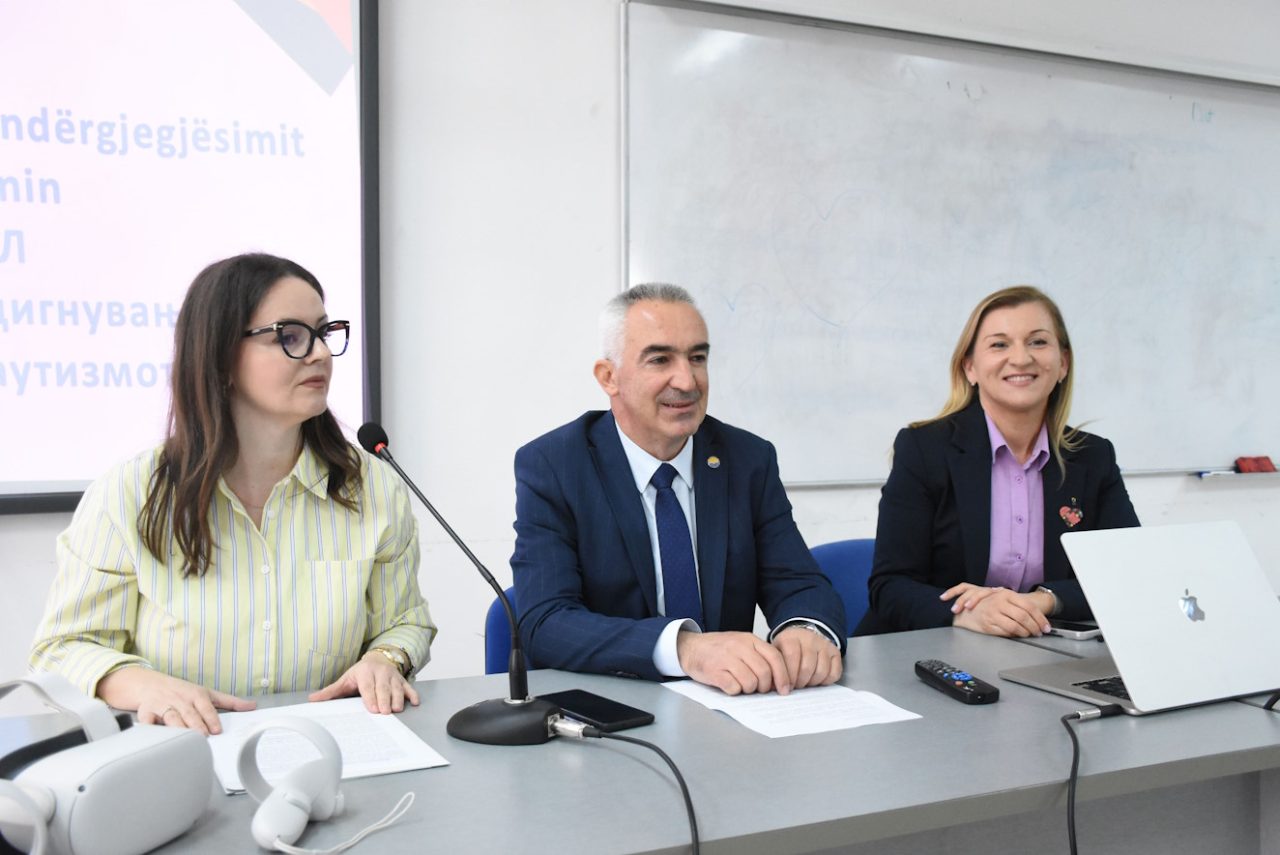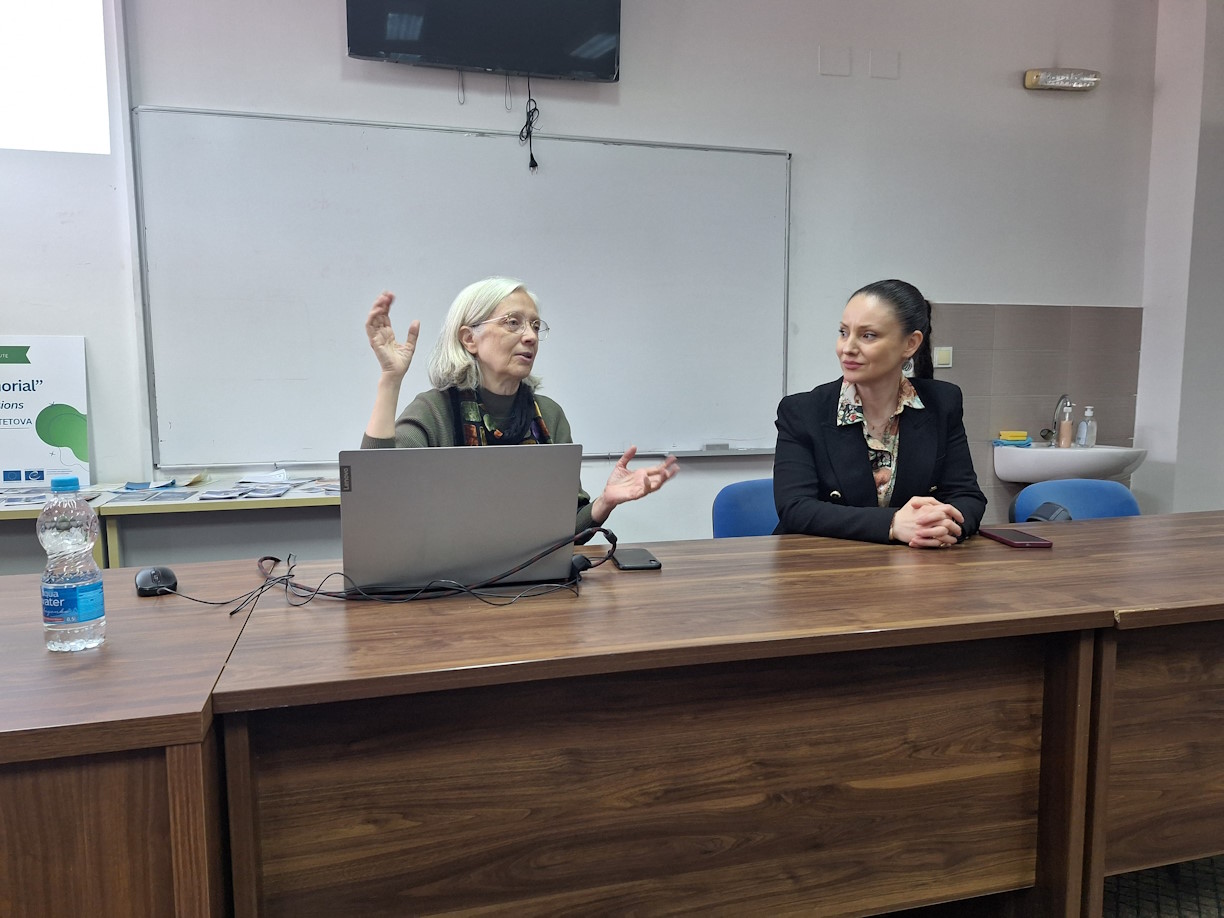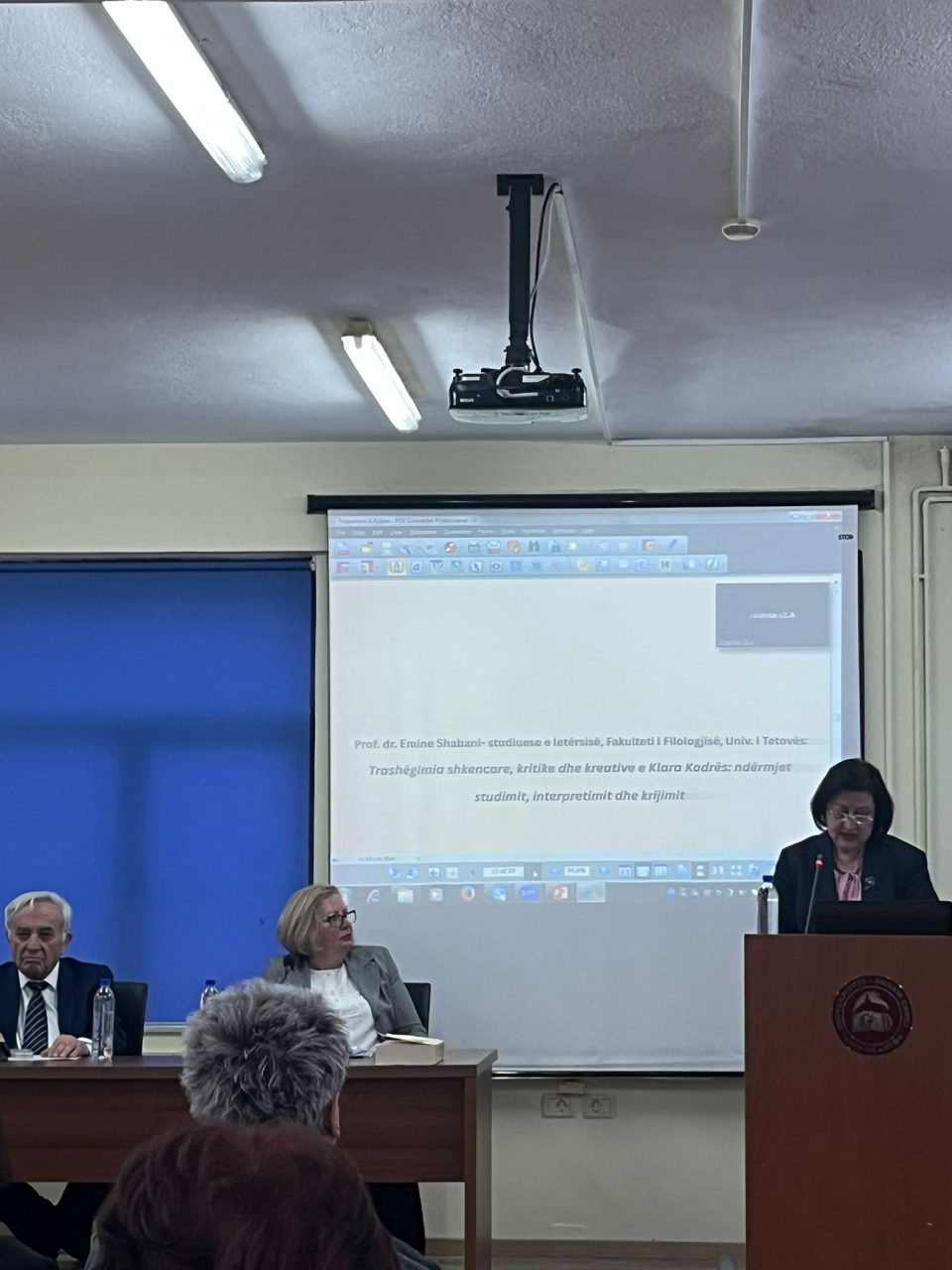
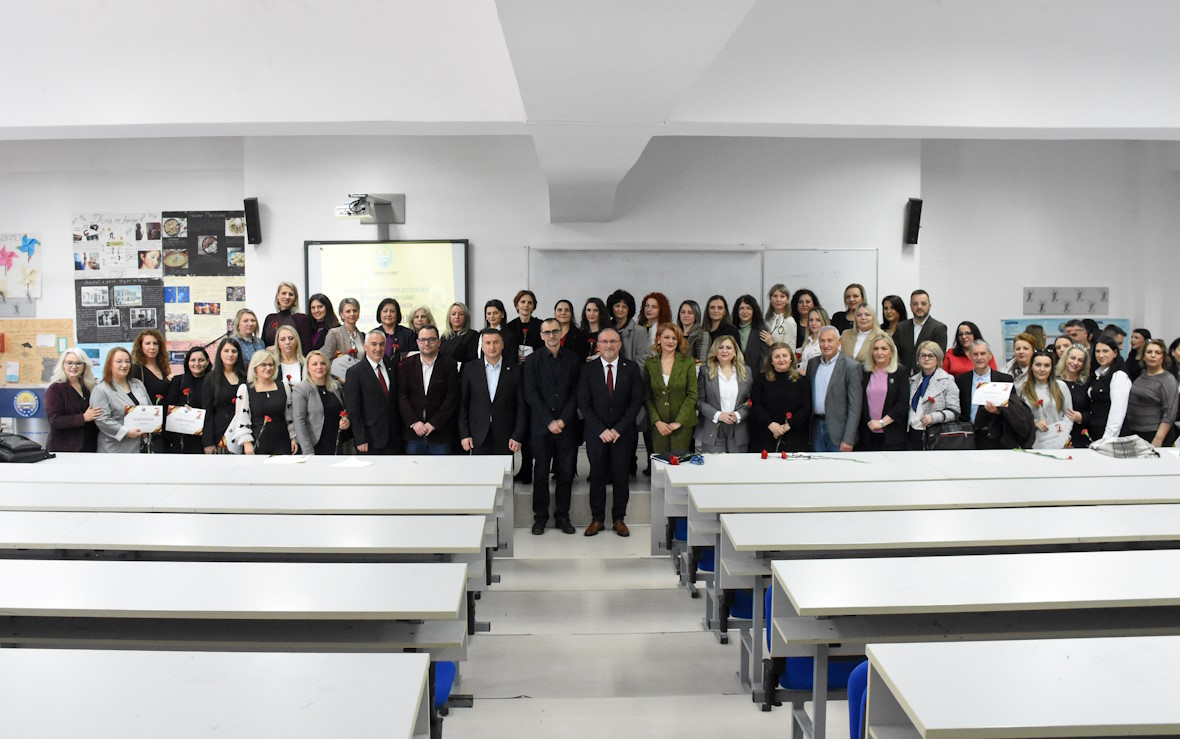
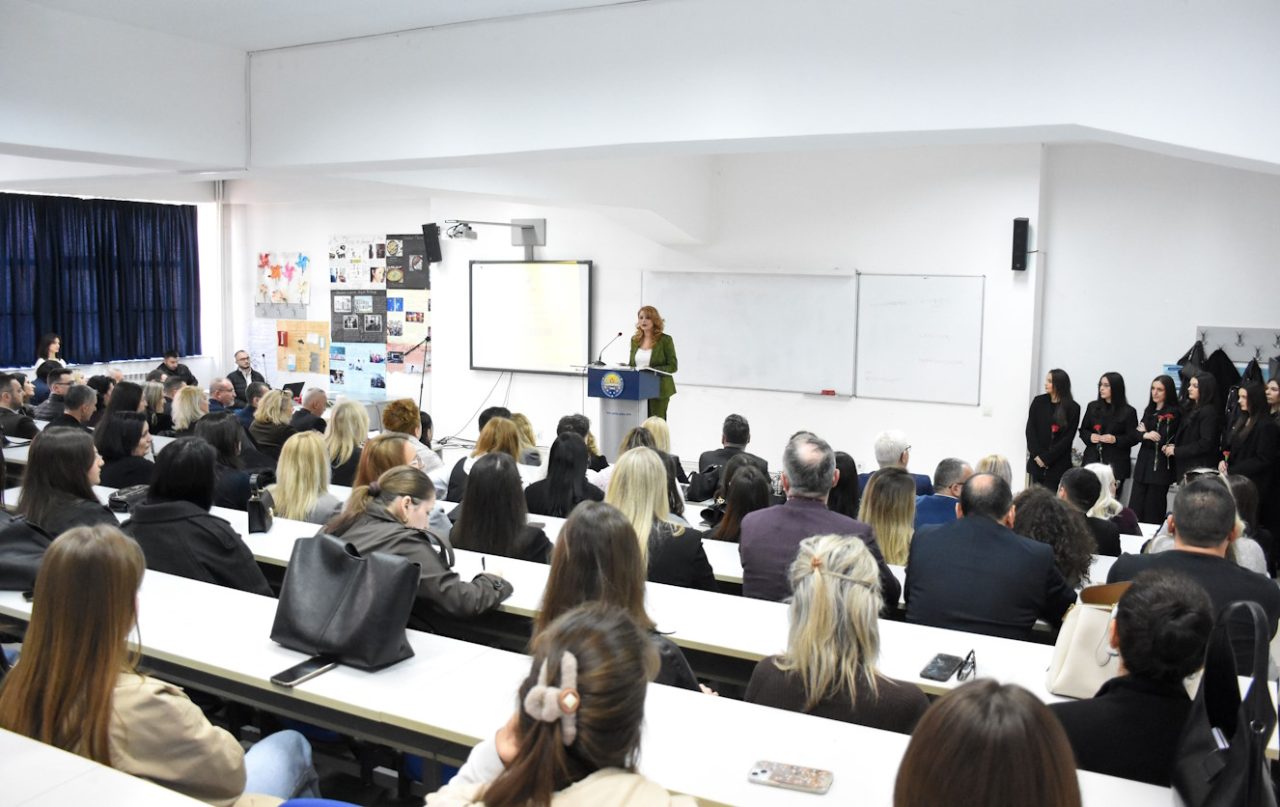
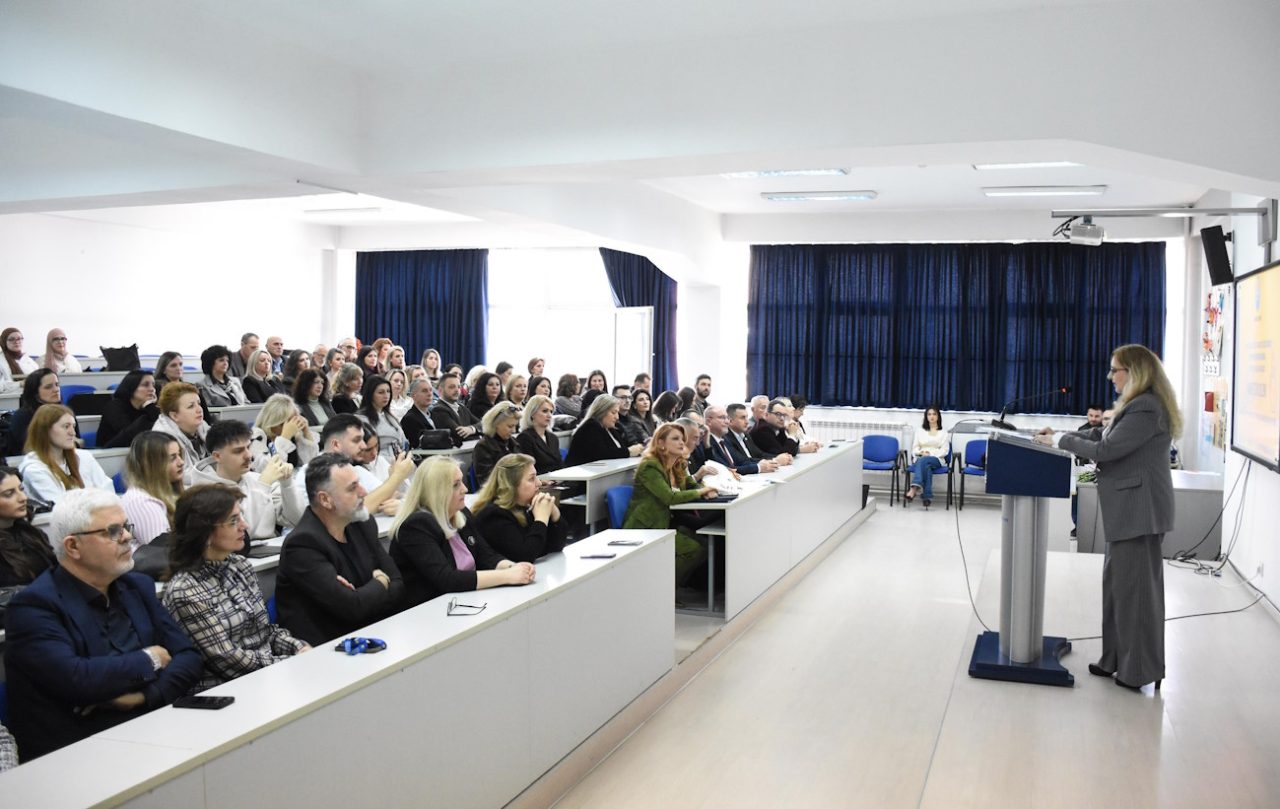
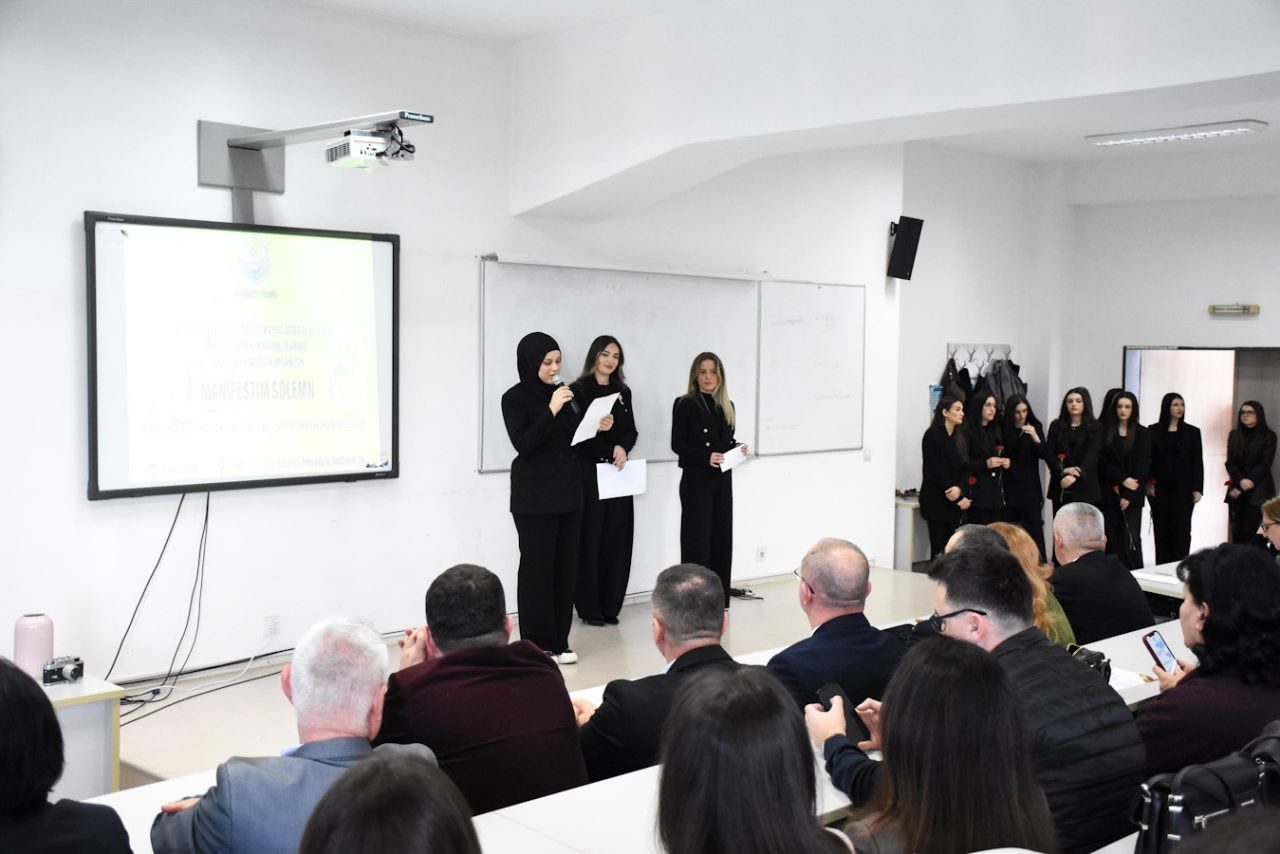
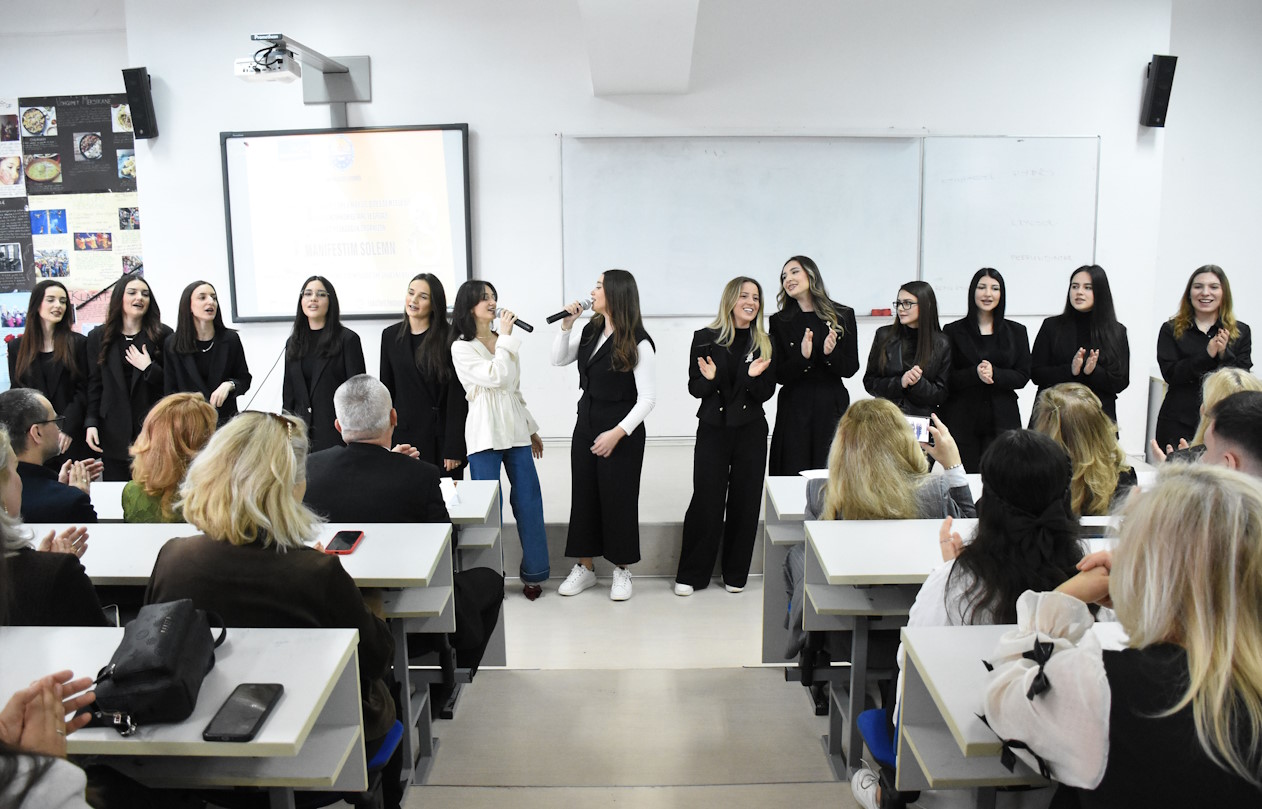
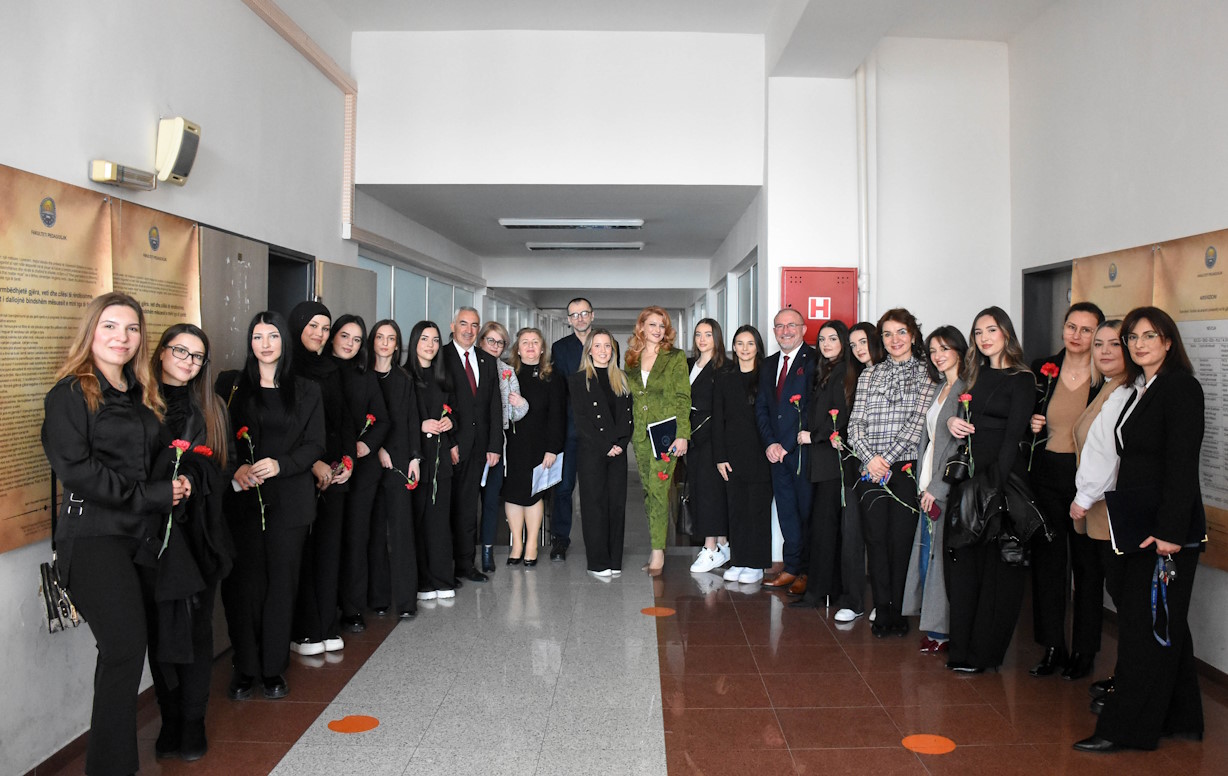
Faculty of Pedagogy of the University of Tetova marked two important dates with a solemn ceremony: March 7 – Teacher’s Day and March 8 – International Women’s Day. This activity marked a moment of reflection on the role of teachers in illuminating the path of knowledge and on the extraordinary contribution of women in the family, society, and every field of life.
The program began with opening remarks by the Vice-Rector for Finance, Prof. Dr. Aida Yzeiri Baftiari, who emphasized that Women’s Day, March 8, and March 7 – Teacher’s Day, are not just dates on the calendar. According to her, they are two moments of reflection that touch the essence of a society’s development: women and education. “If a nation wants to understand the level of its civilization, it is enough to see how it treats women and how much it values teachers. The history of humanity shows that progress has not come only from physical power or political authority, but from knowledge and sensitivity, two fields in which women have made an extraordinary contribution. However, for centuries, women have faced a great paradox: they have been the foundation of education, yet often excluded from decision-making. In Albanian history, one of the most inspiring examples is the sisters Sevasti and Parashqevi Qiriazi. At the end of the 19th century, when education for girls was considered unnecessary, they opened the first school for girls in Korçë. This act was not only pedagogical; it was an act of social and national courage.They challenged prejudice and proved that the education of women is not a luxury, but a necessity for the development of a nation. In science, figures such as Marie Curie show that gender barriers cannot stop the human mind. Curie not only entered a world dominated by men, but managed to become one of the greatest scientists in history, winning two Nobel Prizes. In the political and economic sphere, Margaret Thatcher demonstrated that strategic decision-making is not a monopoly of men. She became the first female Prime Minister of Great Britain and a figure who strongly influenced global economic policies. In philosophical and social thought, figures such as Margaret Fuller demanded that women should not be merely objects of history, but active subjects within it. However, the history of women is not only a history of success; it is also a history of sacrifice. The philosopher Hypatia was killed because of her free thinking. The French activist Olympe de Gouges was executed because she demanded that women have the same rights as men during the French Revolution. These examples show that when society fears knowledge and equality, it often attacks those who represent them”,- initially stated the Vice-Rector for Finance, Prof. Dr. Aida Yzeiri Baftijari.
Continuing her speech, the Vice-Rector stated that in modern times the world is experiencing a major transformation through technology and artificial intelligence. “Digital systems analyze data, generate content, and carry out complex processes. However, there is a dimension that no algorithm can replace: human empathy. In this respect, the role of the professor and the teacher remains irreplaceable. A machine can transmit information, but it cannot understand the emotion of a student who doubts himself. It cannot feel fear, uncertainty, or hope. The teacher and often the woman in her role as an educator-is the one who connects knowledge with humanism. Therefore, March 7 and March 8 are more than just celebrations. They are a reminder that society does not progress only through technology or the economy, but through culture, education, and respect for human dignity”, – stated, among other things, the Vice-Rector for Finance, Prof. Dr. Aida Yzeiri Baftijari.
Afterwards, Prof. Dr. Lulzime Lutfiu–Kadriu presented a paper dedicated to March 7, recalling the opening of the first Albanian-language school and the sacrifices made by teachers throughout the years. “March 7 marks one of the most significant dates in the history of Albanian education, associated with the opening of the first Albanian-language school in 1887 in Korçë, which marked a historic moment for our education and our nation. At a time when the Albanian language had no official status in education, the opening of this school represented a courageous step toward the affirmation of national identity and toward emancipation through knowledge. This action was not simply an educational event, but an act of extraordinary importance for our national and cultural emancipation. The first director of this school, the patriot Pandeli Sotiri, represented the model of a teacher devoted not only to teaching but also to the national cause. Thanks to his work and that of many other figures of the Albanian National Awakening, education in the Albanian language took on an institutional form, becoming the foundation of cultural and social development. March 7 is not only a symbolic date, but also a moment of reflection on the transformative role of education that invites us to recall the historical legacy of education and our current responsibility. In the history of pedagogy and schooling, the teacher has always been the most valued personality in society. Although teachers of that time worked under difficult material conditions and faced political and cultural obstacles, they nevertheless played a key role in preserving the language and national identity. The teacher was an authoritative and respected figure, often making sacrifices for the ideal of education in the mother tongue,” – stated Prof. Dr. Lulzime Lutfiu–Kadriu.
In the conclusion of her speech, the professor stated that the teacher, yesterday, today, and tomorrow, represents a figure that evolves with time but remains essential for the development of society. “Methods, tools, and contexts change, but the mission does not. Because in every era, education begins and ends with the teacher-a worthy personality with a bright vision and the noblest missionary of our society. Our challenge as teachers is not only to adapt to changes, but to lead them with professionalism, ethics, and vision. In the end, the quality of a school depends on the quality of its teachers. Teachers who love their profession inspire students to develop a love for learning. Let March 7 be not only a day of gratitude, but also a moment for renewing our academic commitment. Therefore, let us express our gratitude to all teachers for their work, sacrifice, and dedication”-said Prof. Dr. Lulzime Lutfiu–Kadriu.
During this event, the Faculty of Pedagogy awarded certificates of appreciation to school principals and teachers who assist students in carrying out their teaching practice. The awards were presented by the dean, Prof. Dr. Lulzim Memedi. Likewise, the dean of the Faculty of Philology, Prof. Dr. Emine Shabani, presented acknowledgments to school teachers who contribute to the professional development of students.