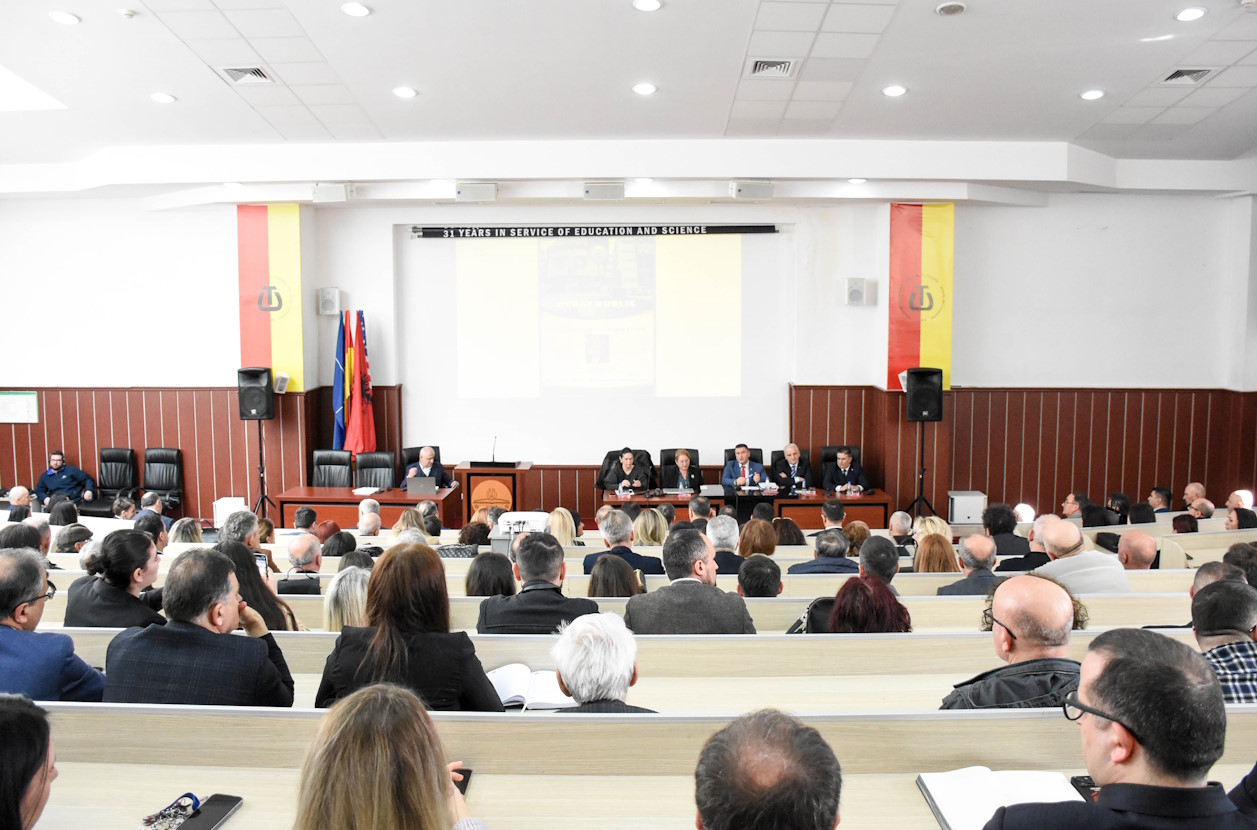
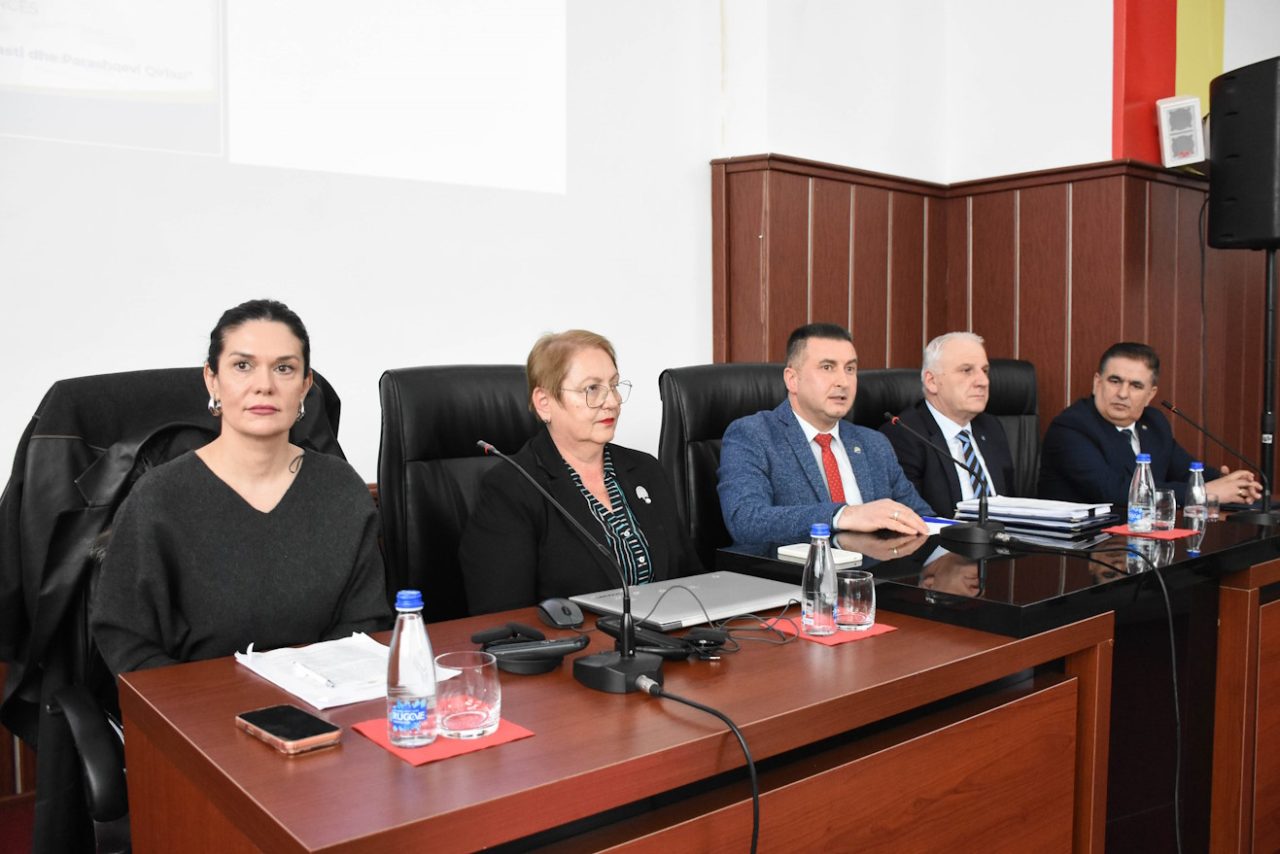
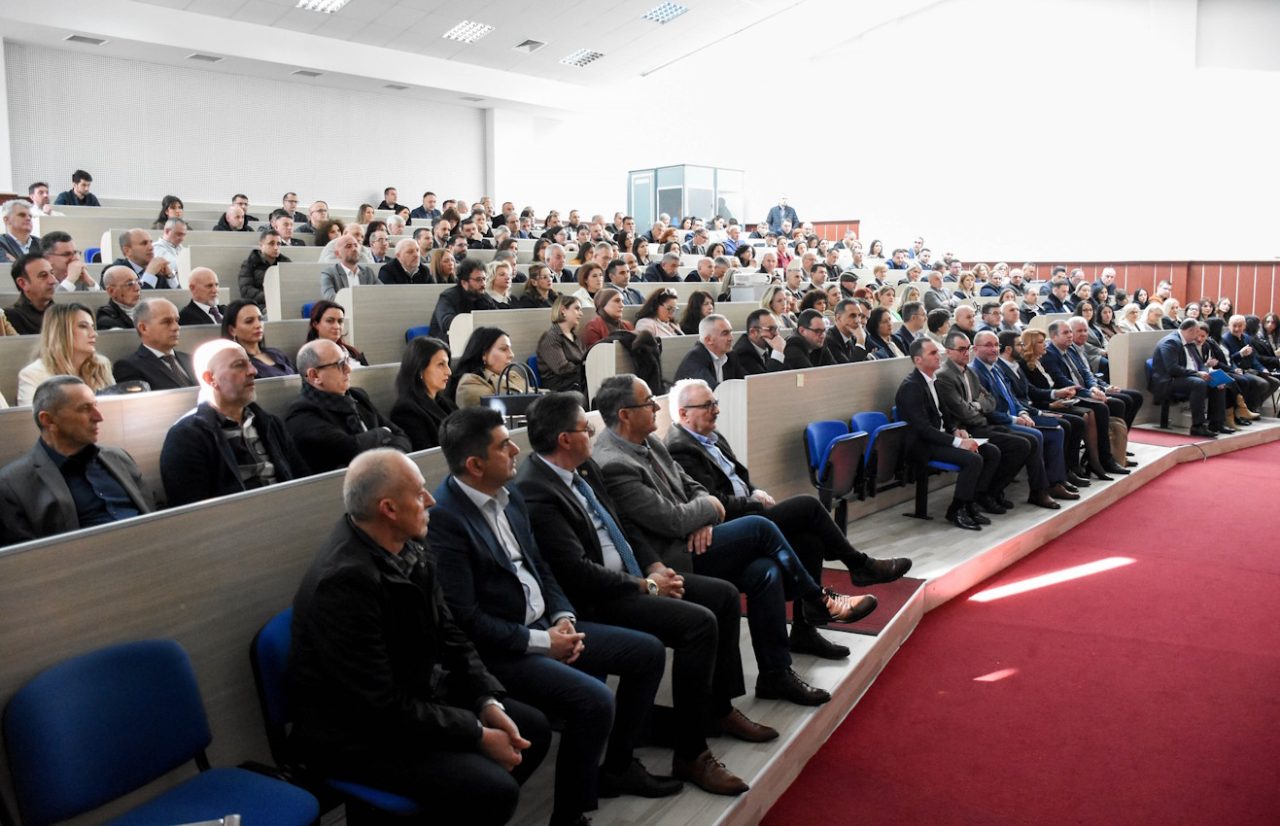
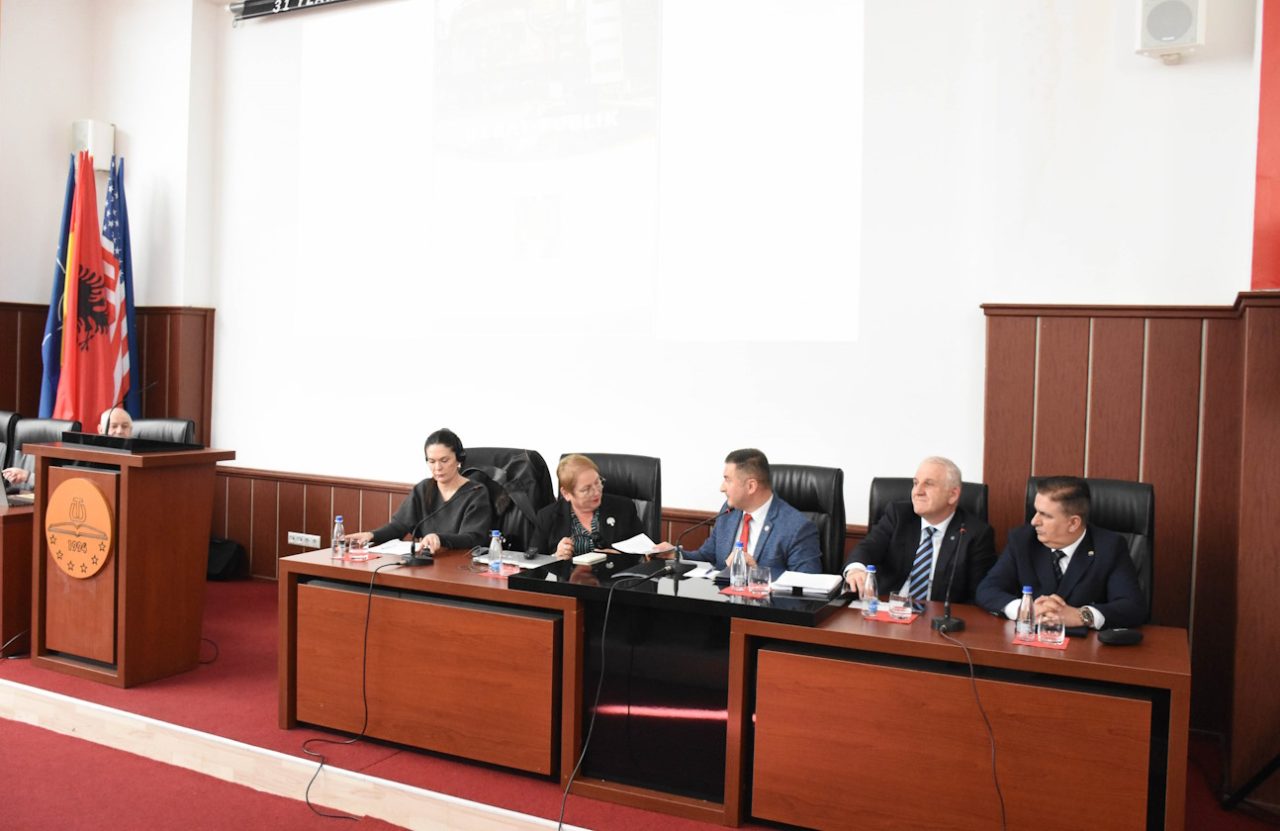
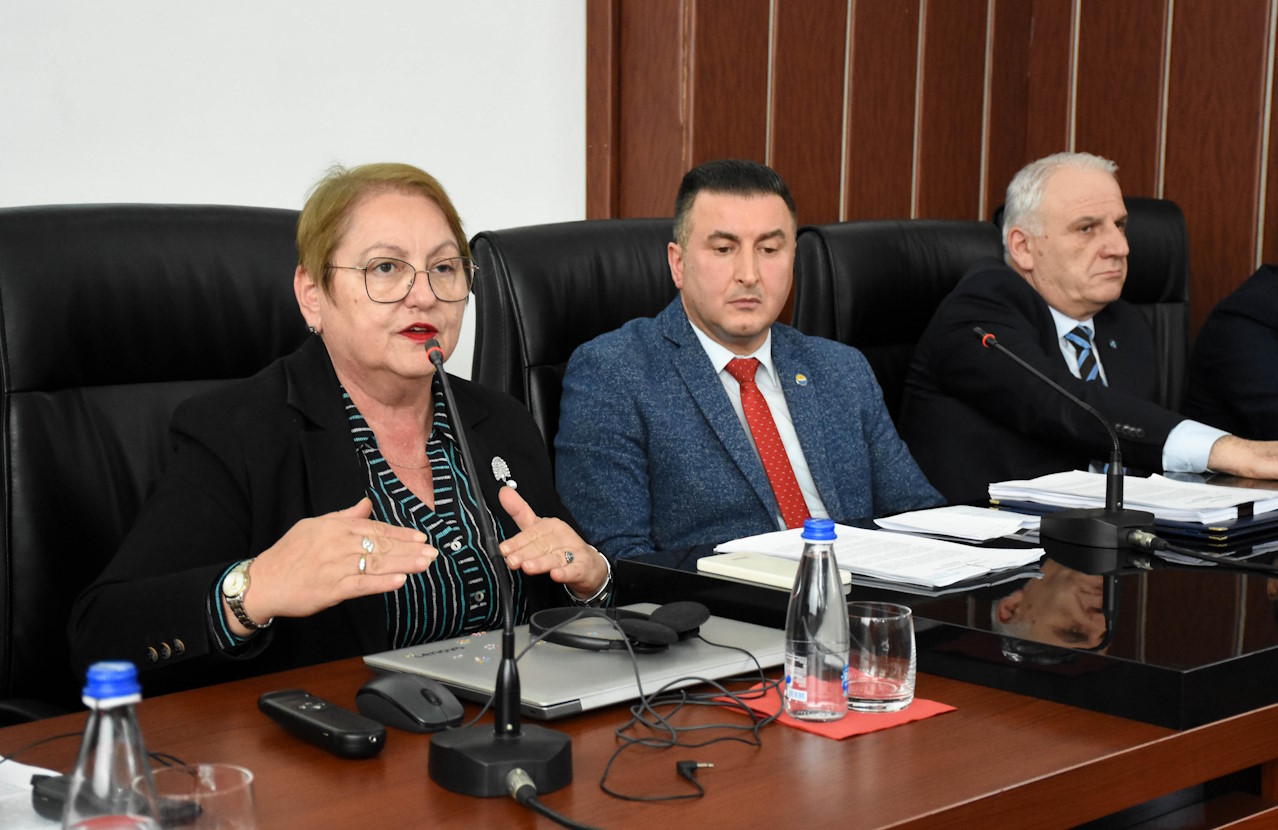
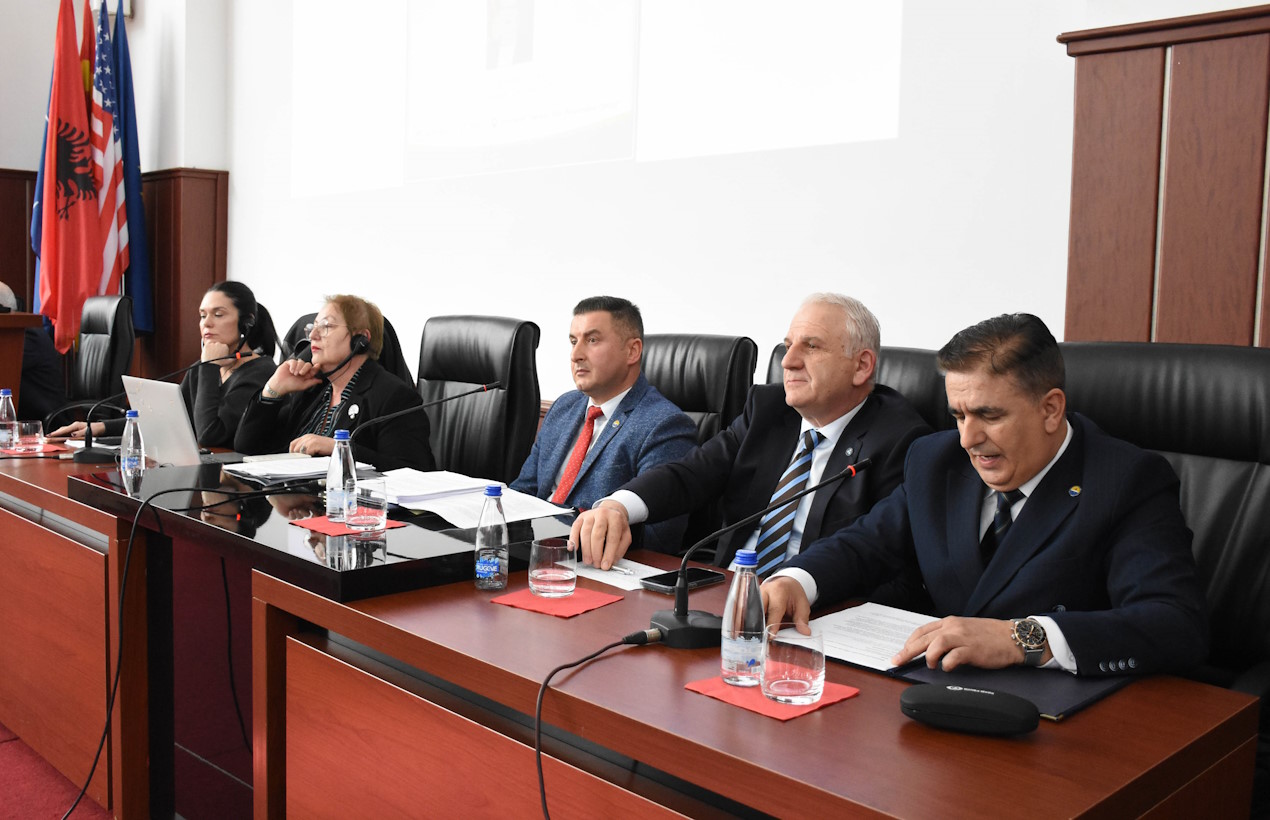
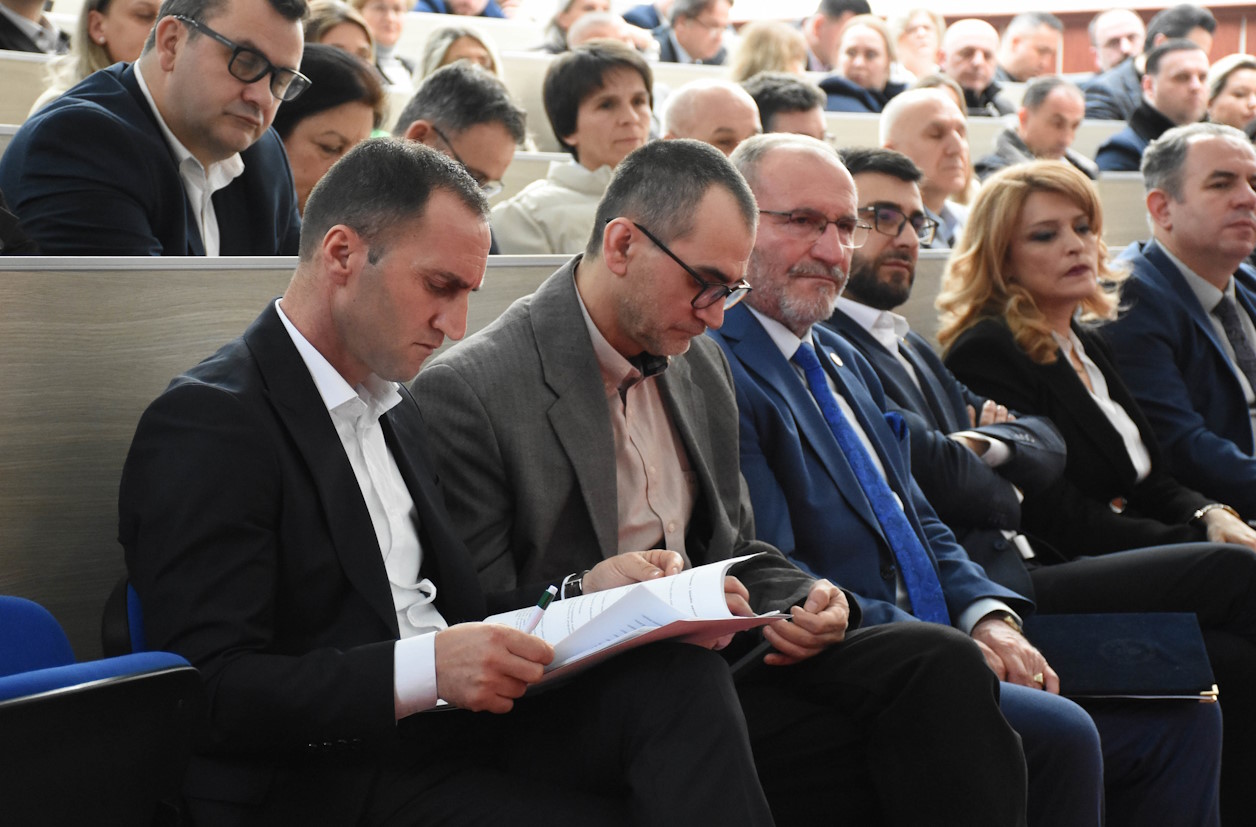
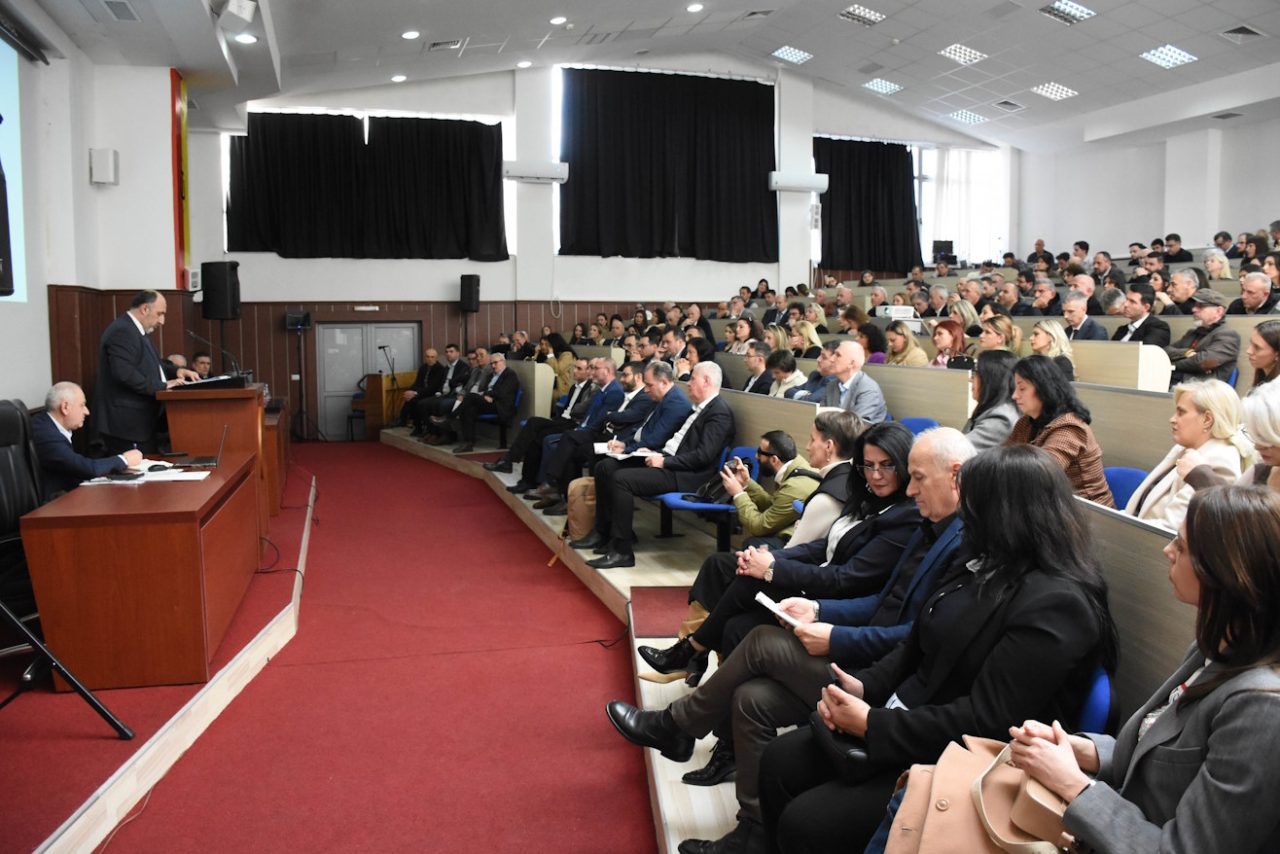
In the amphitheater “Sevasti and Parashqevi Qiriazi” of the University of Tetova (February25, 2026), was held a public debate on the Draft Law on Higher Education, which is expected to bring significant changes to the structure and functioning of universities in the Republic of North Macedonia. This event, conducted in the Albanian language, was also attended by Prof. Dr. Vesna Janevska, Minister of Education and Science of the Republic of North Macedonia, who presented the main provisions of the Draft Law and answered questions from the participants. The debate was followed by a considerable number of professors, students, representatives of academic institutions, as well as other experts in the field of education.
Rector of the University of Tetova, Prof. Dr. Jusuf Zejneli, stated that the Draft Law should be amended and must be aligned with the actual state of higher education. “Each faculty has approved the comments of the professors. In the Rectorate Council, the professors’ comments were also approved. The majority of the remarks concern the undermining of university autonomy. The provision to establish a University Council weakens the autonomy of universities. There are also comments regarding the accreditation of doctoral studies. University of Tetova meets all the criteria, as it has qualified staff and scientific publications, but the criteria of the new law are not consistent with the actual situation. Similarly, regarding elections for teaching and research positions, the real state of higher education in the country should be considered, because some conditions depend not only on us but also on investments made by institutions in universities. At the same time, journals published under the University should also be considered, as we have invested a long time in them; they are indexed with impact factors. Additionally, scientific journals outside the University should be considered, and the number of publications for academic staff should reflect the actual figures. Senate of our University has issued a decision proposing that the law be withdrawn and reconsidered, so that a more reasonable draft can be prepared, in harmony with the actual situation. We are committed to protecting the real state of affairs; the Draft Law must be amended and aligned with the work of the universities,” concluded Prof. Dr. Jusuf Zejneli, Rector of the University of Tetova.
Meanwhile, the President of the Senate, Prof. Dr. Kenan Ferati, in his speech, presented, among other things, the key remarks that directly affect the quality of higher education:
- Article 86 – University Council (composition, competencies, and autonomy)
What does the law provide? The provision foresees the establishment of a University Council, in which a considerable portion of the members are appointed from outside the university, alongside internal representatives. Why is this a problem? Members appointed from outside may gain influence over strategic and financial decisions; if competencies are not clearly defined, the Council could practically dominate the Senate; there is a risk of conflict of interest in decisions regarding property, finances, and development policies. What does this mean in practice? It shifts power from academic bodies toward managerial structures; risks the politicization of decision-making; may cause institutional deadlocks and contested decisions, while constitutional autonomy requires that academic matters remain under the real self-governance of the university community. - Removal of the titles “Titular Assistant Professor” and “Titular Associate Professor”
What does the law provide? The Draft Law does not include the titles of “Titular Assistant Professor” and “Titular Associate Professor”, which existed in the previous law. This practically means the removal of the possibility to engage them in the teaching process.
Why is this a problem for the University of Tetova? Especially in the Faculty of Medicine and other professional faculties, these titles are essential instruments for ensuring the continuity of the teaching process. In conditions where approvals for new hires are not granted, professors holding these titles help fulfill staffing needs and bring added value to students through their practical experience. Their removal deprives the university of a flexible mechanism to engage qualified staff without additional financial burden.
- Stricter criteria and limitation of academic advancement. The proposal to strengthen the criteria for appointments to academic titles (Assistant Professor, Associate Professor, Full Professor), with an emphasis on publications with an impact factor in Web of Science and Scopus, may have negative consequences for the younger academic staff. According to data from the University of Tetova, out of a total of 329 teaching staff, 130 (33.77%) are Full Professors, 125 (32.47%) are Associate Professors, and only 74 (19.22%) are Assistant Professors. This structure shows that most of the senior positions are already filled. Additional tightening of the criteria could further hinder the advancement of new academic staff, creating career stagnation instead of generational renewal and academic development. To be appointed as an Associate Professor, a candidate must have previously been employed as an Assistant or Collaborator in a higher education institution. This provision poses a problem because it limits competition to internal staff only. It penalizes doctoral graduates who have completed their studies at prestigious universities abroad but have not held a formal assistant status. It reduces openness and internationalization of universities. In many systems (Germany, Austria, Italy, Croatia), prior assistant status is not necessarily required. A balanced model is needed that encourages quality while also allowing real advancement for the new generation of researchers.
- Article 124 – Third Cycle (Doctoral Studies) What does the law provide? Article 124 allows the organization of doctoral studies only at universities that meet high and cumulative conditions, including being ranked among the “top four,” having at least 15 years of activity, maintaining high thresholds for projects and publications, and all conditions must be fulfilled cumulatively. Why is this a problem? The issue is threefold: ranking as a legal barrier – ranking is an analytical instrument, but it should not be turned into a monopolistic filter for the third cycle; the 15-year condition – institutional age is not a guarantee of the quality of a doctoral program and creates a structural barrier for newer universities that may have sufficient capacities in certain fields; cumulativeness of conditions – fulfilling multiple criteria cumulatively practically excludes a large part of the university system, leading to centralization rather than quality-based competition.
According to the President of the Senate, Prof. Dr. Kenan Ferati, the purpose of these remarks is to improve the legal provisions and to preserve university autonomy, ensure balanced institutional development, and promote sustainable academic advancement. Reform is necessary, but it must be built on dialogue, equality, and respect for the fundamental principles of higher education.
During the discussions, important issues were raised concerning university autonomy, the funding of higher education institutions, and accreditation standards. Some of the professor’s present expressed specific requests regarding working conditions and the protection of academic staff rights. The public debate is part of a broader consultative process conducted by the Ministry of Education and Science throughout the country, ahead of the final approval of the Draft Law in Parliament.