
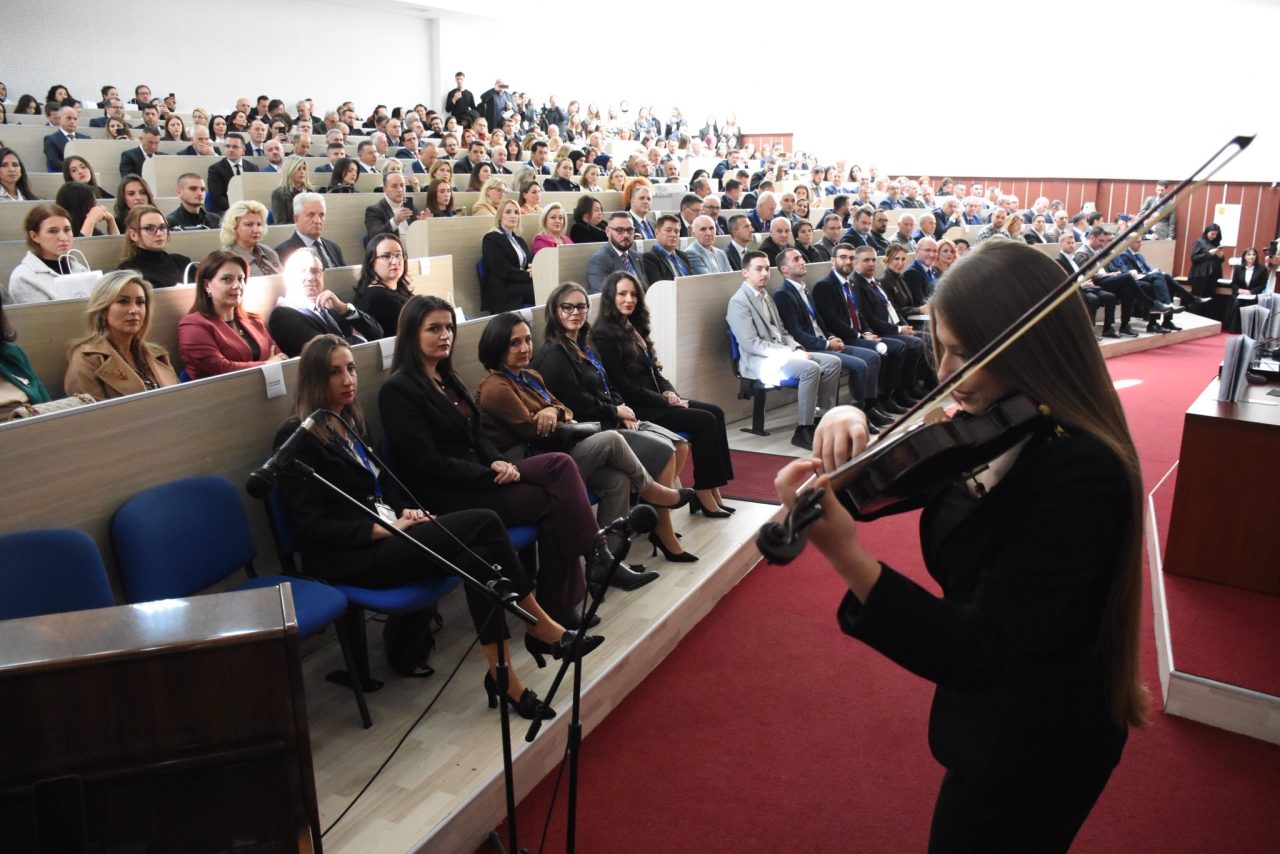
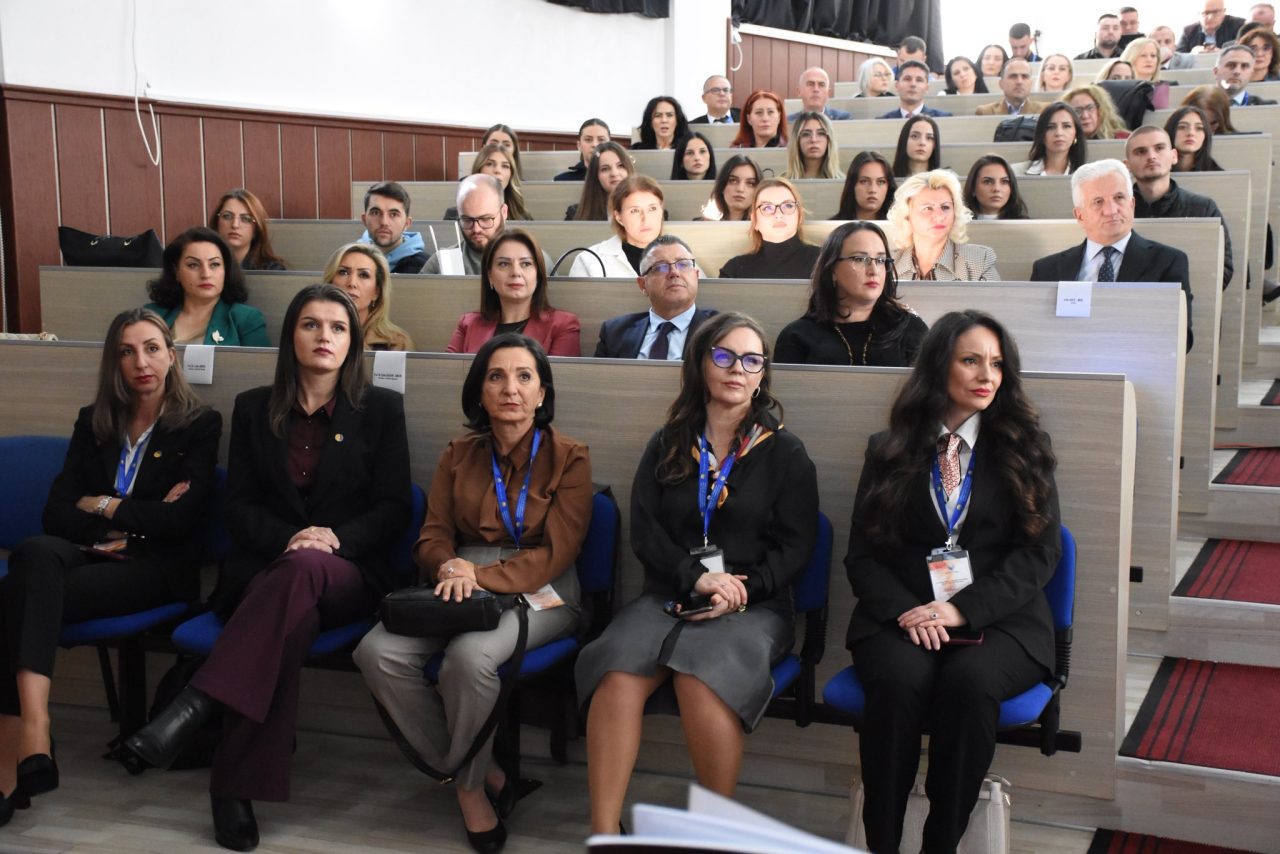
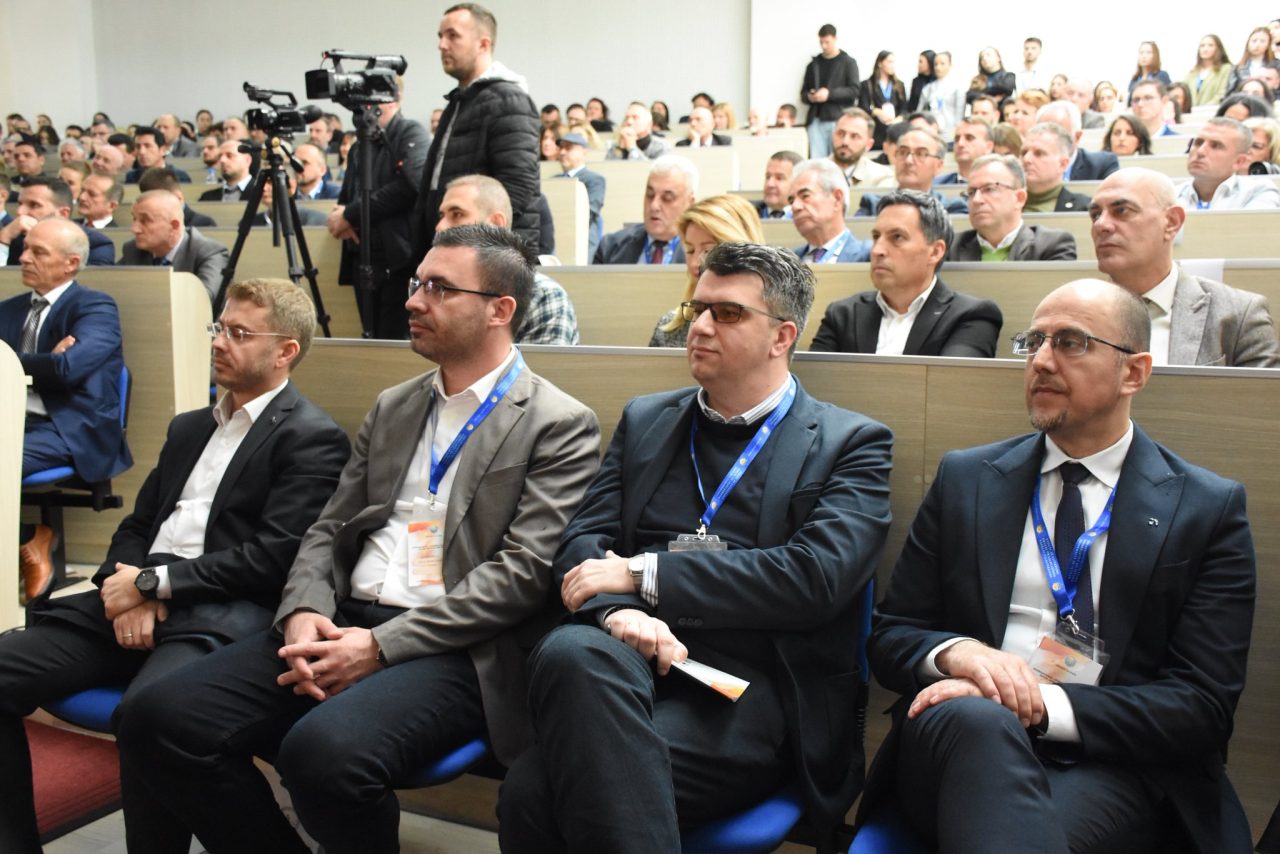
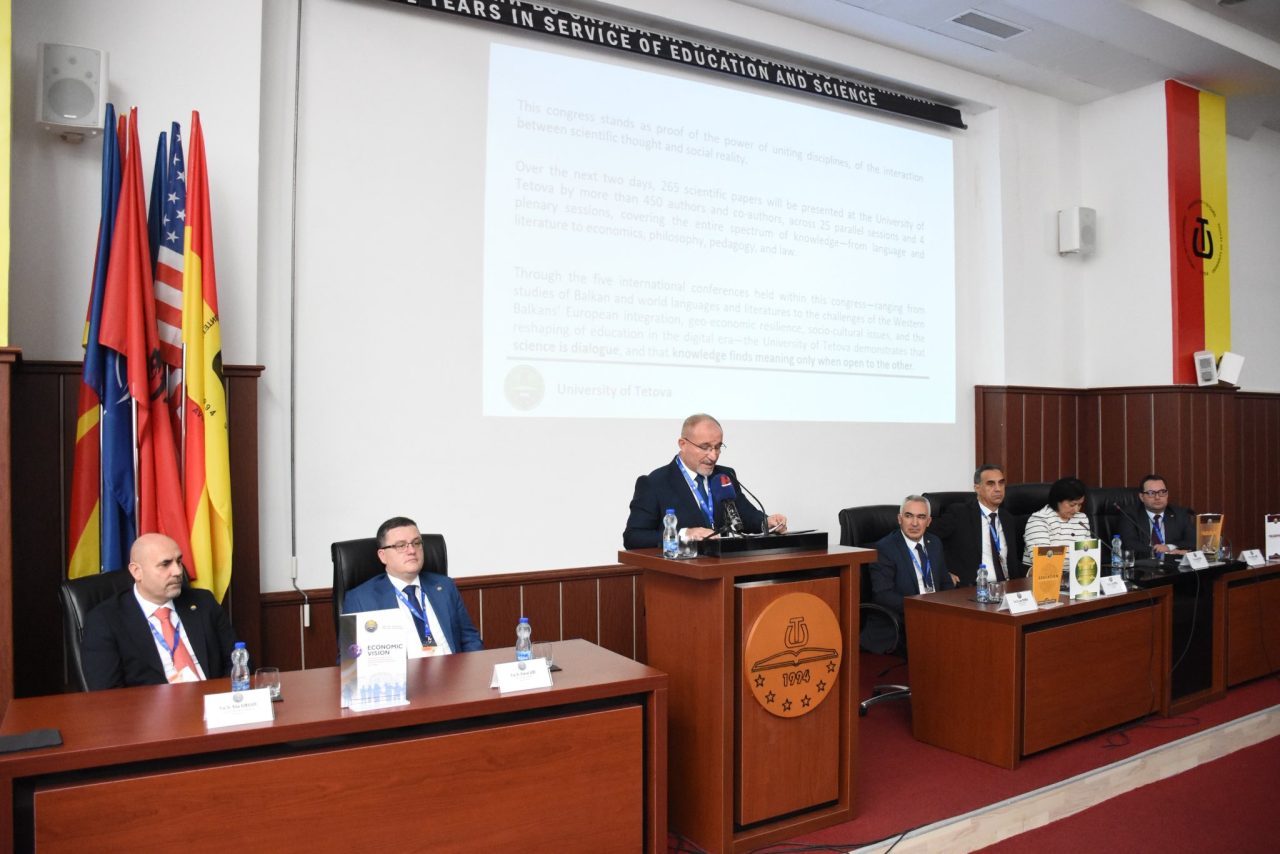
University of Tetova is holding the International Congress on Human, Social Sciences, and Arts, an academic event that brings together professors, researchers, and experts from the region and beyond. The congress includes a series of international conferences organized by various faculties, including the Faculty of Economics, the Faculty of Philology, the Faculty of Law, the Faculty of Philosophy, and the Faculty of Pedagogy.
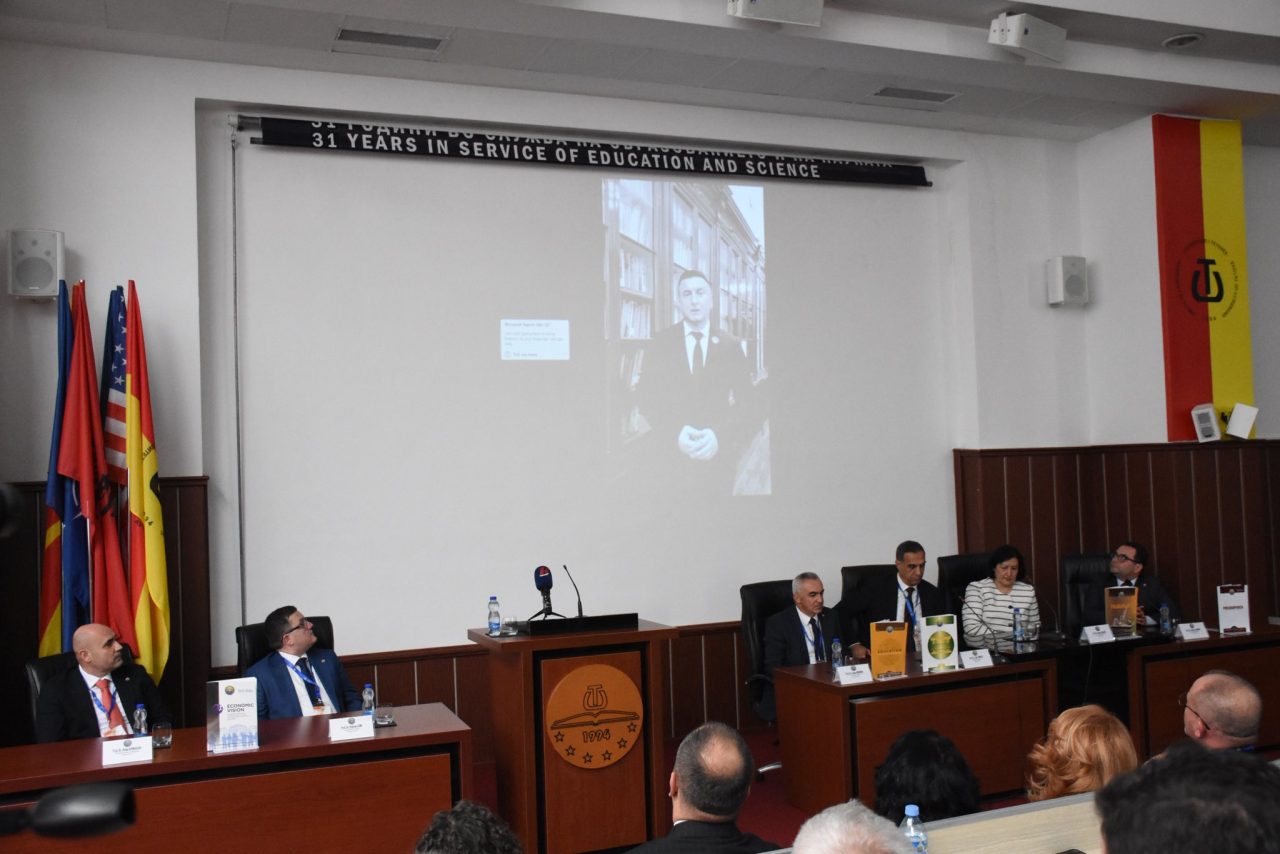
At the opening session of the congress, held in the amphitheater “Sevasti and Parashqevi Qiriazi”, the Rector of the University of Tetova, Prof. Dr. Jusuf Zejneli, addressed the scholars and participants via a video message from London. He greeted the proceedings of the congress and congratulated all participants for their work and contribution to the development of education and science in general.
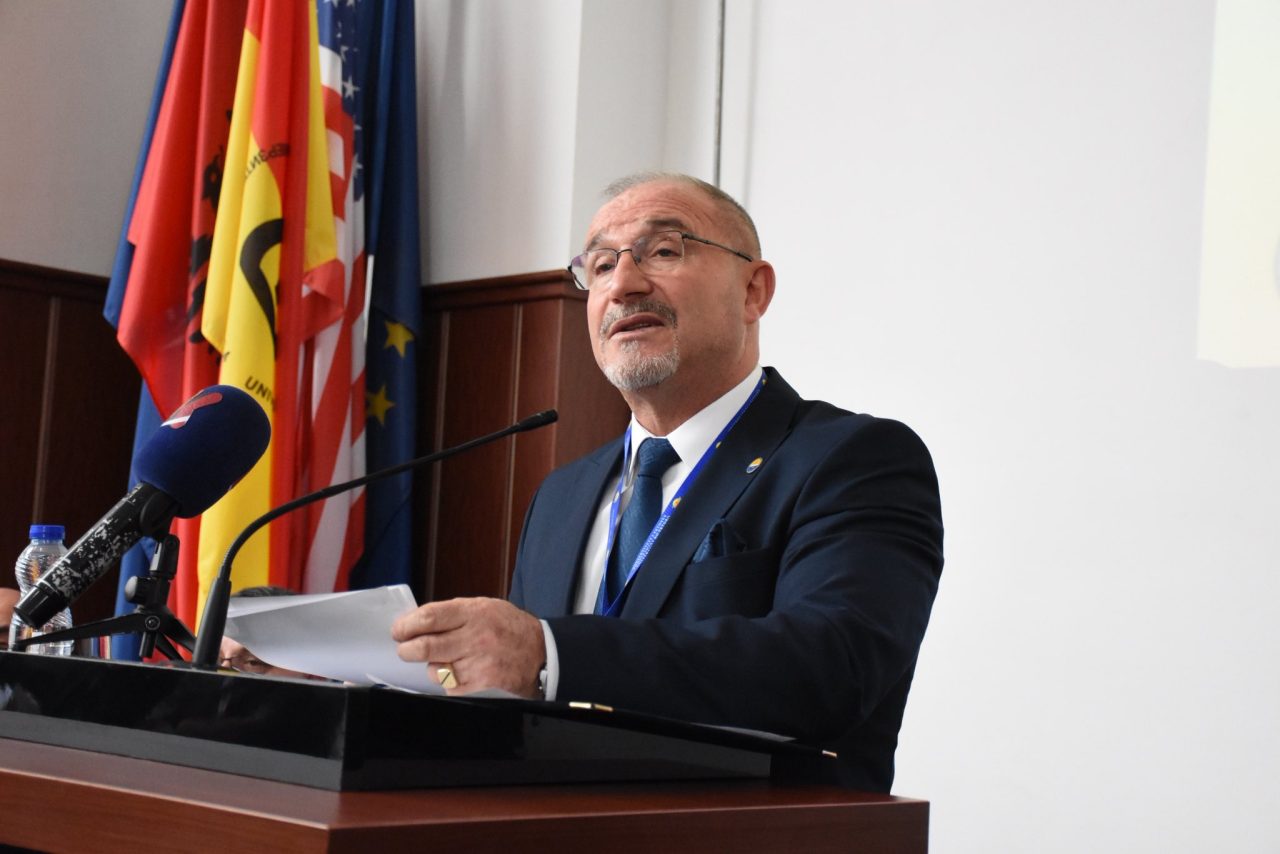
Vice-Rector for Science, Prof. Dr. Vullnet Ameti, in the opening of the International Congress on Human, Social Sciences, and Arts, emphasized that this event crowns the University of Tetova’s efforts to be not only an academic center but also a laboratory of ideas, visions, and major social transformations. “This congress is proof of the power of uniting disciplines — of the interaction between scientific thought and social reality. Over the course of these two days, 265 scientific papers will be presented at the University of Tetova, by more than 450 authors and co-authors, across 25 parallel sessions and 4 plenary sessions, covering the entire spectrum of knowledge: from language and literature to economics, philosophy, pedagogy, and law. Through the five international conferences held within this congress — ranging from those on Balkan and world languages and literatures to the challenges of European integration of the Western Balkans, geoeconomic resilience, sociocultural issues, and the reformation of education in the digital age — the University of Tetova demonstrates that science is dialogue and that knowledge gains meaning only when it is open to the other”, said Prof. Dr. Vullnet Ameti.
He further noted that this congress is taking place at a time when society, both as a concept and as a reality, is undergoing unprecedented changes. The new dynamics of communication, artificial intelligence, migration, and the wars of perception and information are all pushing scientific thought toward a new horizon, where the concepts of knowledge, ethics, and responsibility must be re-examined.
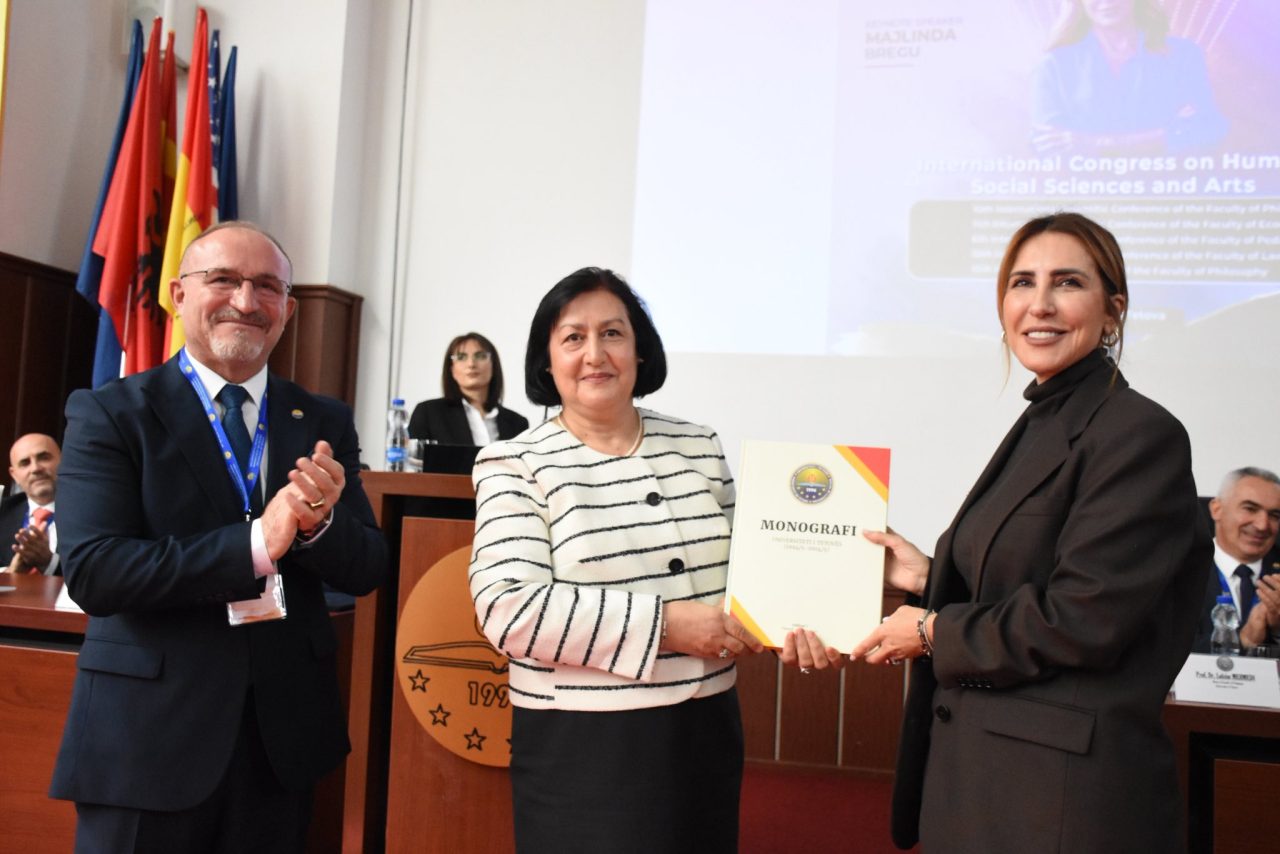
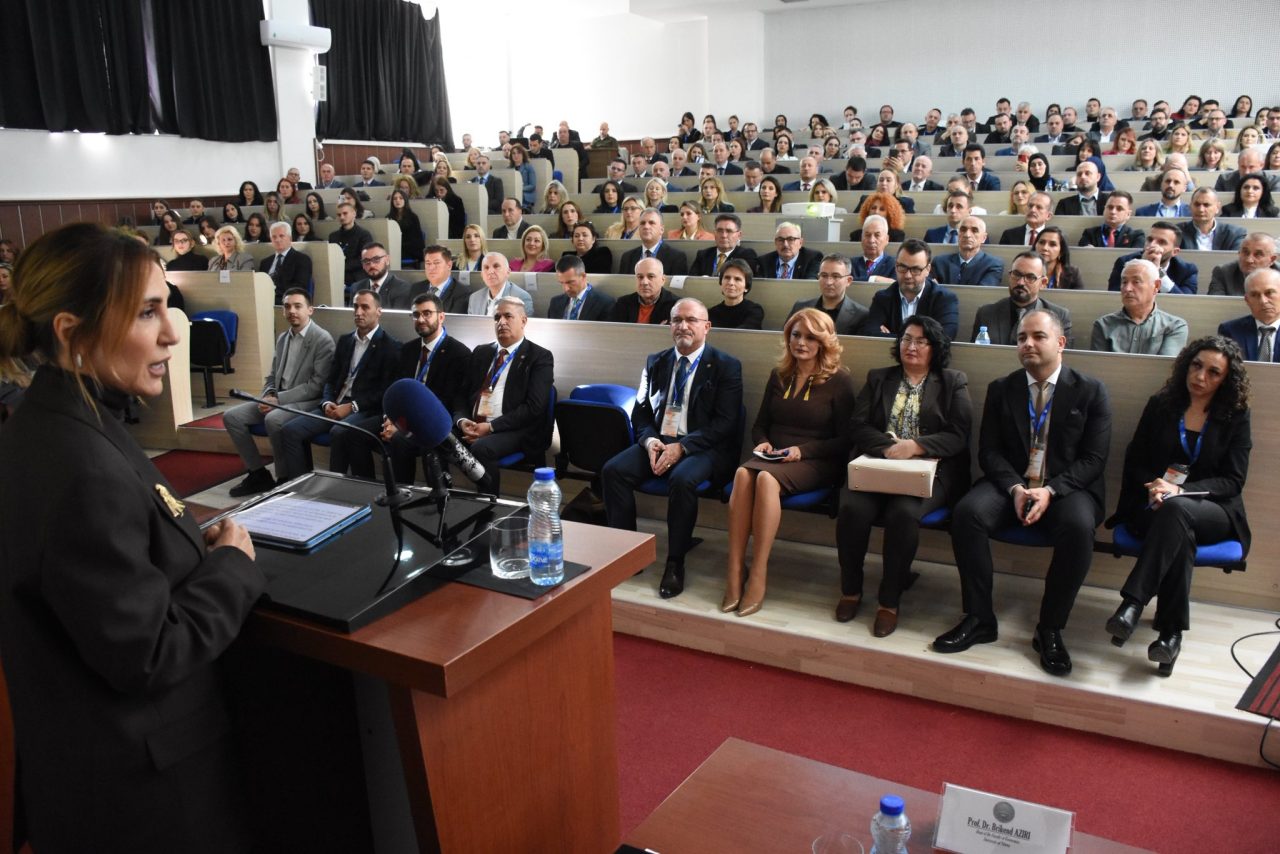
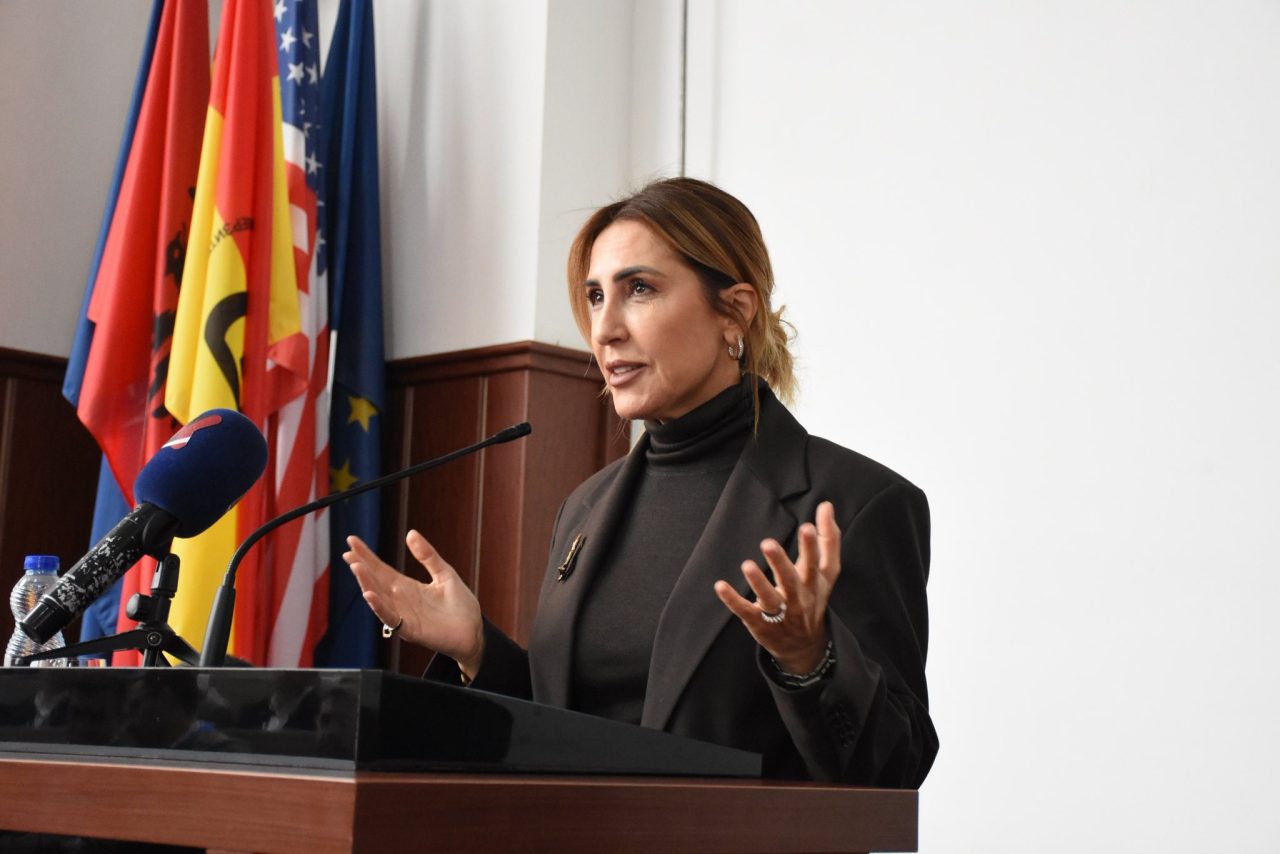
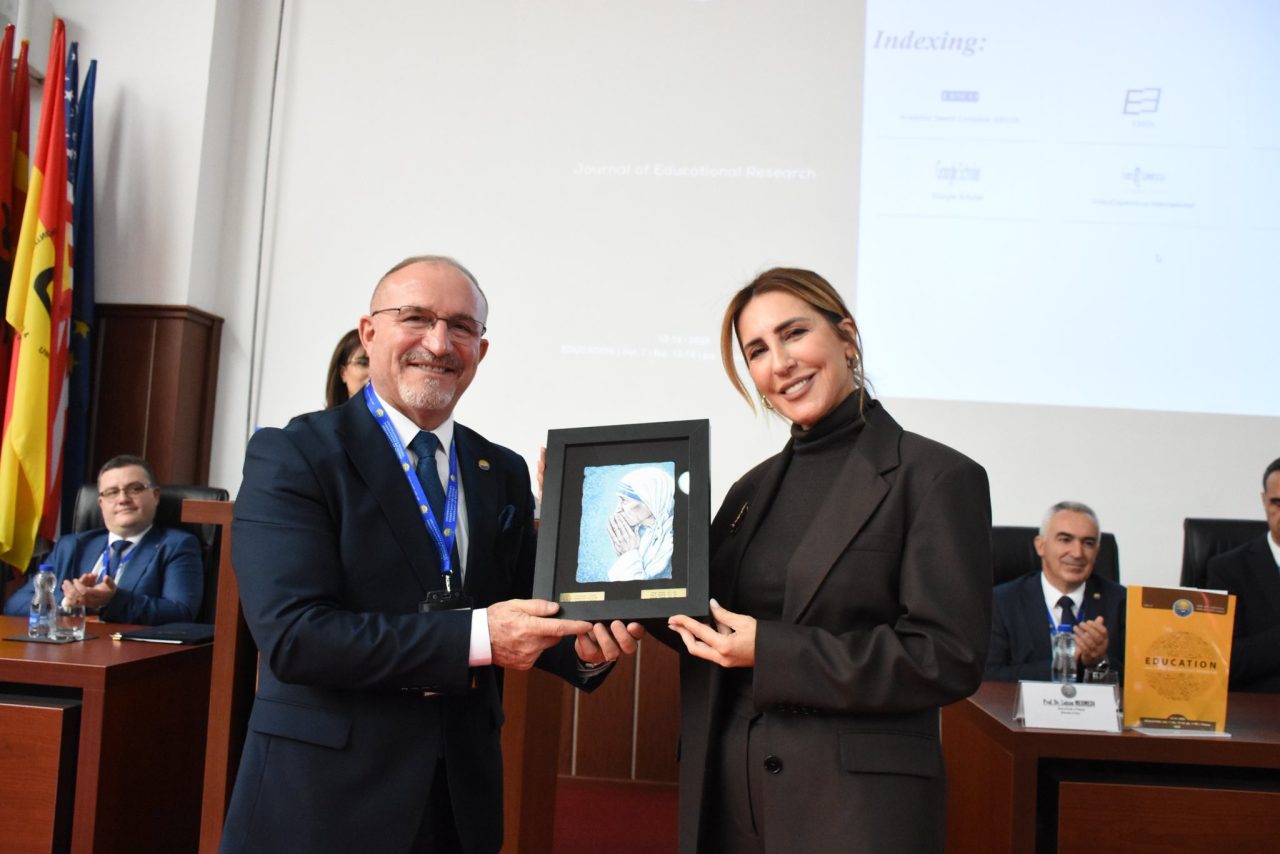
The keynote speaker of this congress was Mrs. Majlinda Bregu, former Secretary General of the Regional Cooperation Council (RCC). In her address, Mrs. Bregu offered a deep reflection on the role of education, global transformations, and the challenges faced by modern society in the Balkans and beyond. At the beginning of her speech, she described the University of Tetova as a living testament to the pursuit of knowledge, freedom, and national dignity, praising its founders as pioneers of Albanian-language education under difficult historical circumstances. Referring to notable figures of Albanian history, she emphasized that “education protects freedom better than an army, and that societies which invest in knowledge build long-term peace and stability”.
In continuation, Mrs. Bregu emphasized the need to strengthen the role of universities as spaces of free thought, scientific research, and ideas that challenge the status quo — because society needs more ideas, not just more titles. Her speech also touched upon the major transformations brought by the modern era – from artificial intelligence and robotics to the energy transition – phenomena that are influencing the way we learn, work, and communicate. She raised important questions about the ethics of technology use and its impact on democracy and public institutions, warning about the risk of algorithmic discrimination if ethical and legal oversight is lacking.
In a direct analysis, she emphasized that the labor market is changing rapidly and now demands practical skills, flexibility, and innovation more than formal diplomas. Mrs. Bregu also spoke about the delays in the European integration process, as well as the obligations of the Balkan countries to transform themselves rather than waiting for changes to come from outside. She provided concrete examples from the initiatives of the Berlin Process, such as the removal of roaming charges and the mutual recognition of diplomas in the region, which demonstrate that cooperation leads to tangible results.
At the conclusion of her speech, Majlinda Bregu addressed the students with a powerful message of hope: “Do not seek the future elsewhere — create it here. Depopulation is not a triumph of freedom, but a collective loss for the nation”. Her speech was met with great interest by the congress participants and university faculty, setting the tone for a new debate on the role of knowledge, ethics, and regional cooperation in the digital age.
The congress will continue its sessions until November 13, 2025, during which participants will have the opportunity to discuss the most current topics in the human, social sciences, and arts, share research experiences, and deepen interuniversity cooperation. One of the special activities of the congress is a workshop organized by the Faculty of Pedagogy, focused on the transformation from traditional classrooms to virtual classrooms and the use of virtual reality glasses for innovative teaching. This congress reflects the University of Tetova’s commitment to promoting scientific research, academic dialogue, and the development of innovative ideas in the humanities, social sciences, and arts, positioning the university as an important academic center in the region.