
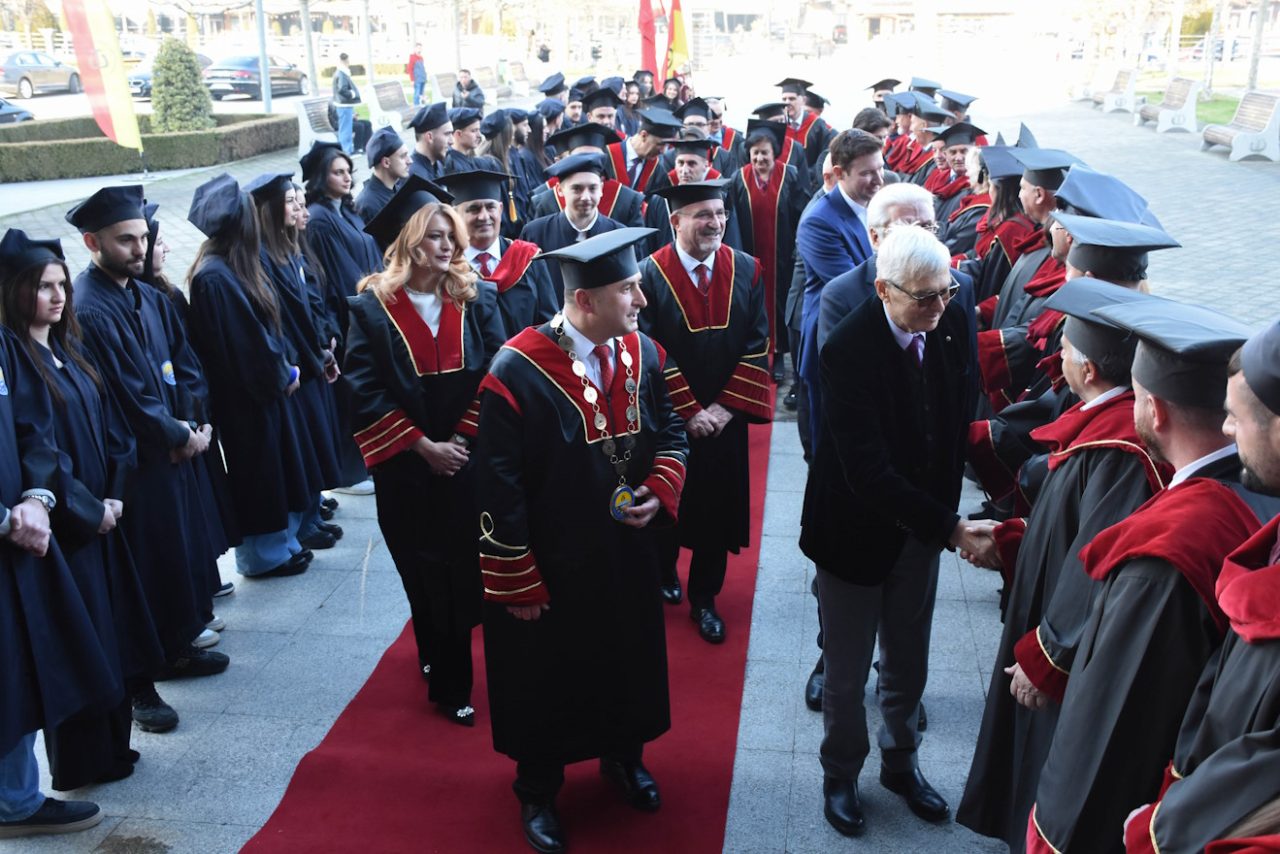

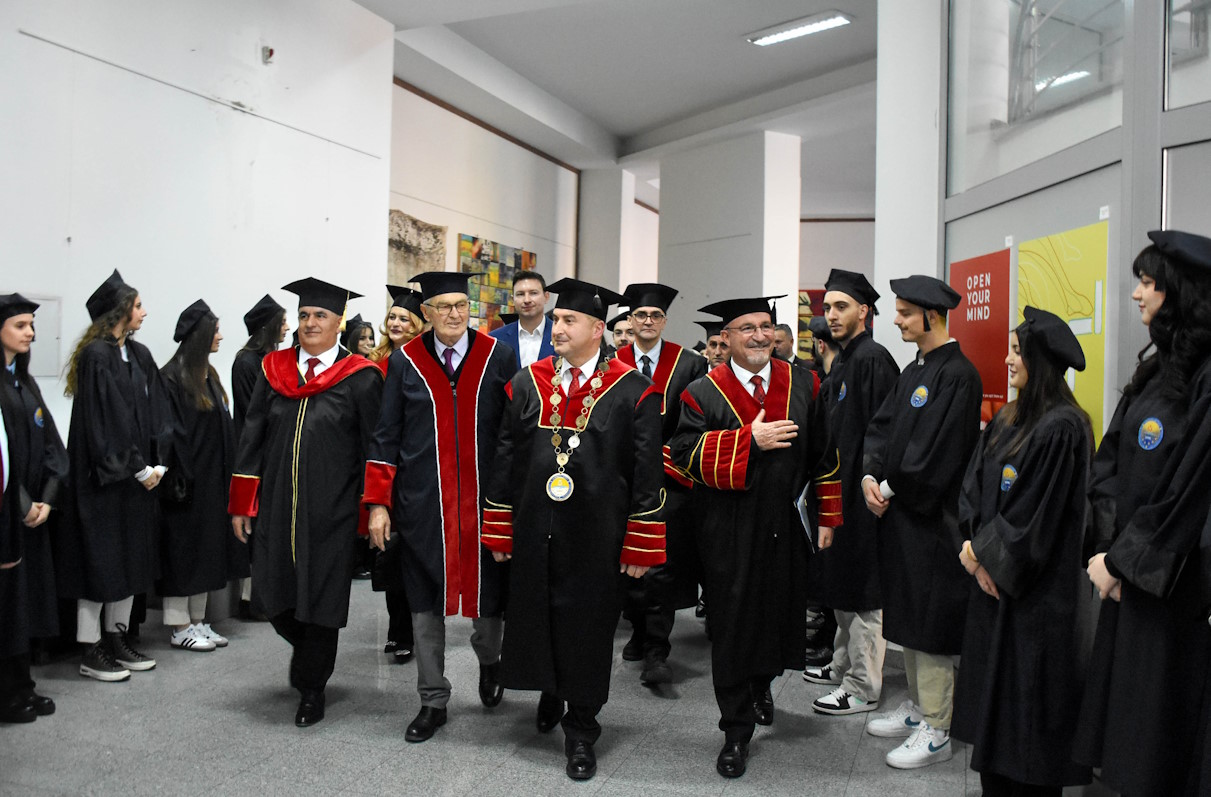


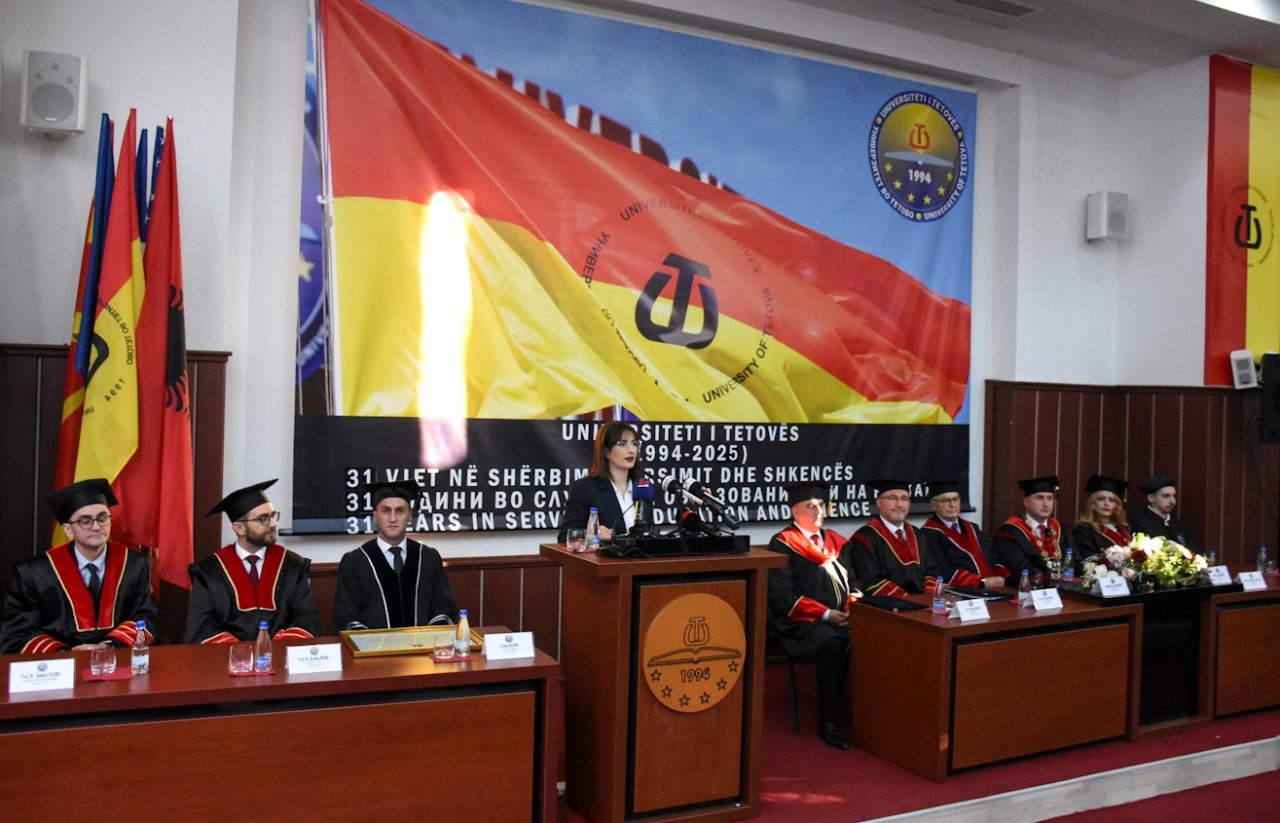
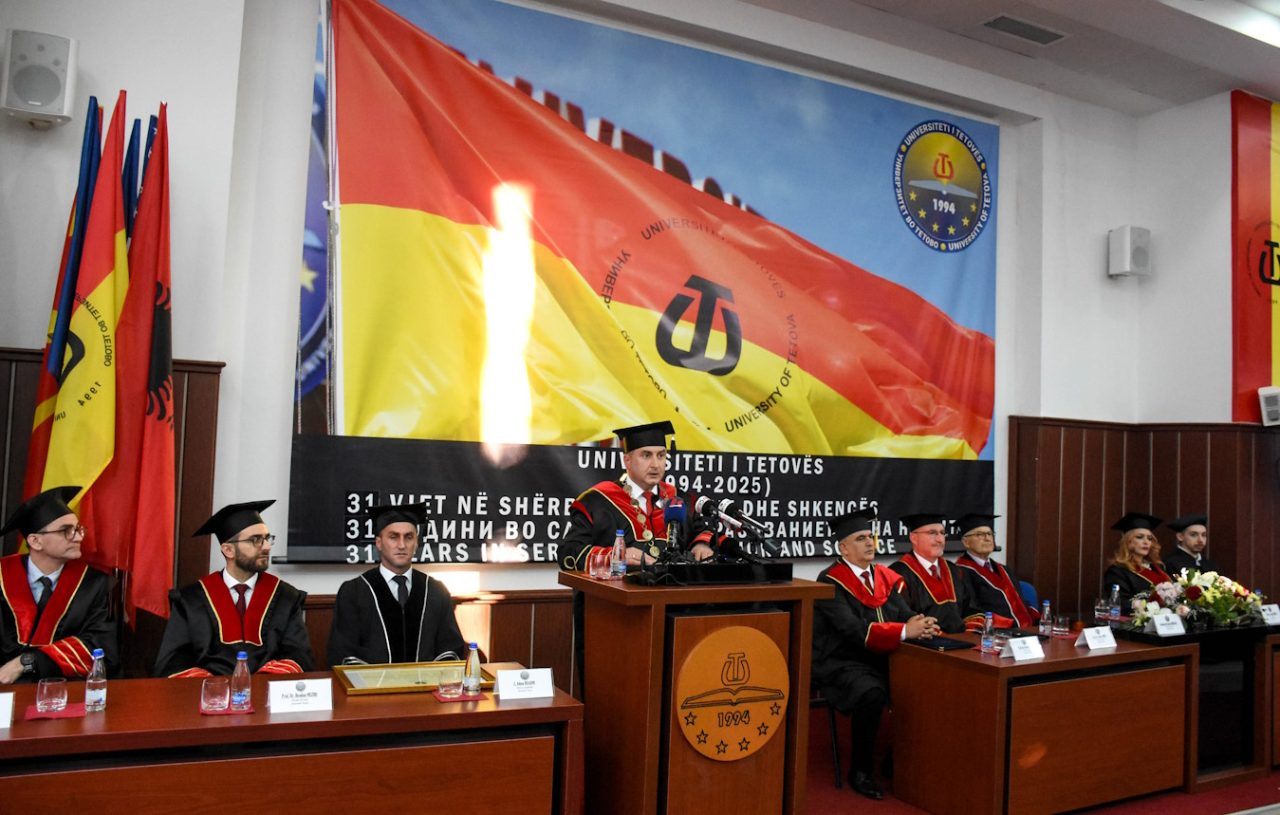

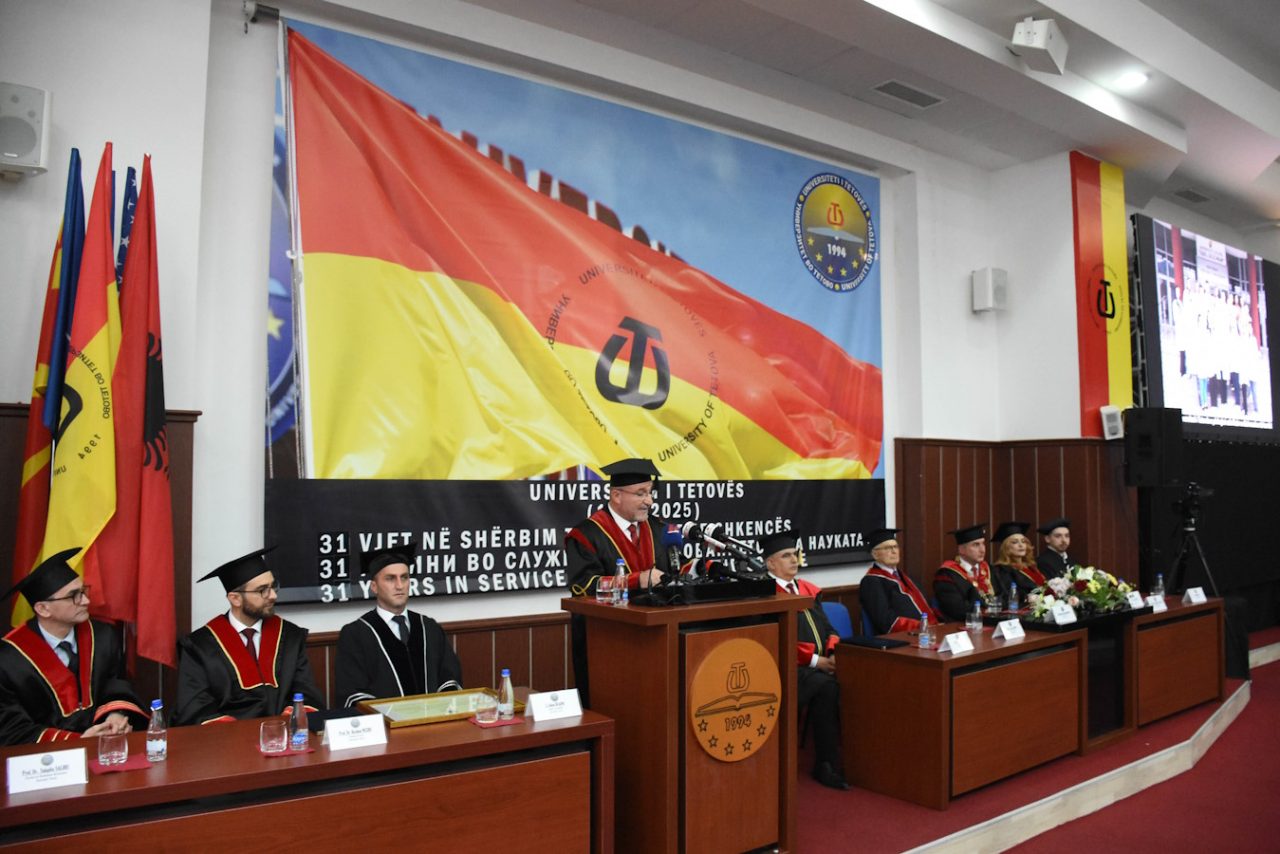

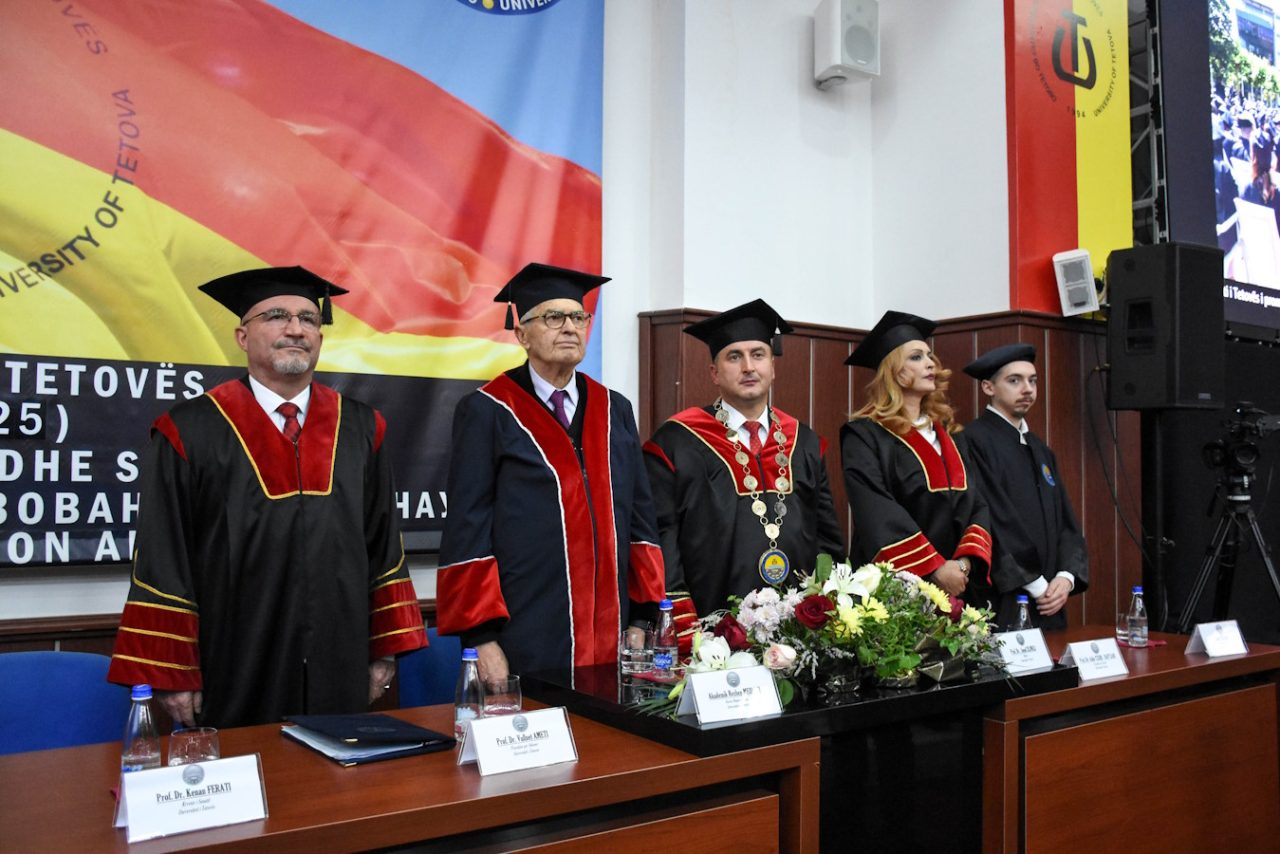



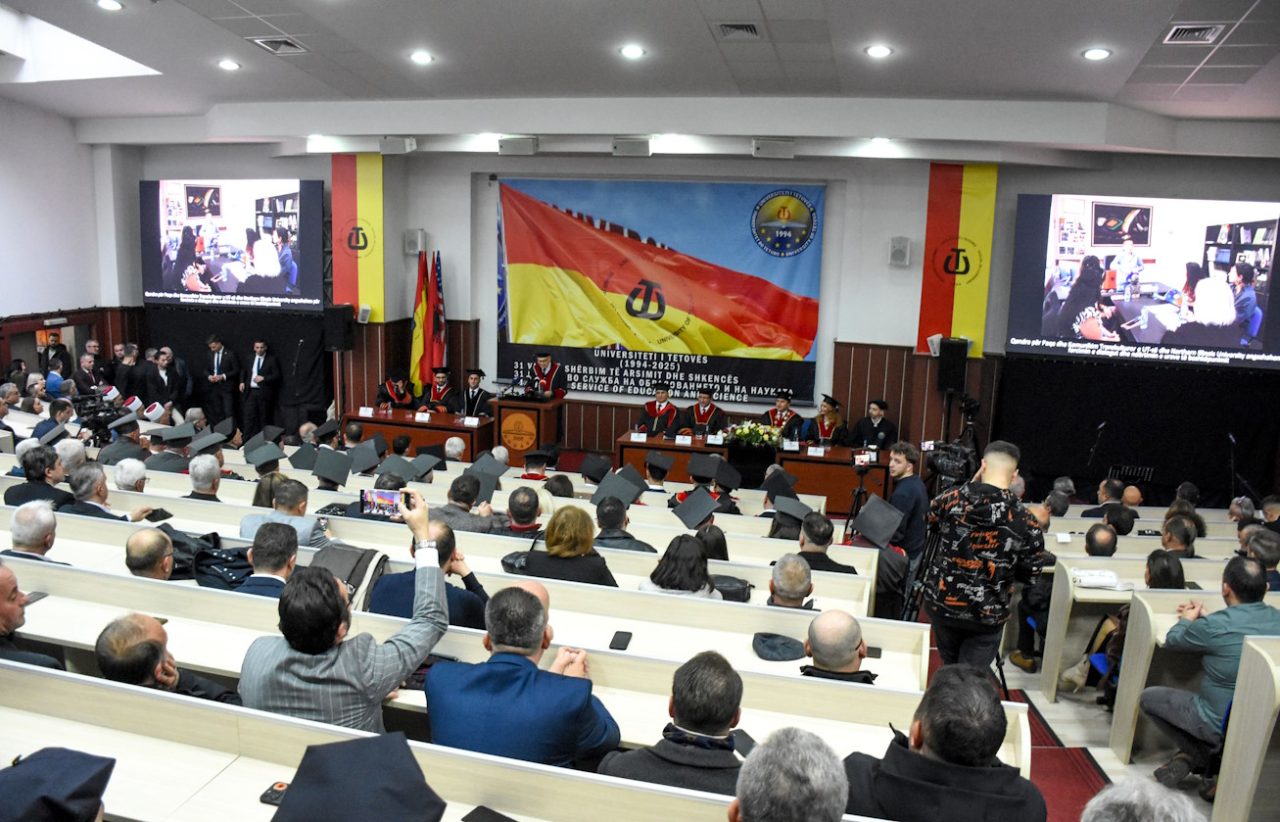
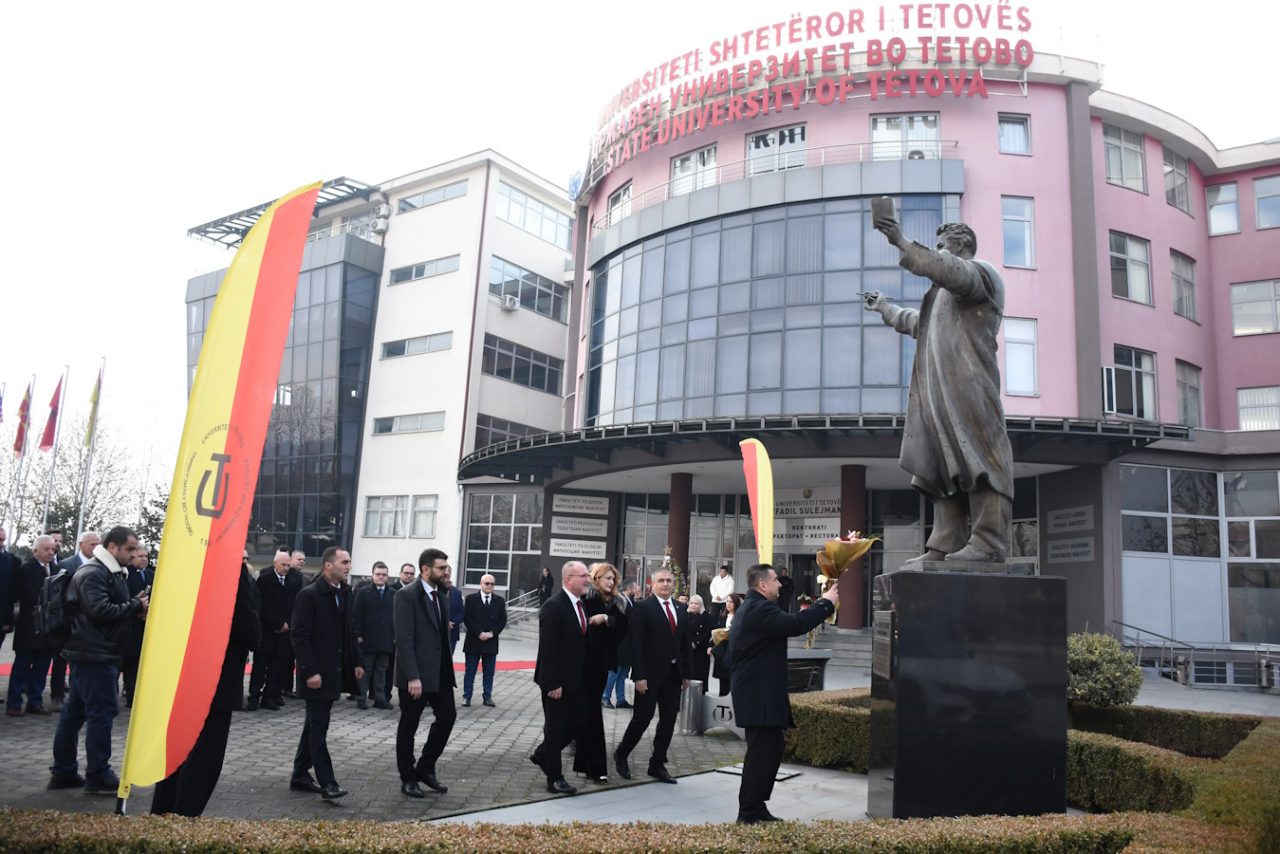

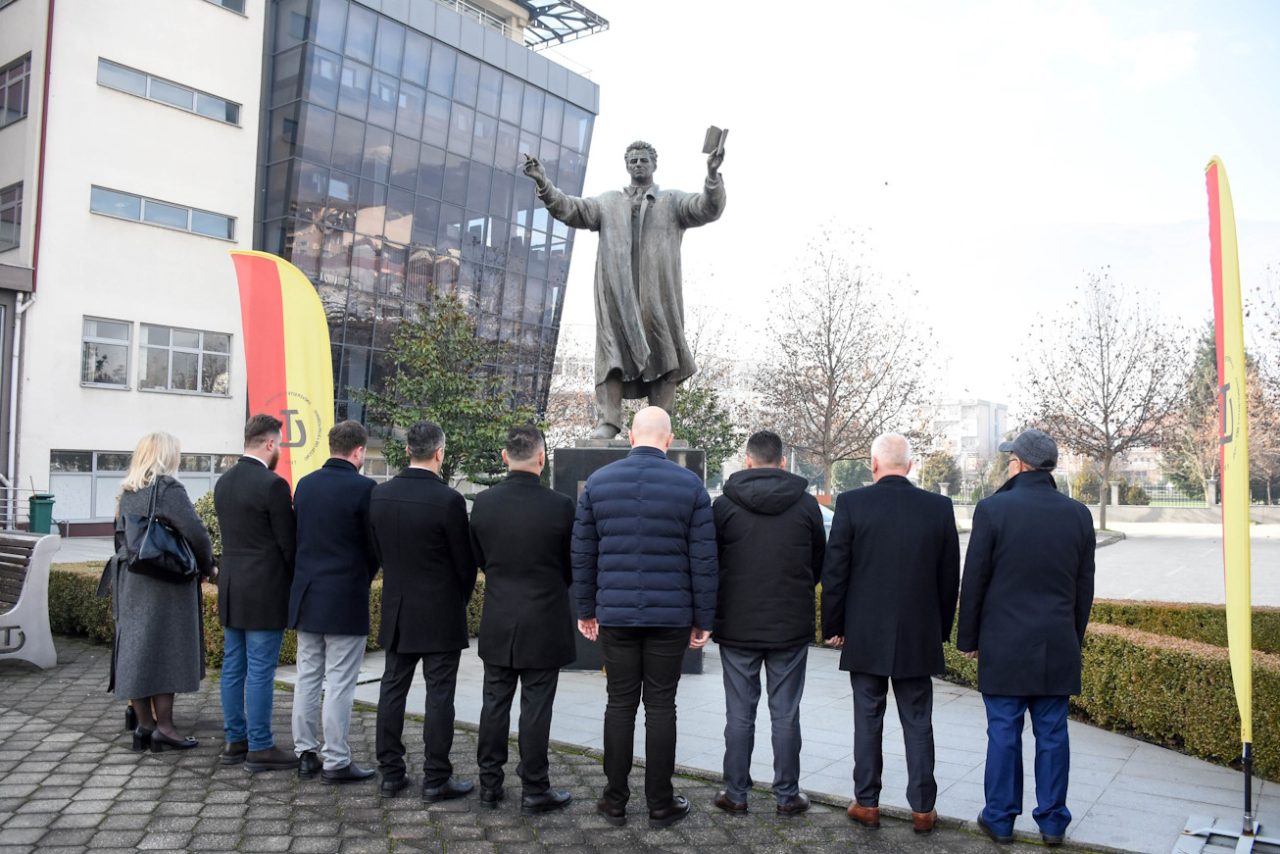

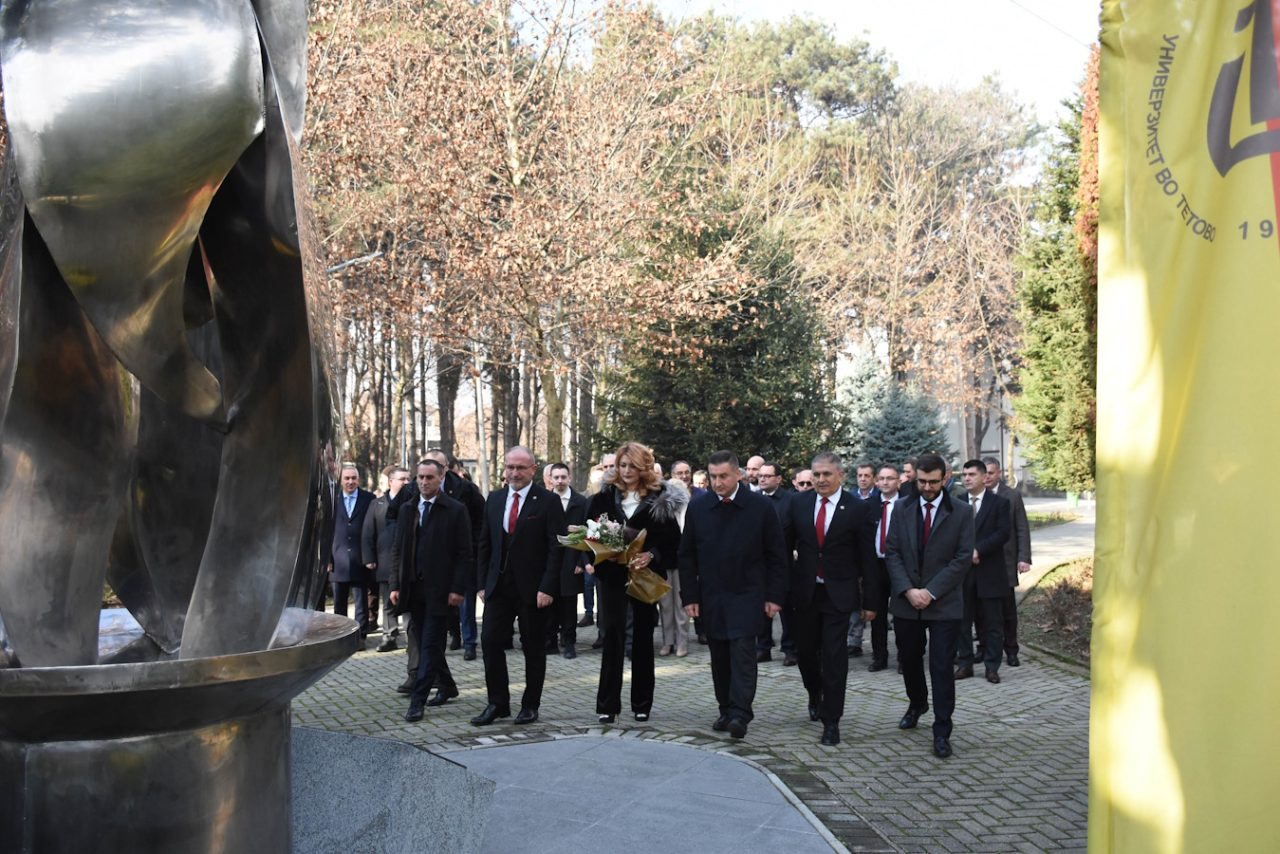
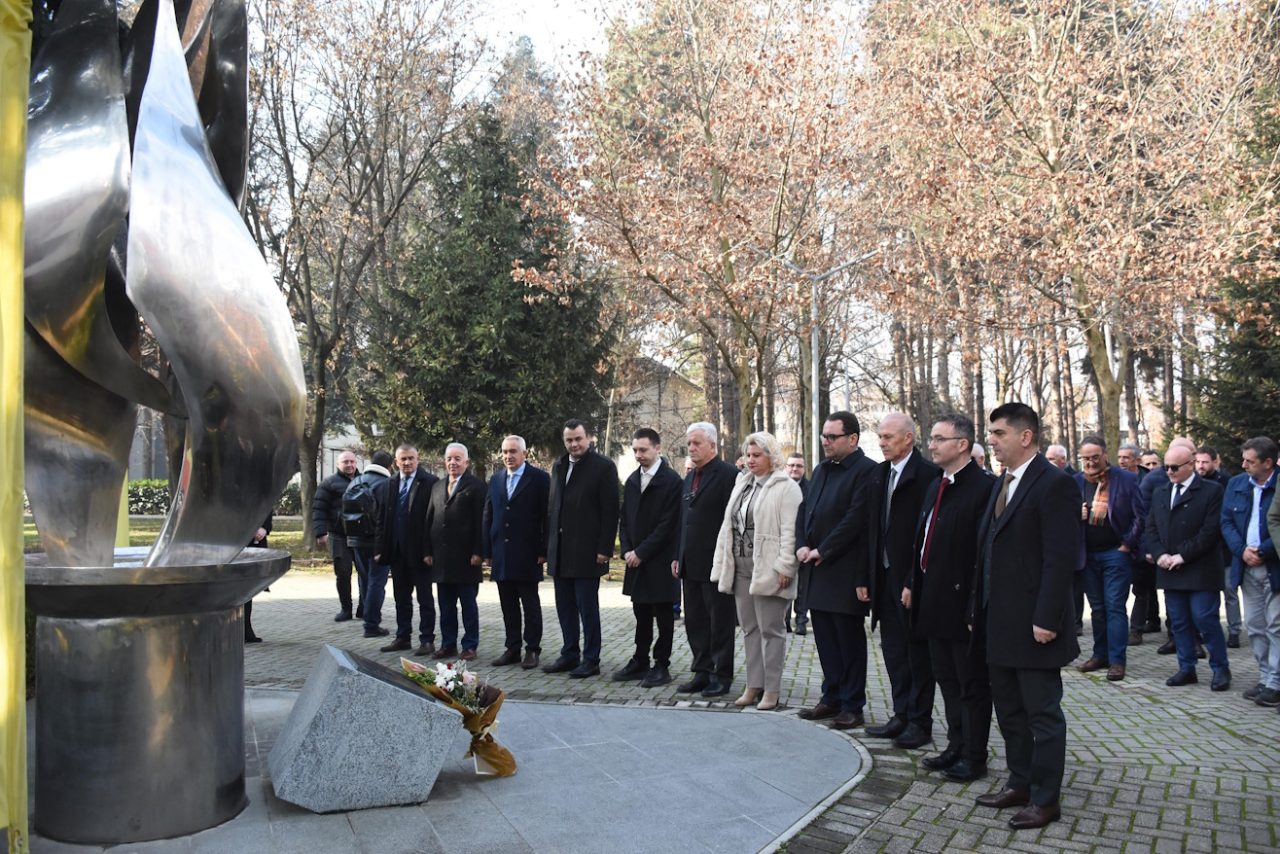
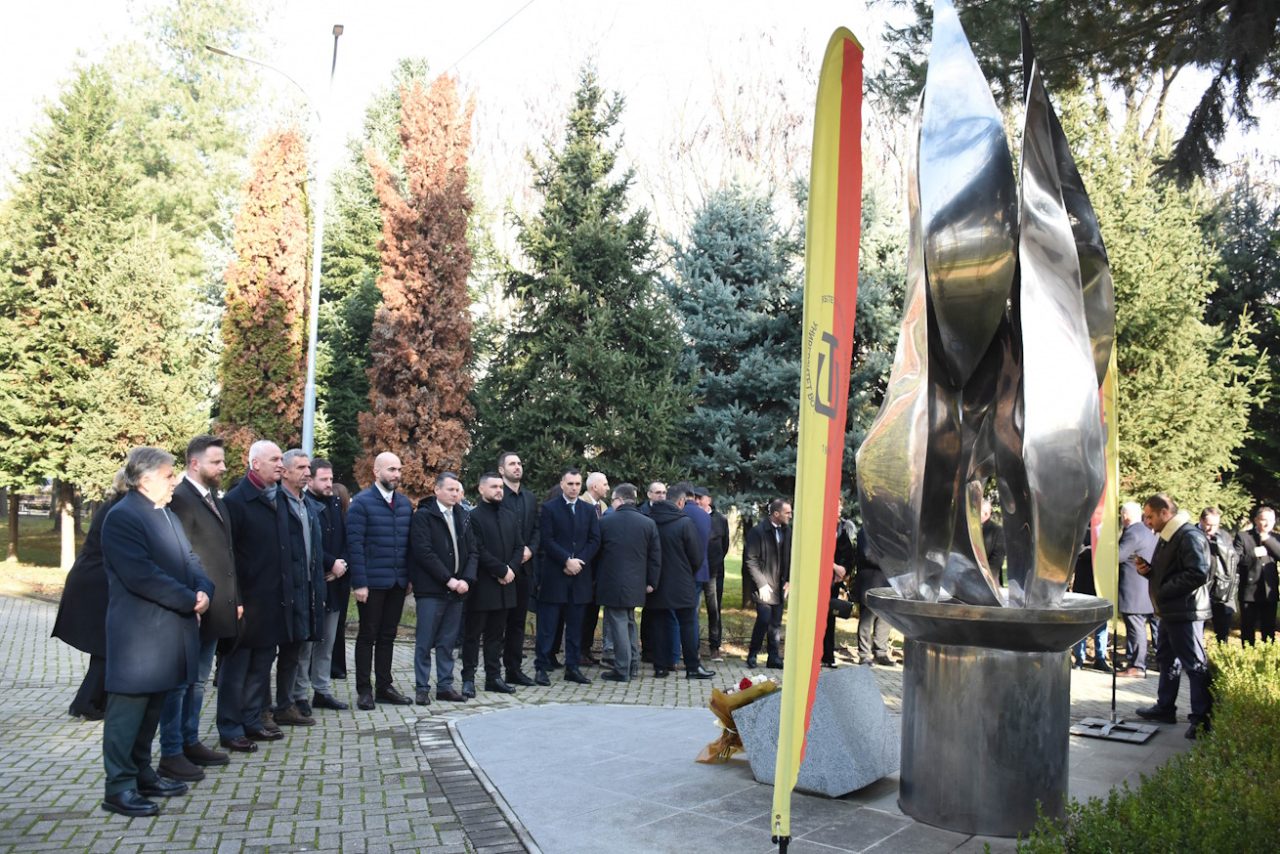
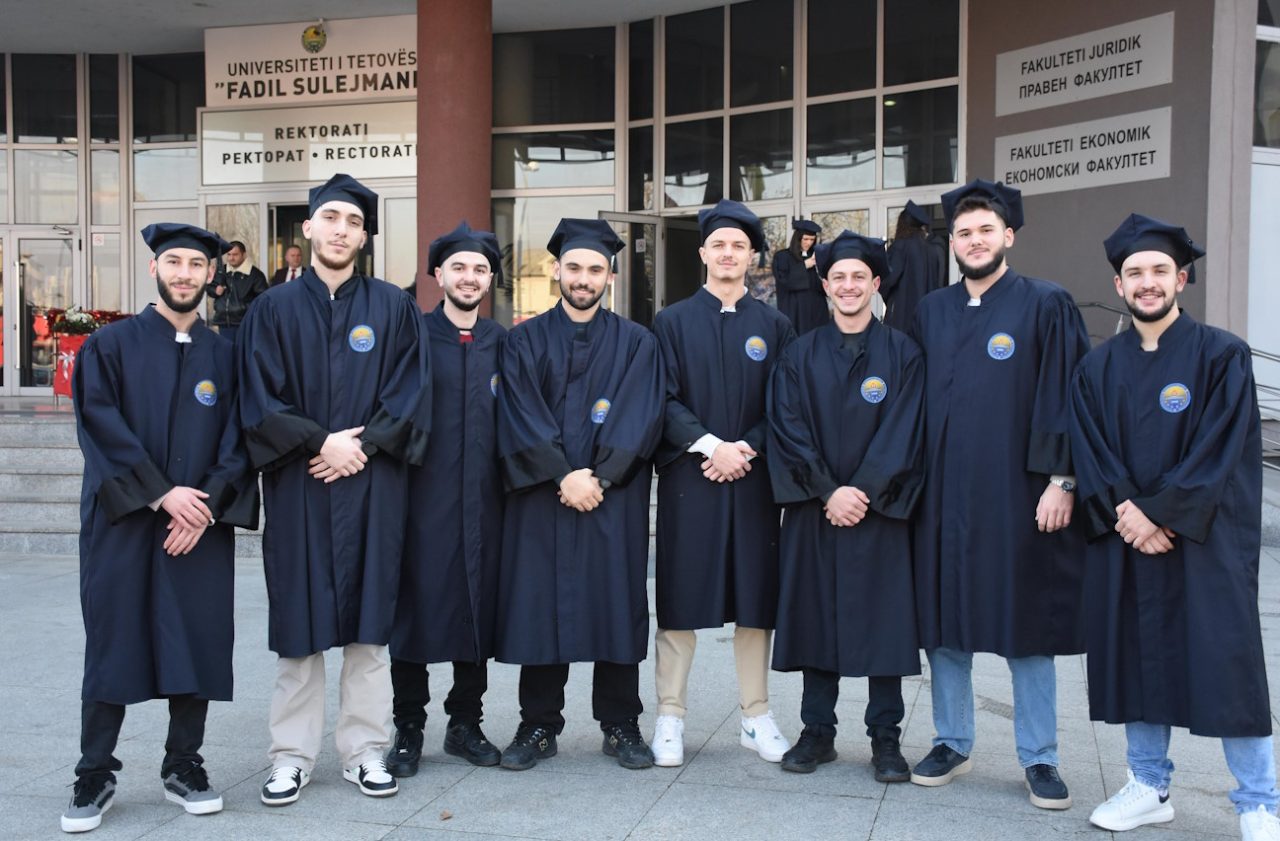
University of Tetova marked the 31st anniversary of its founding through a solemn academy—an anniversary that represents the institutional journey of one of the most important pillars of higher education in the country. Prior to this, the University leadership and administrative staff paid homage in front of the statue of the founder and the first historic Rector of the University of Tetova, Prof. Dr. Fadil Sulejmani, as well as the memorial “Beacon of remembrance”.
Over these 31 years, our University has educated generations of students, built bridges of cooperation, and contributed to the academic, social, and cultural development of our country. This solemn academy serves as a moment of reflection on the achievements to date, as well as a clear orientation toward the challenges and objectives of the future.
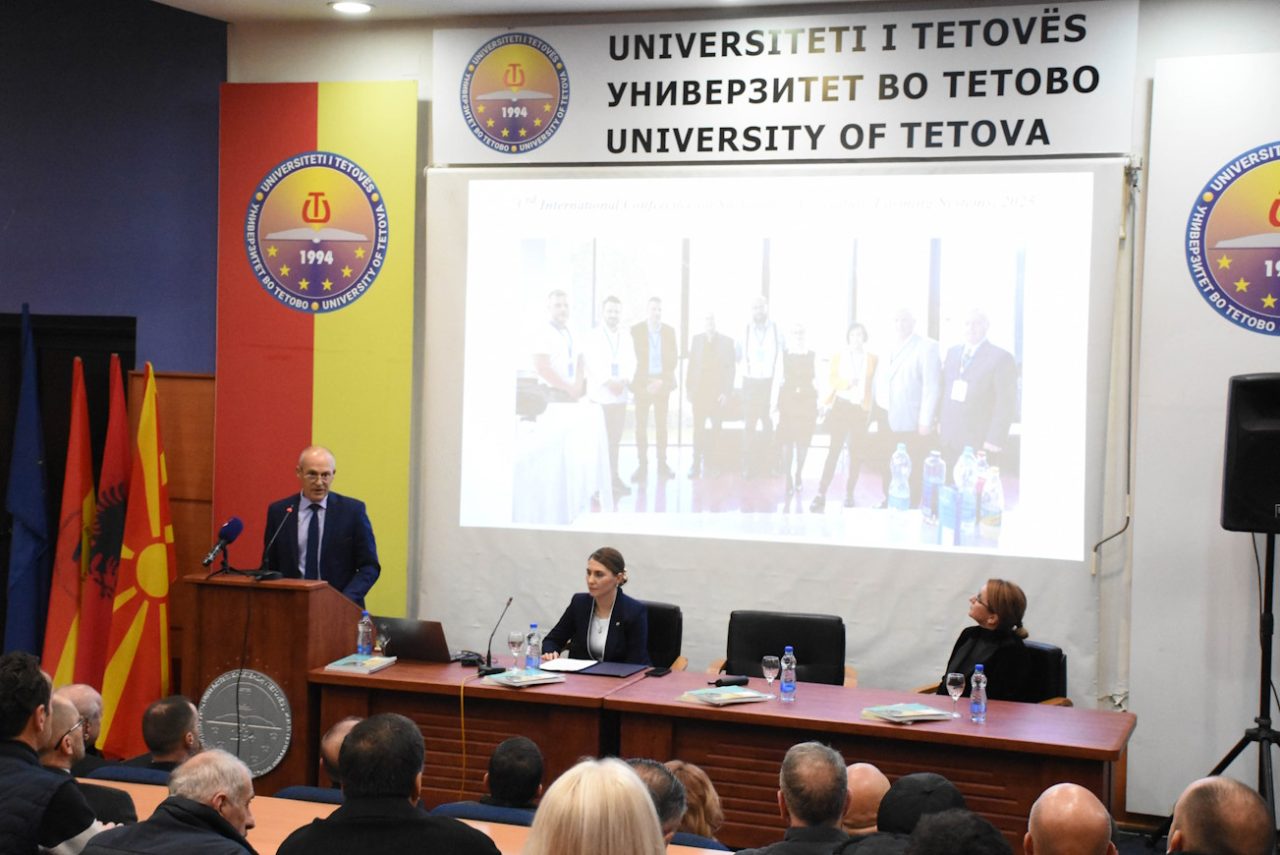
Rector of the University of Tetova, Prof. Dr. Jusuf Zejneli, in his address, delivered a retrospective of the events of the year we have just concluded. He stated that at this solemn academy, we have not gathered merely to conclude a year of work, but also to reflect on our shared journey, to clearly understand where we stand as an institution, and to responsibly define our future direction. “A university is not a calendar of events, but a space where meaning is constructed, a place where knowledge assumes responsibility and where vision is transformed into action. During this calendar year, the University of Tetova has demonstrated that it understands knowledge not as a mere accumulation of information, but as a process of critical, emancipatory, and socially engaged judgment, closely linked to the real needs of society and the challenges of our time. This commitment has been strongly reflected in the University’s scientific activity. The organization of international congresses and conferences, including the International Congress of Natural Health Sciences, Medical Sciences, and Technology, the International Congress on Human, Social Sciences, and Arts, as well as the 19th International Seminar of Albanology, has positioned the University of Tetova as a serious platform for scientific and academic dialogue. The participation of distinguished academic and public figures, as well as renowned scholars from the region and across Europe, demonstrates that our University is present where essential issues of health, education, culture, peace, and social development are discussed. A modern university cannot be closed in on itself. During this year, the University of Tetova has intensified its internationalization efforts and inter-university cooperation, building sustainable bridges with prestigious higher education institutions. Collaborations with Arizona State University, Northern Illinois University, Sam Houston State University, as well as with universities from the United Kingdom, Austria, Poland, Greece, Turkey, and the region, have enabled academic exchange, student and staff mobility, lectures by international professors, and active participation in global higher education projects and networks. These partnerships have not remained merely at a formal level. Study visits to Rome, Austria, Istanbul, Bulgaria, Sweden, and Slovenia; lectures delivered by international professors at our faculties; and the dignified representation of the University at scientific conferences in France, Austria, Greece, Italy, and other European countries, attest to a university that moves, communicates, and contributes beyond borders. The University of Tetova has demonstrated that it is a socially responsible actor. In cooperation with public institutions and civil society organizations, sensitive topics related to public health, mental well-being, equality, inclusiveness, and peacebuilding have been addressed. The marking of World Health Day, World Food Day, World Sports Day, Europe Day, the International Day of Persons with Disabilities, and other awareness-raising activities has placed the University of Tetova at the heart of civic debate and social responsibility. At the center of all this engagement stands the student. University of Tetova views the student not only as a beneficiary of knowledge but also as an active participant and co-creator of it. International student conferences, study visits, workshops, trainings, educational competitions, career fairs, and cultural activities have clearly demonstrated that our students possess intellectual capacity, academic courage, and a sense of responsibility to be active contributors to scientific and social discourse. A fundamental dimension of university life remains the culture of books and critical thought. During this year, significant scientific, historical, cultural, and academic works were promoted. These publications have strengthened the identity of the University of Tetova as a center of critical thinking and knowledge production”,- said the Rector of the University of Tetova, Prof. Dr. Jusuf Zejneli.
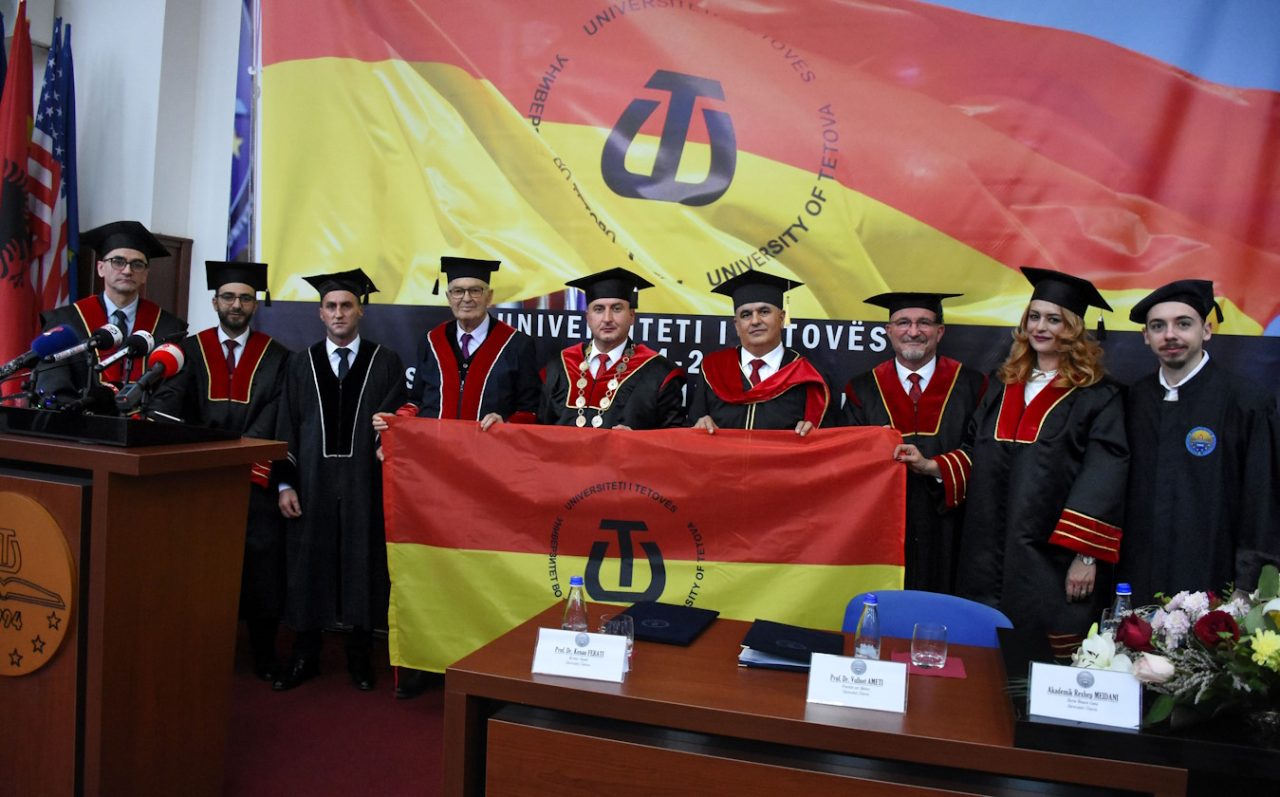
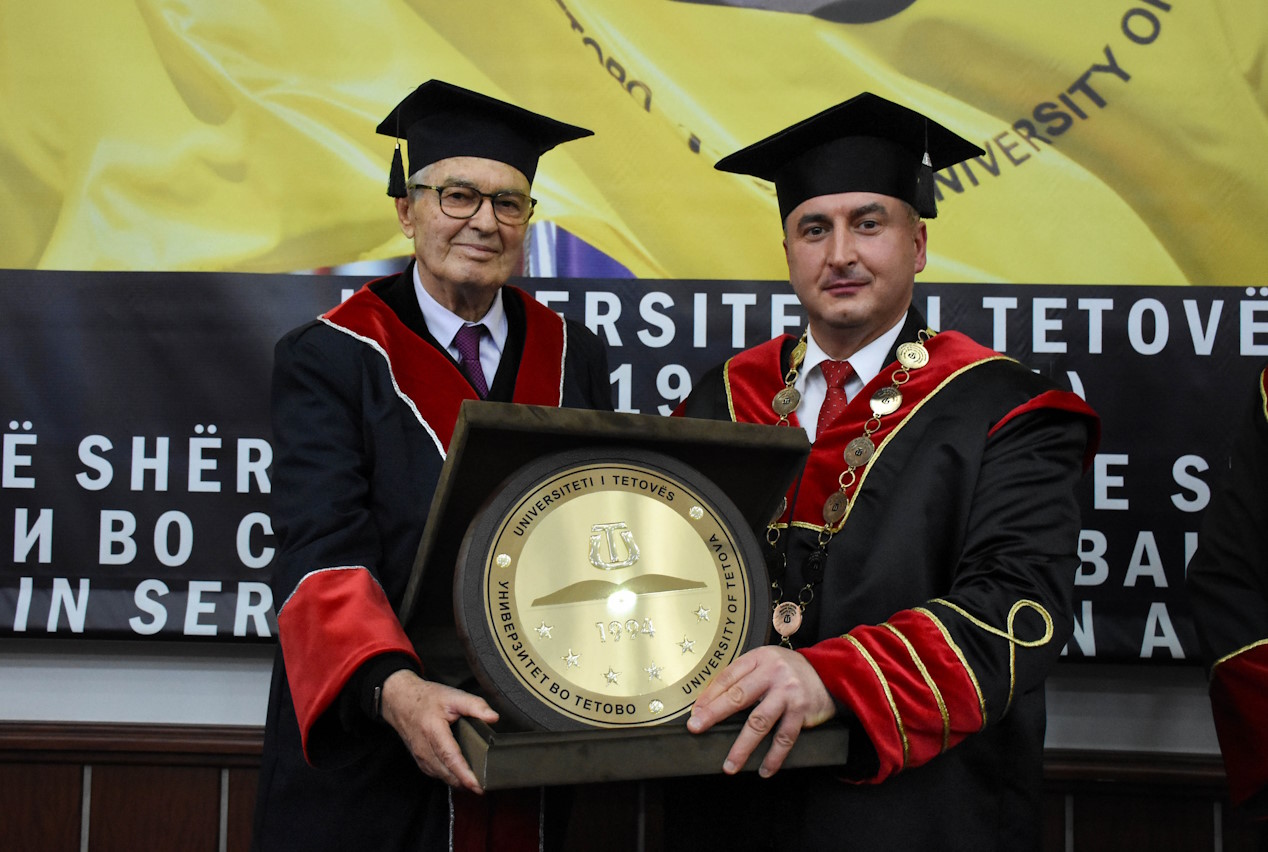
At this academic event, the University of Tetova awarded the title of Doctor Honoris Causa to a distinguished figure of Albanian public and intellectual life, Academician Rexhep Meidani. This high honor represents institutional recognition of his extraordinary contribution to the advancement of education, science, democracy, and human values, as well as his unwavering commitment to strengthening dialogue, peace, and cooperation in the region and beyond.
The address on the life and work of Academician Rexhep Meidani was delivered by the Vice-Rector for Science, Prof. Dr. Vullnet Ameti. He emphasized that the University of Tetova, as a higher education institution operating in the Albanian language in the Republic of North Macedonia, has, since its founding, upheld the mission of honoring the most important national figures who have distinguished themselves through their achievements in science, culture, education, civil society, and politics. The leadership of the University of Tetova has consistently expressed respect and high esteem for Academician Rexhep Meidani—a personality with valuable achievements in the fields of science, academic life, and Albanian politics. Furthermore, he noted that Rexhep Meidani, as a scientist, has distinguished himself through his scientific and research work, having published numerous studies and books both domestically and internationally. As a politician, he has been recognized for his principled, visionary, and democratic stances. As President of the Republic of Albania (1997–2002), he served the country with dignity, dedication, and integrity, promoting regional stability and economic development. In the continuation of his address, the Vice-Rector for Science presented the biography of Mr. Rexhep Meidani.
“Rexhep Qemal Meidani was born in Tirana on 17 August 1944. He holds a Doctorate of Sciences, is a Professor, a member of the Academy of Sciences of Albania (since 2003), and an External Member of the Macedonian Academy of Sciences and Arts (since 2015). He served as Secretary General of the Socialist Party from 1996 to 1997 and as President of Albania from 1997 to 2002. He has also participated in numerous public and social activities and has published many academic studies and university-level textbooks. He is an honorary member of many national and international associations. Professor Rexhep Meidani has been awarded the title of Doctor Honoris Causa by Istanbul Technical University (1998); Aristotle University of Thessaloniki (1998); University of Sofia (1998); the American University of Rome (1999); the Mediterranean University René Cassin in Bari, Italy (1999); the University of Bridgeport, Connecticut, USA (2001); the University of Portsmouth, England (2002); and New York University Tirana, Albania (2016). He has been honored with several prestigious awards, including the F. Lux Award from Clark University, Worcester, Massachusetts, USA (2000); the Jan Masaryk Medal from the University of Economics in Prague (2001); and the Chancellor’s International Medallion of Distinction from the University of New Orleans, USA (2002). He has received numerous national and international decorations, medals, and awards for his educational, scientific, social, and political contributions, including: the Order “Naim Frashëri”, Third Class, Albania (1981); the “Republic Award,” Second Class, Albania (1988); the Gold Medal of Merit of the City of Athens, Greece (1998); the Great Cross of Salvation, Greece (1998); the Medal of Merit of the Universal Postal Union (1998); the Honorary Medal of the “Democritos” Center, Greece (1998); the National Order “The Golden Star of Romania,” Romania (1999); the Golden Key of the City of Worcester, Massachusetts, USA (2000); the Order of King Tomislav, Croatia (2001); the Golden Key of the City of Prague, Czech Republic (2001); the “Schuman” Medal from the Robert Schuman Foundation, Paris, France (2001); the National Order of Merit, Malta (2002); International Honorary Citizen of New Orleans, USA (2002); the Golden Key of the City of New Orleans, USA (2002); and the Gold Medal of Freedom, Pristina, Kosovo (2010), among others. In Albania, he has published more than thirty scientific works (monographs, brochures, undergraduate and postgraduate textbooks) and hundreds of scientific, social, political, and biographical articles, as well as interviews, speeches, and analytical writings. He has also published studies abroad, including in France, Germany, Italy, England, the United States, the Netherlands, Turkey, Bulgaria, Greece, Romania, China, Hungary, and other countries”,- said, among other remarks, the Vice-Rector for Science, Prof. Dr. Vullnet Ameti.
Meanwhile, the decision of the Senate to award the title of Doctor Honoris Causa upon Academician Rexhep Meidani was presented by the President of the Senate of the University of Tetova, Prof. Dr. Kenan Ferati.
The laureate, Academician Rexhep Meidani, thanked the University of Tetova for this special honor and presented several personal reflections on education and its evolution, on the continuous acquisition of knowledge, and on its translation into employment and professional evaluation. “One initial idea relates to the necessary changes in academic formation, where a more active role should be played by classroom teaching, in which learning should be facilitated rather than knowledge merely dictated or transmitted. Furthermore, student interest and curiosity should be stimulated through dynamic, interactive, and simulation-based methods, participation, and the development of critical thinking, as well as the creation of an environment that encourages inquiry and discovery. This is because, under today’s conditions, students acquire knowledge not only in the classroom, but also through interaction with other students during various activities and group discussions, as well as from the internet, multimedia, and other sources of information. Another idea that requires further elaboration is that of lifelong learning. Years ago, after graduation, the knowledge acquired was, in most cases, sufficient to some degree for an entire lifetime. Today, however, the obsolescence of acquired knowledge is extremely rapid, and without continuous updating of knowledge or acquired skills, they can quickly become outdated for employment. For this renewal, the university must assume a new role in shaping and stimulating a new culture among students, one in which, at any moment throughout their professional lives, they are prepared to improve their skills and knowledge. This objective is also served by continuous qualification and education, both at universities and in specialized centers. Indeed, in an era of rapid technological progress, global economic changes, and social disruptions, career paths and employment themselves may become increasingly uncertain, even overturning traditional notions of career trajectories and job security for many workers. Likewise, the rise of automation, robotization, and the penetration of artificial intelligence, along with the flourishing of a gig-based economy, are profoundly transforming the nature and content of work. Under such conditions, individuals must learn to adapt and evolve, without hesitation, toward new skills and competencies to remain resilient in a continuously changing labor market. At the same time, the structure of society itself will be further shaped within a physical–virtual dichotomy, where the pace of technological advancement will increasingly blur the boundaries between the physical and virtual worlds, creating a digital reality that is as exciting as it is unsettling. Moreover, in confronting these changes, we are compelled to reconsider fundamental issues related to our identity and values, as well as our place as individuals and as nations in an ever more interdependent, interconnected, and complex world. In my judgment, when facing the challenges of the near future, the only constant is change, something that must be reflected in our ability to adapt and reorient ourselves. This must be the key to our survival and success, the DNA of our individual and social behavior”, – said, among other remarks, the laureate of the Doctor Honoris Causa title, Academician Rexhep Meidani.
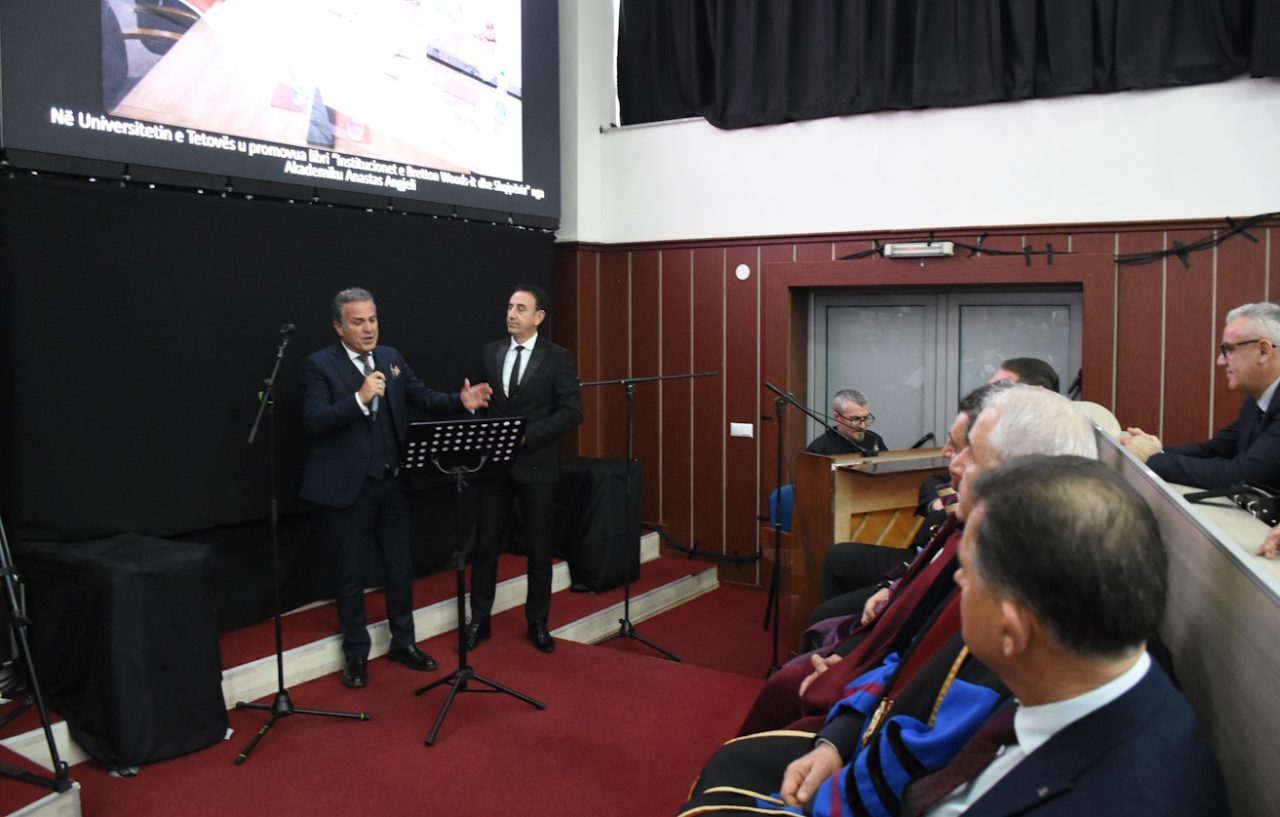
Through this solemn ceremony, the University of Tetova reaffirms its mission to honor individuals who, through their work and integrity, have left a profound mark on the development of society and have served as an inspirational model for new academic generations. The event concluded with several artistic performances by Professors Kastriot Tusha and Bajramali Idrizi, accompanied on the piano by Shkëlzen Baftijari.