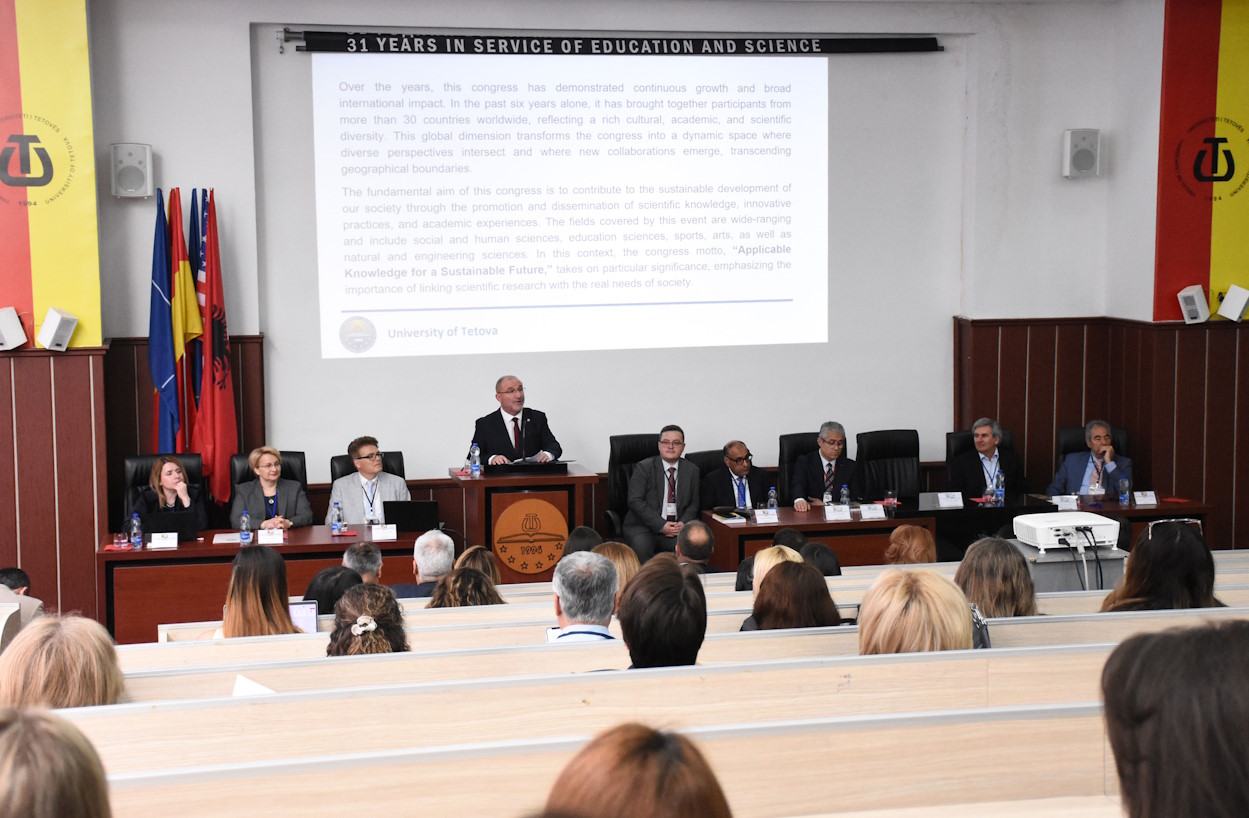
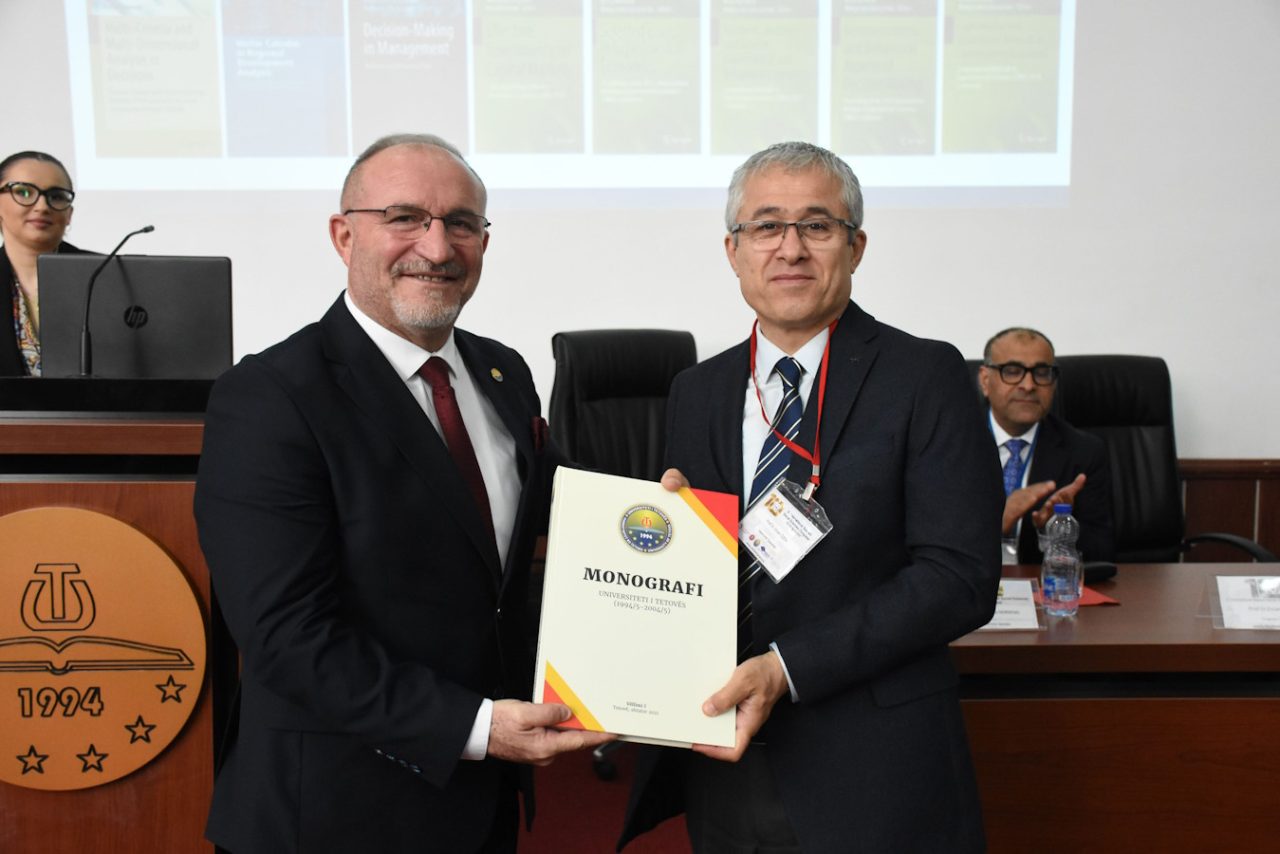
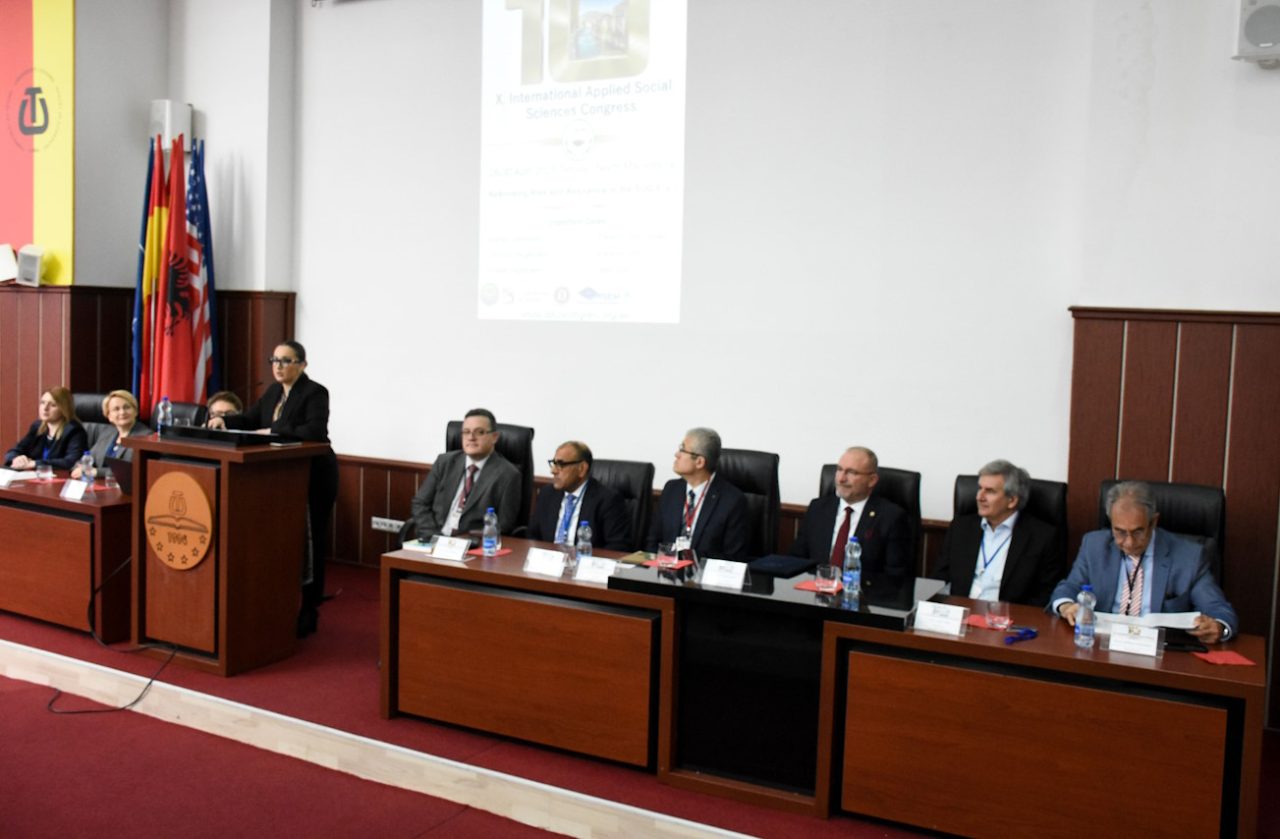
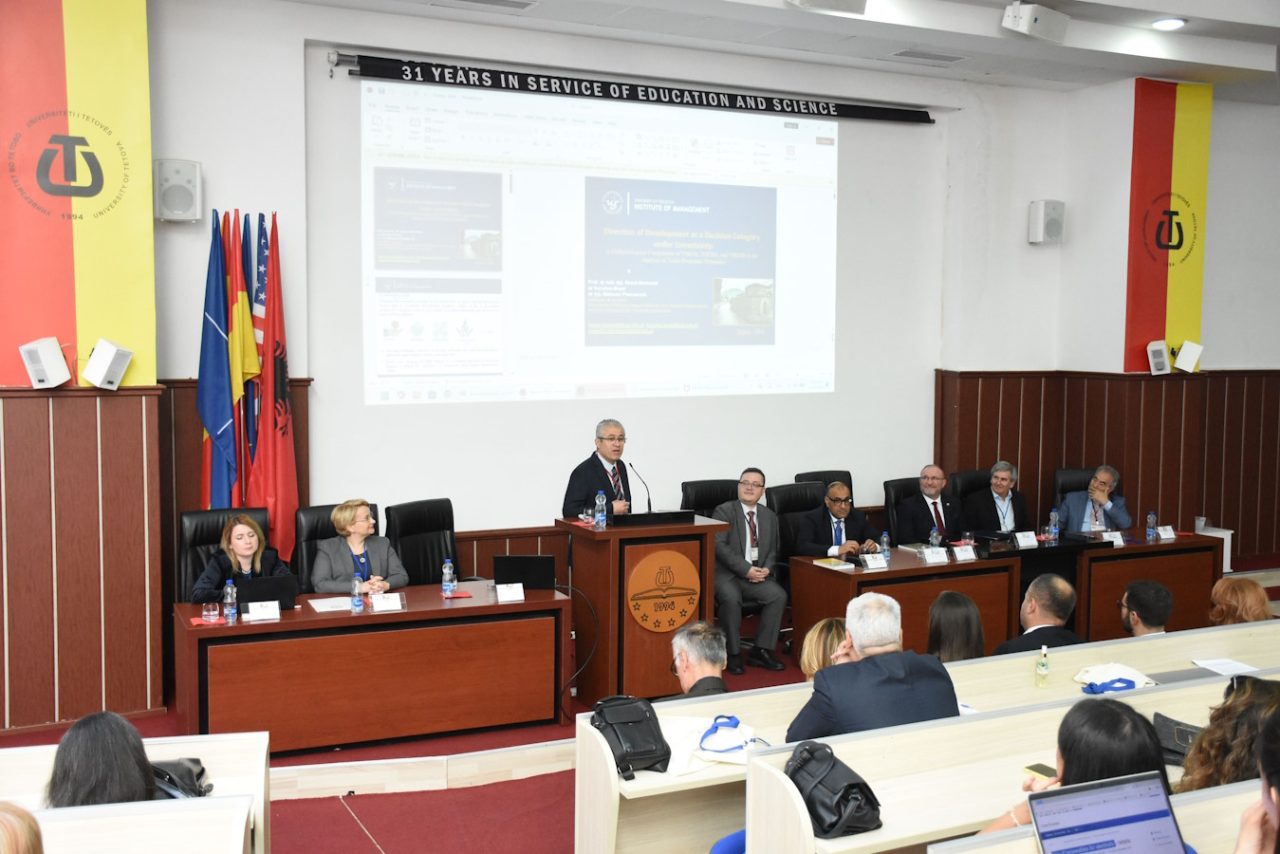
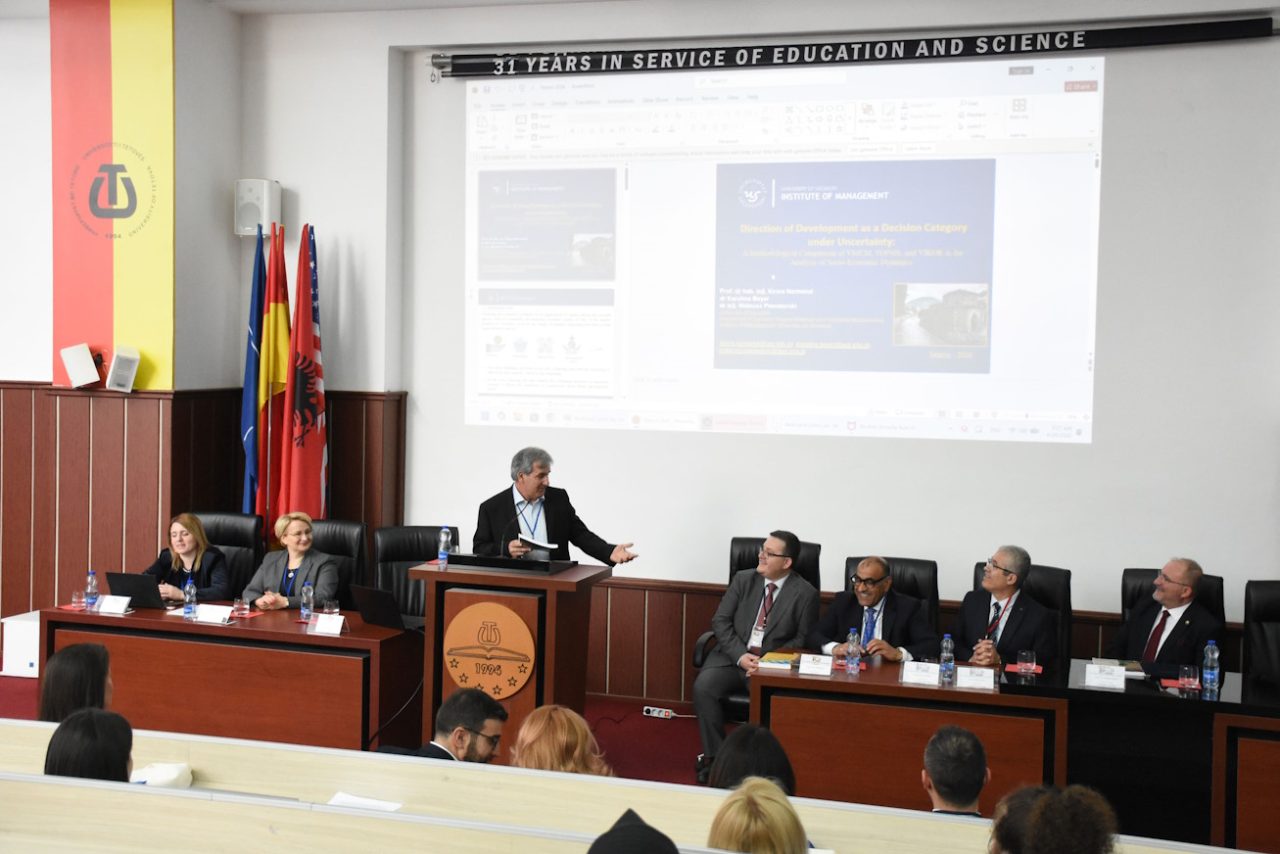
At the Faculty of Economics of the University of Tetova, the X. International Applied Social Sciences Congress (C-IASOS – 2026) has begun its proceedings, with the topic “Rethinking Risk and Resilience in the SDG Era”, bringing together academics and researchers from well-known international universities.
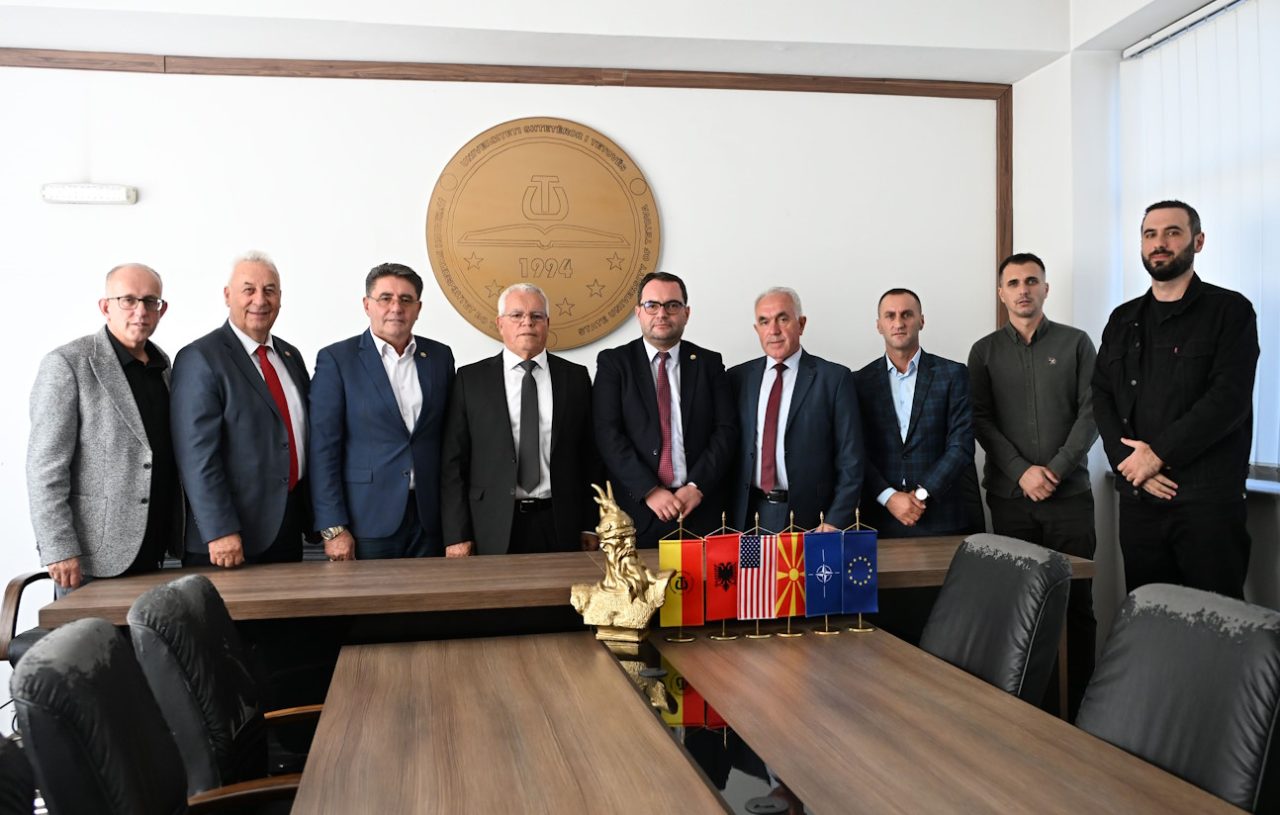
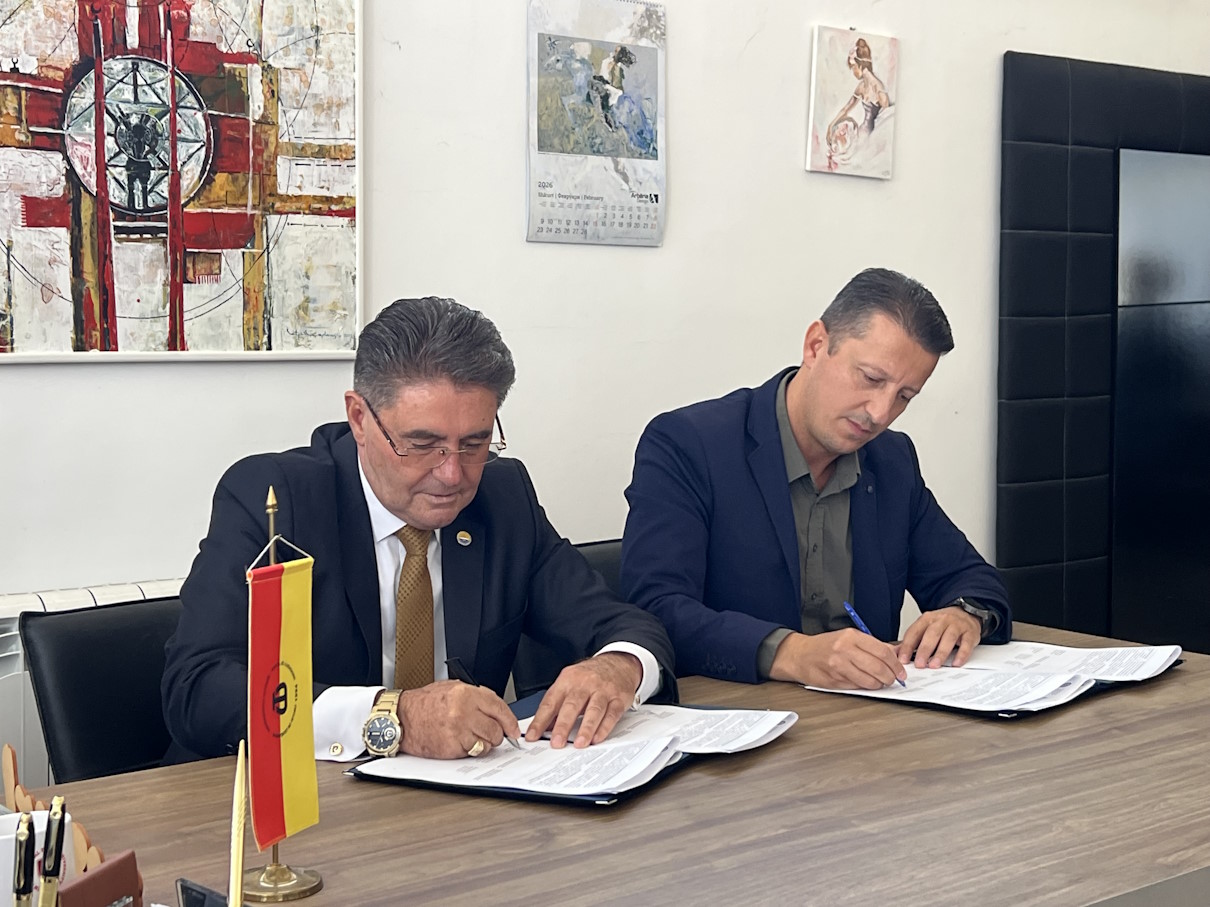
This congress was organized within the framework of inter-institutional cooperation, with the participation of representatives from the University of Tetova, the University of Malta, the “Haxhi Zeka” University in Kosovo, the Academy of Economic Studies of Moldova (ASEM), the West University of Timișoara in Romania, as well as the University of Rijeka in Croatia.
The proceedings of the Congress were officially opened by the Vice-Rector for Science at the University of Tetova, Prof. Dr. Vullnet Ameti, who, in his address to the academic staff and researchers from well-known international universities, emphasized the importance of this event, which aims to promote academic development and international cooperation. “The fields covered by this activity are broad and include the social and human sciences, educational sciences, sports, arts, as well as natural and engineering sciences. In this context, the congress motto, “Applied Knowledge for a Sustainable Future”, takes on a special meaning, highlighting the importance of linking scientific research with the real needs of society. This year’s theme, “Rethinking Risk and Resilience in the Sustainable Development Goals Era (SDG)”, is extremely relevant at a time when the world is facing complex challenges – from climate change and economic crises to digital transformations and social challenges”, said Prof. Dr. Vullnet Ameti.
Next, international speakers delivered presentations, offering different perspectives on the central theme of the congress. First, Prof. Dr. Ercan Özen from Uşak University in Türkiye addressed the issue of rethinking risk and resilience in the SDG era, emphasizing the need for innovative approaches in managing global challenges.Then, Prof. Dr. Simon Grima from the University of Malta presented new approaches to sustainability, providing contemporary analyses of sustainable development in an economic context.
Prof. Dr. Eleftherios Thalassinos focused on sustainability challenges in modern business, arguing why it is often not treated as a top priority. Meanwhile, Prof. Dr. Gratiela G. Noja from the West University of Timișoara presented on building sustainable companies through the use of green energy, offering concrete development models. Furthermore, Prof. Dr. Inna Romanova from the University of Latvia discussed the role of green bonds as a financial instrument for building a more sustainable future.
In the second part, Prof. Dr. Thomas Burkhardt from the University of Koblenz presented on issues of taxation and the profitability of bonds, while in the closing segment, Prof. Dr. Kesra Nermend from the University of Szczecin, together with his co-authors, addressed the decision-making process under conditions of uncertainty, offering analytical and empirical approaches to this phenomenon.
Dean of the Faculty of Economics, Prof. Dr. Brikend Aziri, stated that this congress was characterized by fruitful discussions and the exchange of academic experiences, demonstrating the role of the Faculty of Economics and the University of Tetova as an important center of international cooperation and scientific development in the country, the region, and beyond.