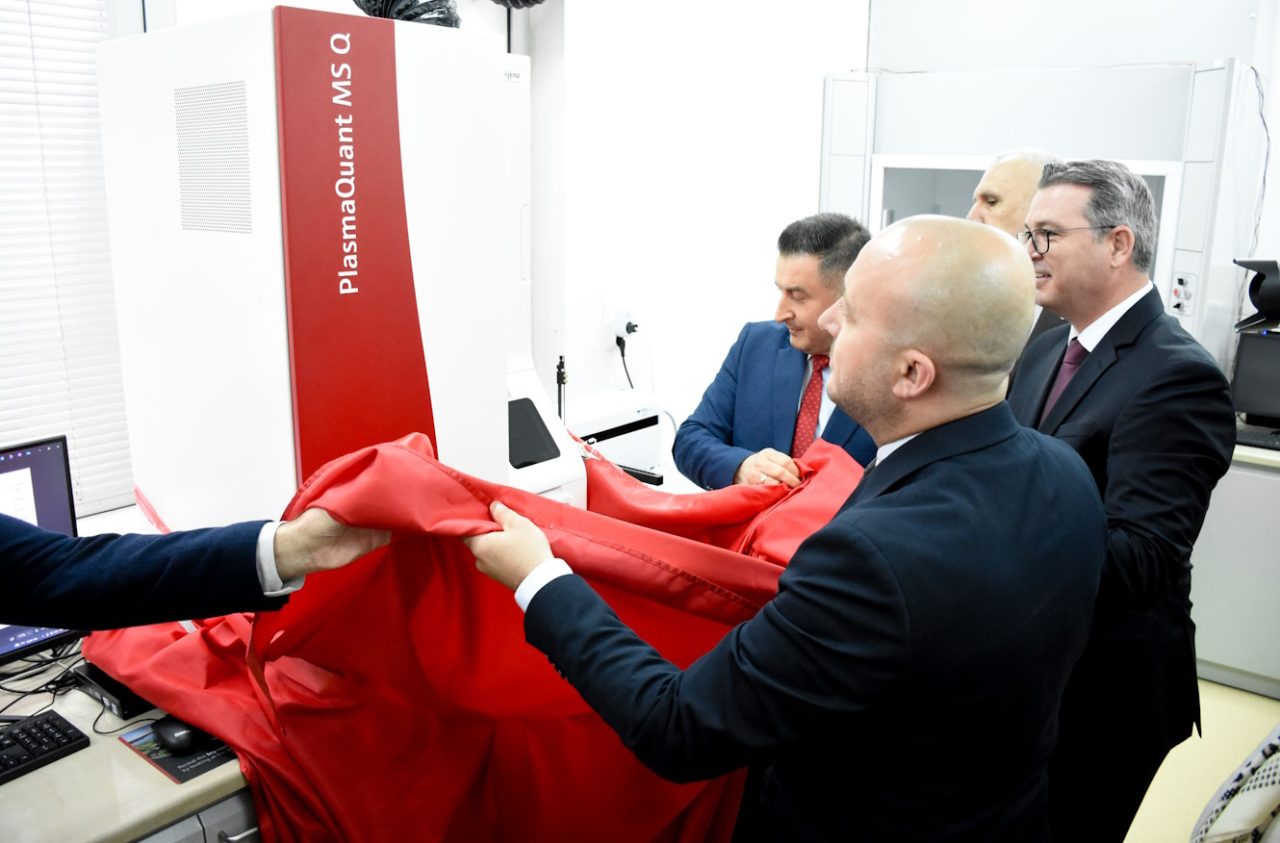
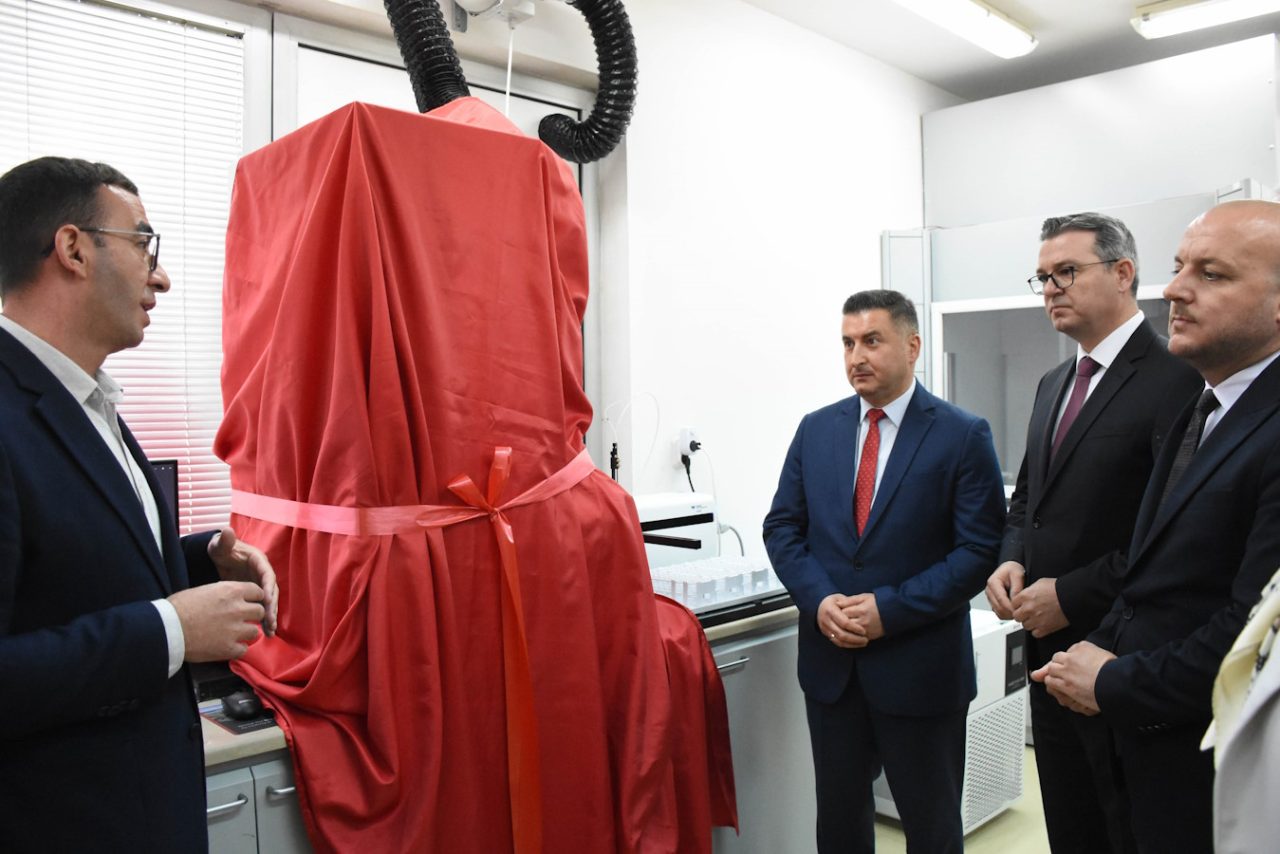
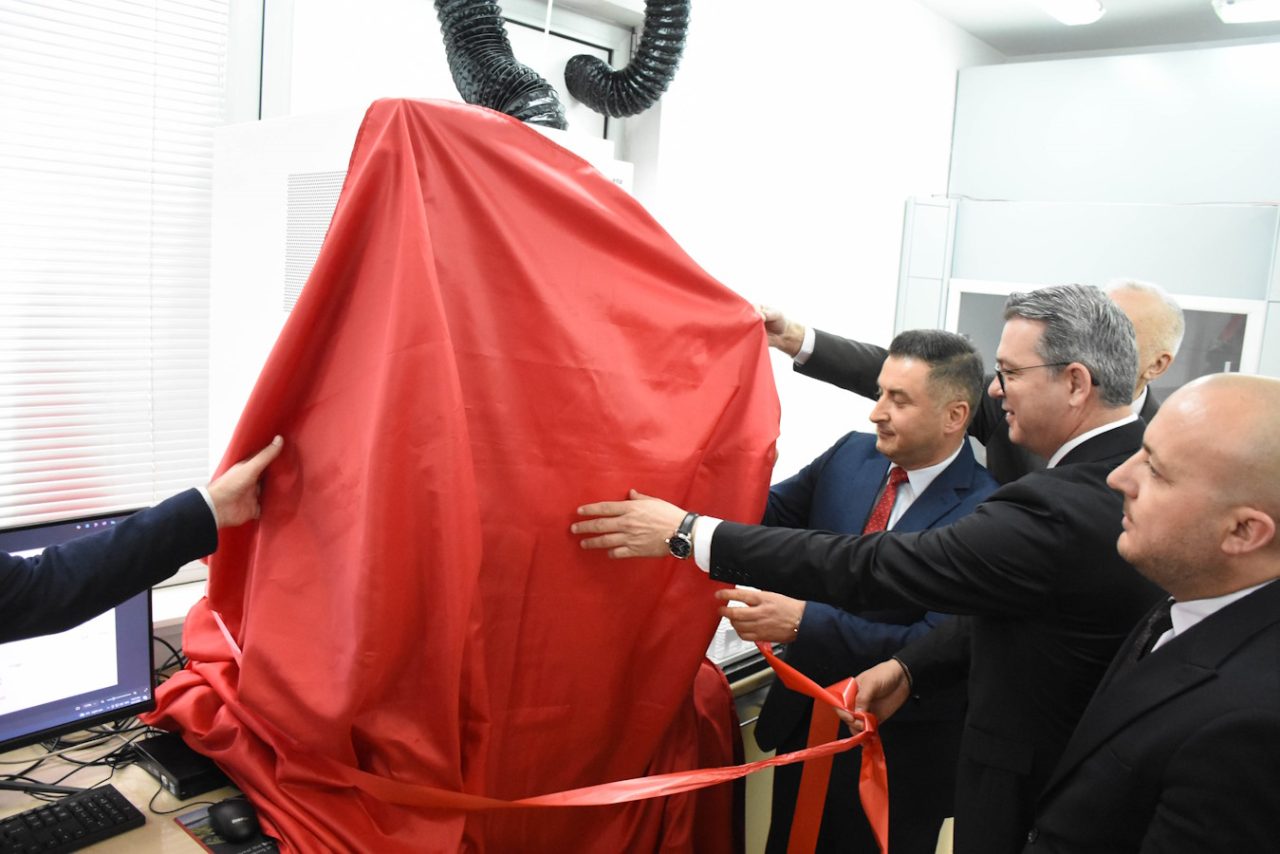
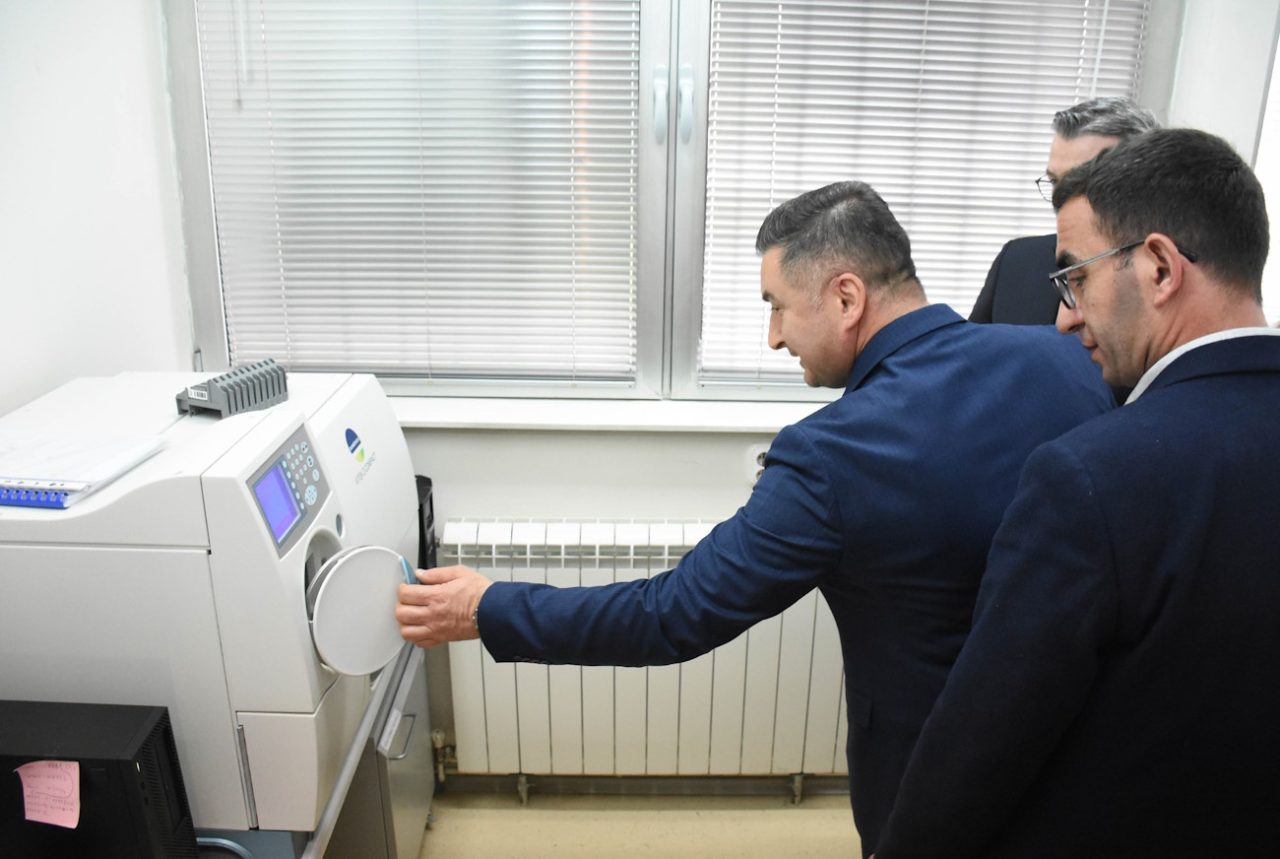
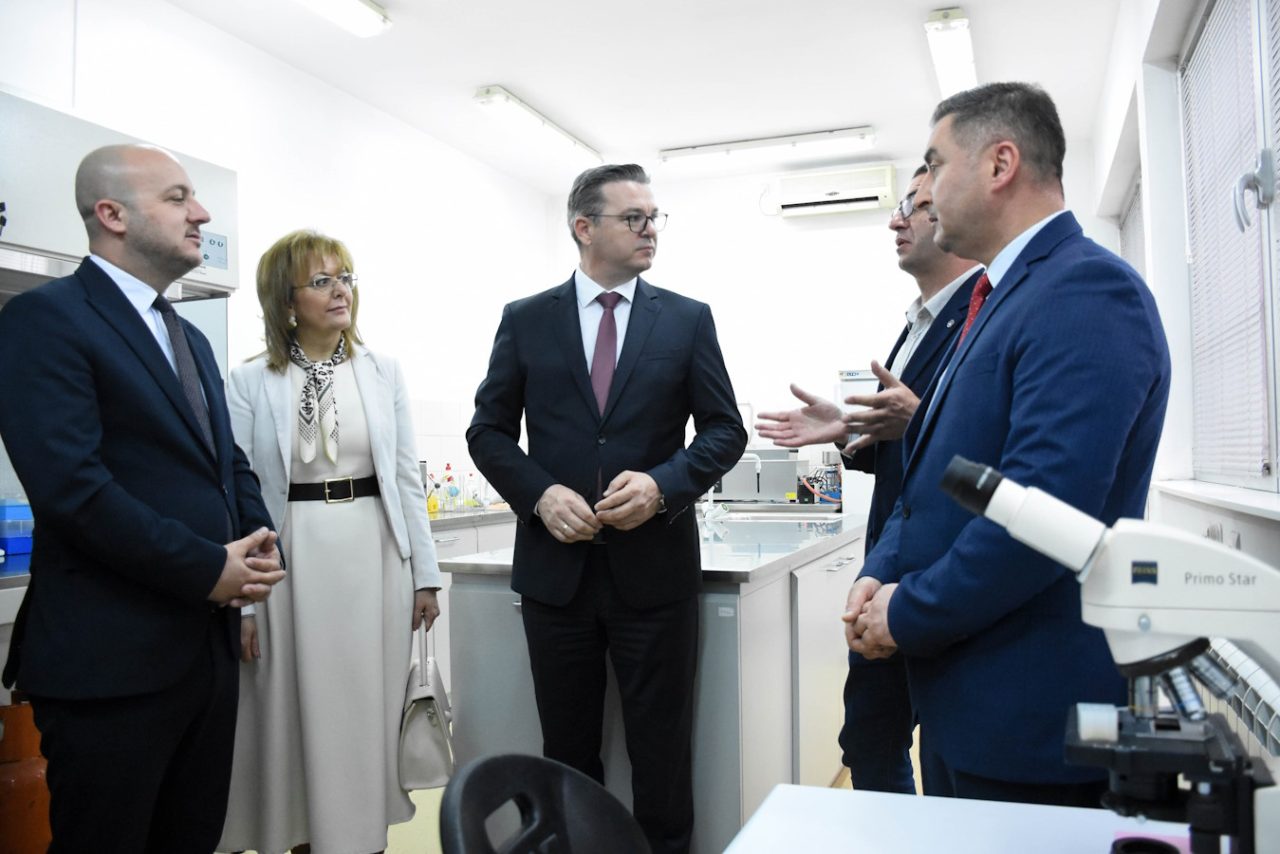
At the Faculty of Food Technology and Nutrition (UT), was held the inauguration of laboratory equipment for analyzing food quality and safety, an important investment aimed at strengthening research and scientific activity and improving standards in this sector. This laboratory equipment is a donation from the Ministry of Agriculture, Forestry, and Water Economy.
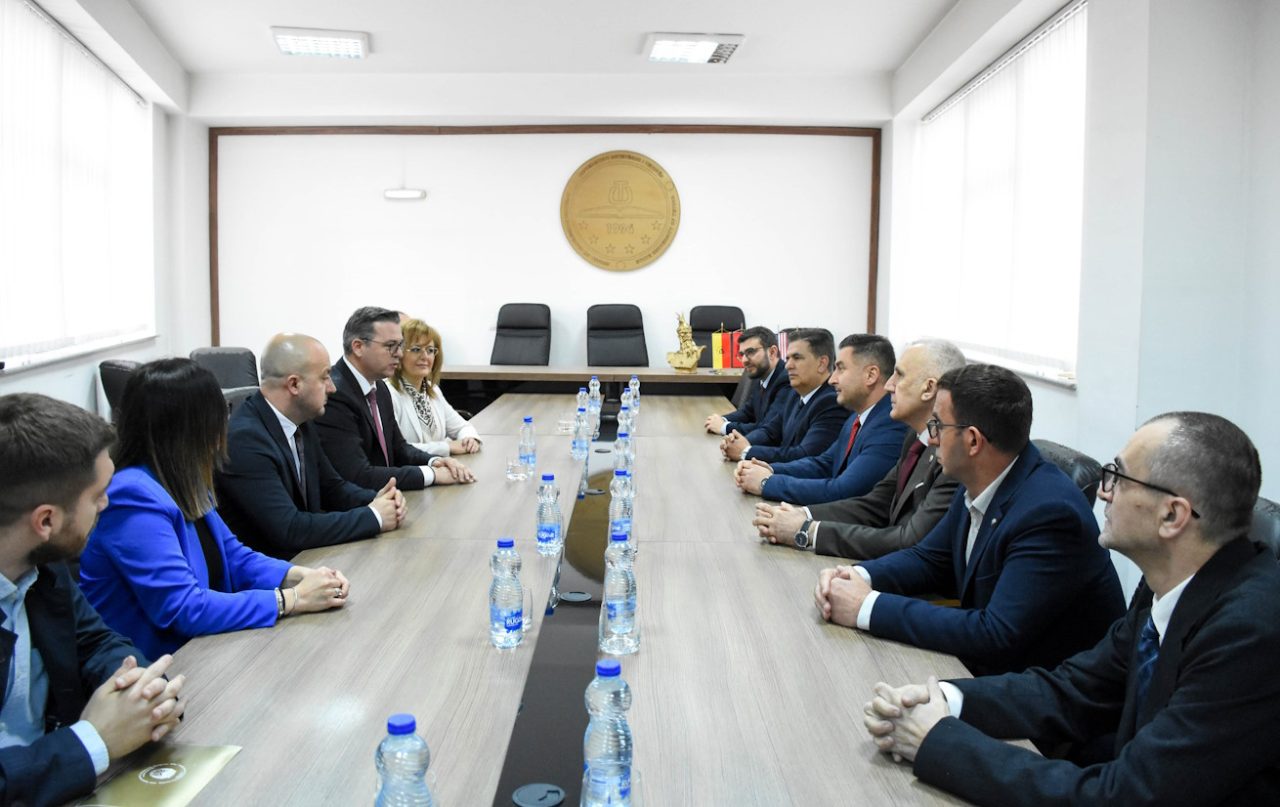
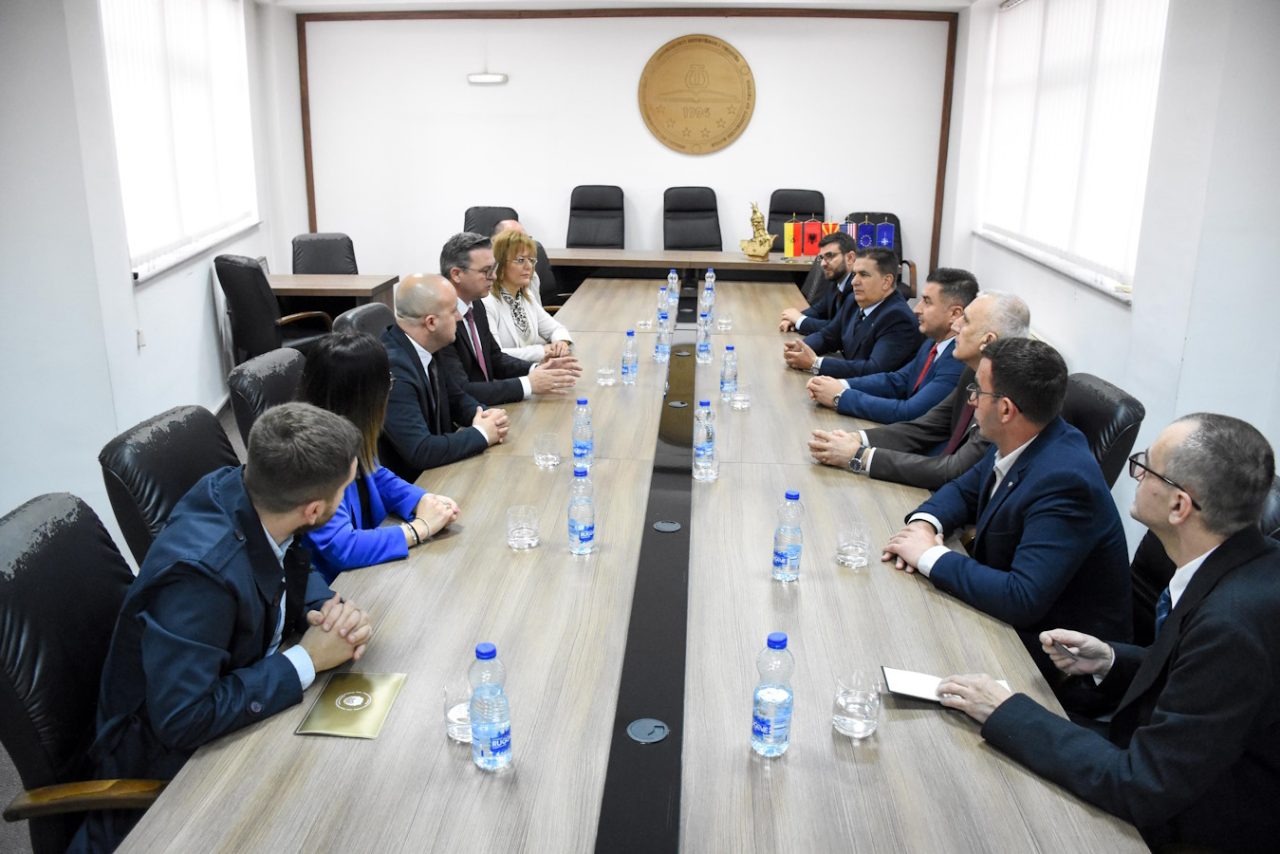
At this important event, institutional leaders and high-ranking state representatives were present, including the Rector of the UT, Prof. Dr. Jusuf Zejneli; the Dean of the Faculty, Prof. Dr. Gafur Xhabiri; the project coordinator of this donation, Prof. Dr. Ismail Ferati; the Minister of Agriculture, Forestry, and Water Economy, Mr. Cvetan Tripunovski; as well as the Deputy Minister, Mr. Albrim Hoxha.
The drafting and application of the project, the specification of the equipment, as well as the implementation and reporting of all phases to the ministry, were carried out by the project coordinator, Prof. Dr. Ismail Ferati. On this occasion, during the presentation of the role of the equipment, he stated that the laboratory is equipped with the most advanced German technology for food safety analyses, particularly for the detection of heavy metals. The installed equipment is of the ICP-MS type (Inductively Coupled Plasma Mass Spectrometry), which enables analyses with very high accuracy and sensitivity, meeting international standards for quality control and food safety.
Rector of the University of Tetova, Prof. Dr. Jusuf Zejneli, thanked the Ministry of Agriculture, Forestry, and Water Economy for this donation, emphasizing that this investment is very important for our students, both those in undergraduate, master’s, and doctoral studies, because it will give them the opportunity to carry out the practical part of their scientific research in this laboratory. He further added that the use of this equipment will serve as a bridge of cooperation with companies in this field, and above all, together with the dean and the academic staff, we will have the opportunity to contribute to food quality control.
Minister of Agriculture, Forestry, and Water Economy, Mr. Cvetan Tripunovski, stated that this investment is yet another indicator that they, as a ministry, are serious about building a partnership with scientific institutions, with the aim of strengthening joint capacities. “This equipment, which will be used to analyze and ensure the safety of pesticides in food and other products, demonstrates our commitment to ensuring that the health of citizens and consumers is protected at the highest level. Such support does not only imply a more responsible approach toward companies that require such analyses, but also creates new opportunities for the university itself. Students will have the opportunity to use this equipment within their scientific research activities, contributing to capacity building and to the training of professional staff capable of working in the future in the field of food quality control and safety. We remain committed, as a ministry, to continuing this dialogue and joint cooperation with the country’s universities, so that together we can build sustainable and professional capacities that will guarantee the quality and safety of food reaching consumers, as they deserve”, stated the Minister of Agriculture, Forestry, and Water Economy, Mr. Cvetan Tripunovski.
Dean of the Faculty of Food Technology and Nutrition, Prof. Dr. Gafur Xhabiri, and the Deputy Minister, Mr. Albrim Hoxha, assessed this donation as highly important, emphasizing that it will directly serve students and academic staff in the development of teaching and research activities. According to them, the equipment will increase the quality of laboratory work, enable the performance of more advanced analyses, and strengthen students’ practical competencies, better preparing them for the labor market and professional challenges in the field of food safety and quality.
The inauguration of this equipment is considered an important contribution to the development of the agricultural sector and the food industry in the country, as well as a step forward in integrating contemporary scientific practices into the educational and research process.