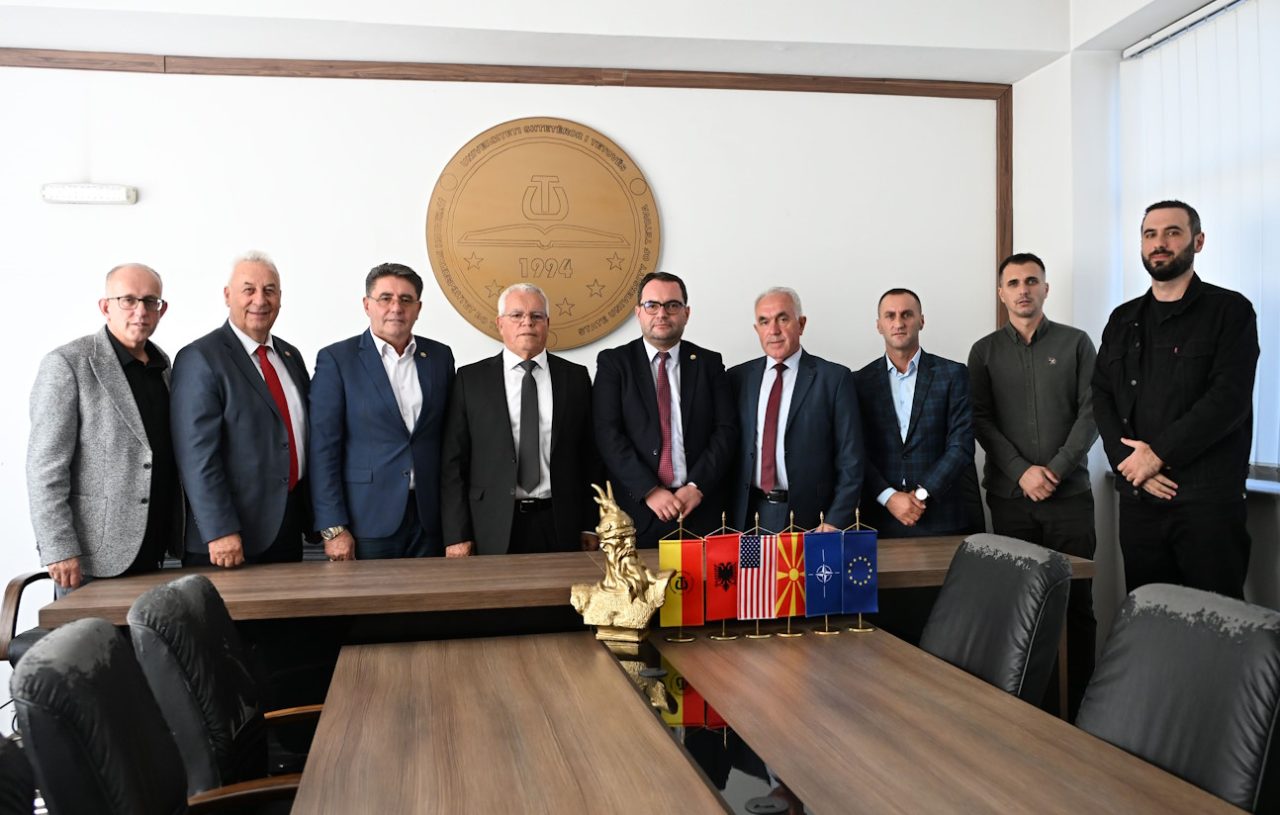
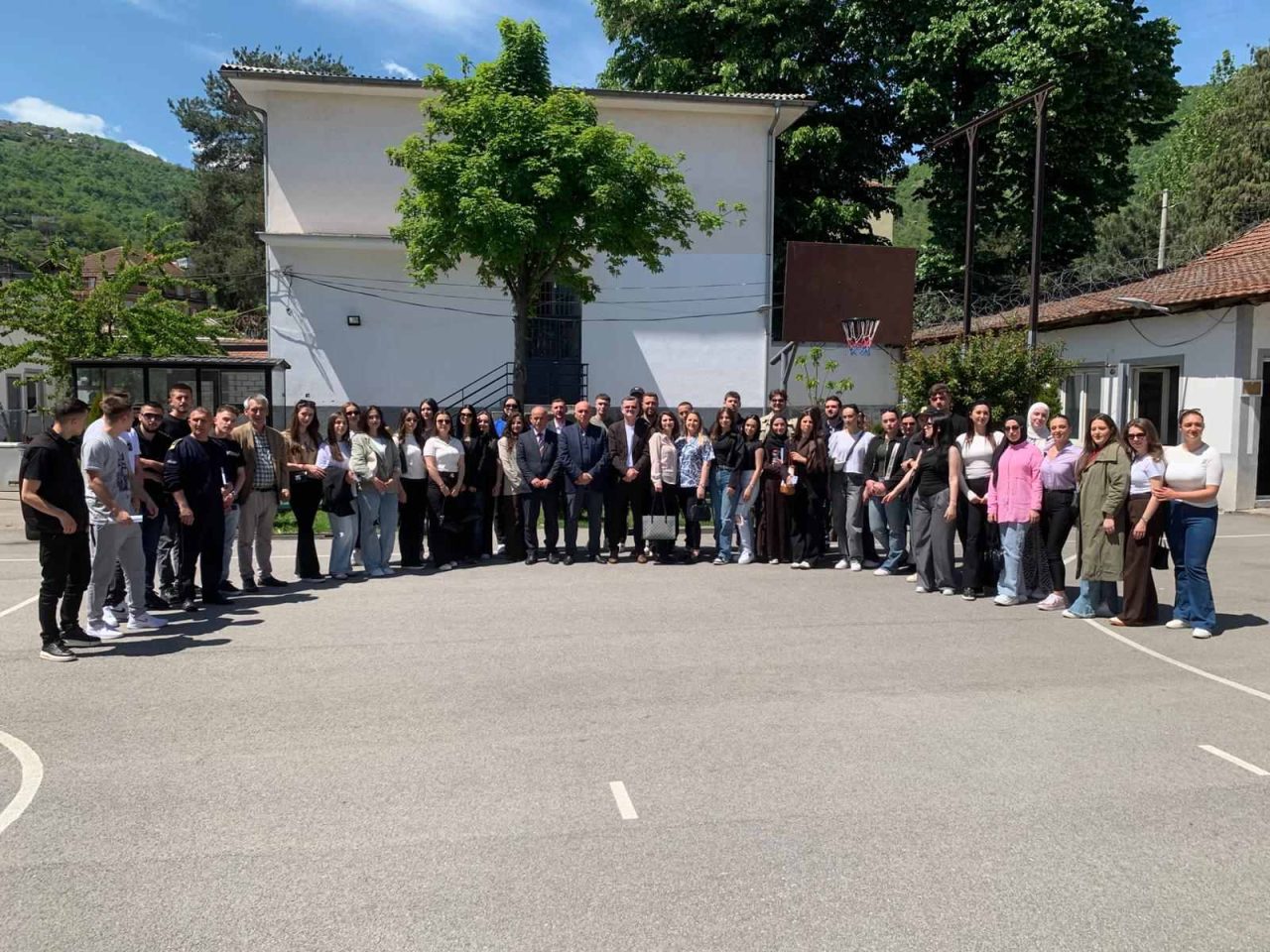
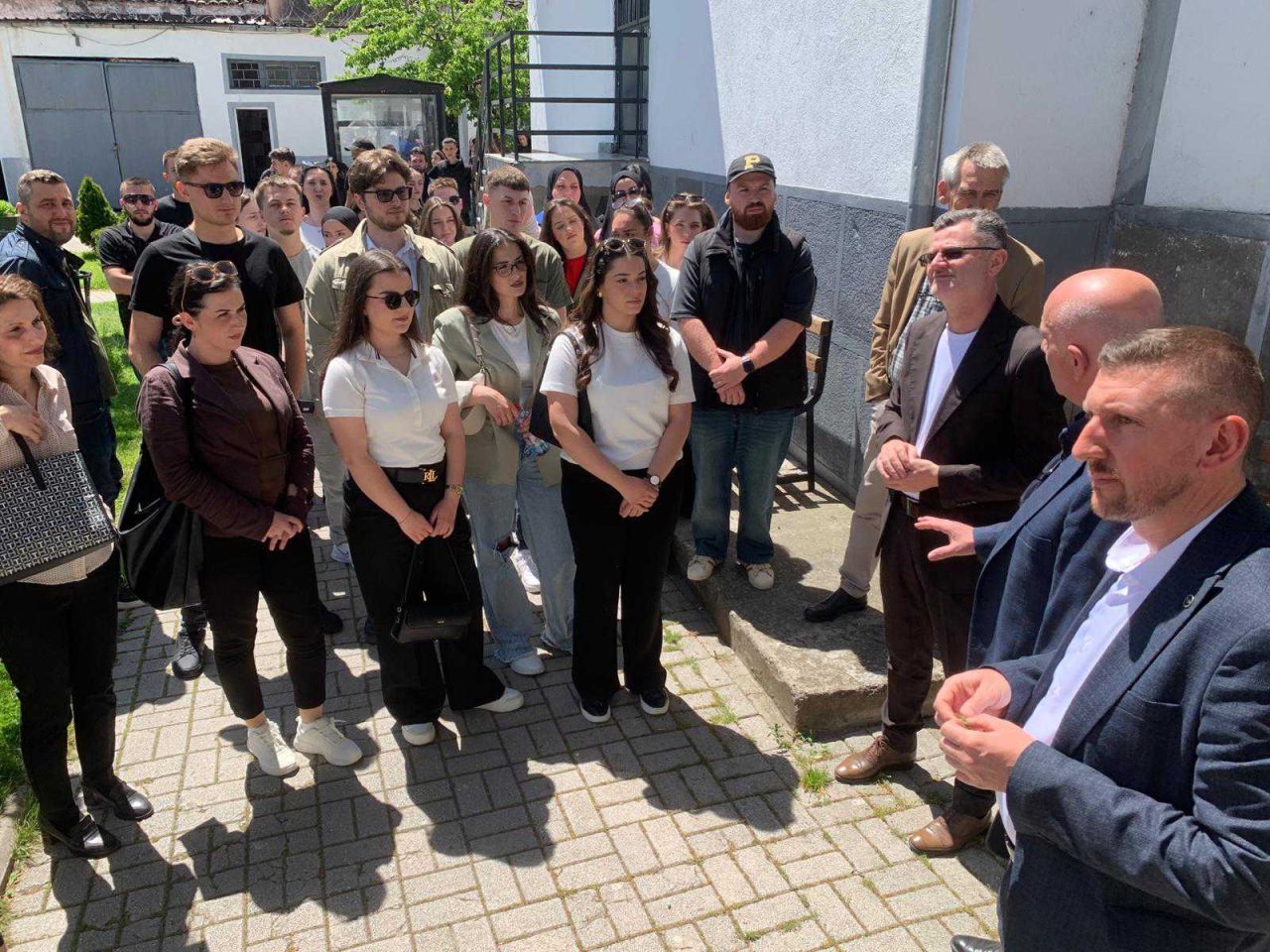
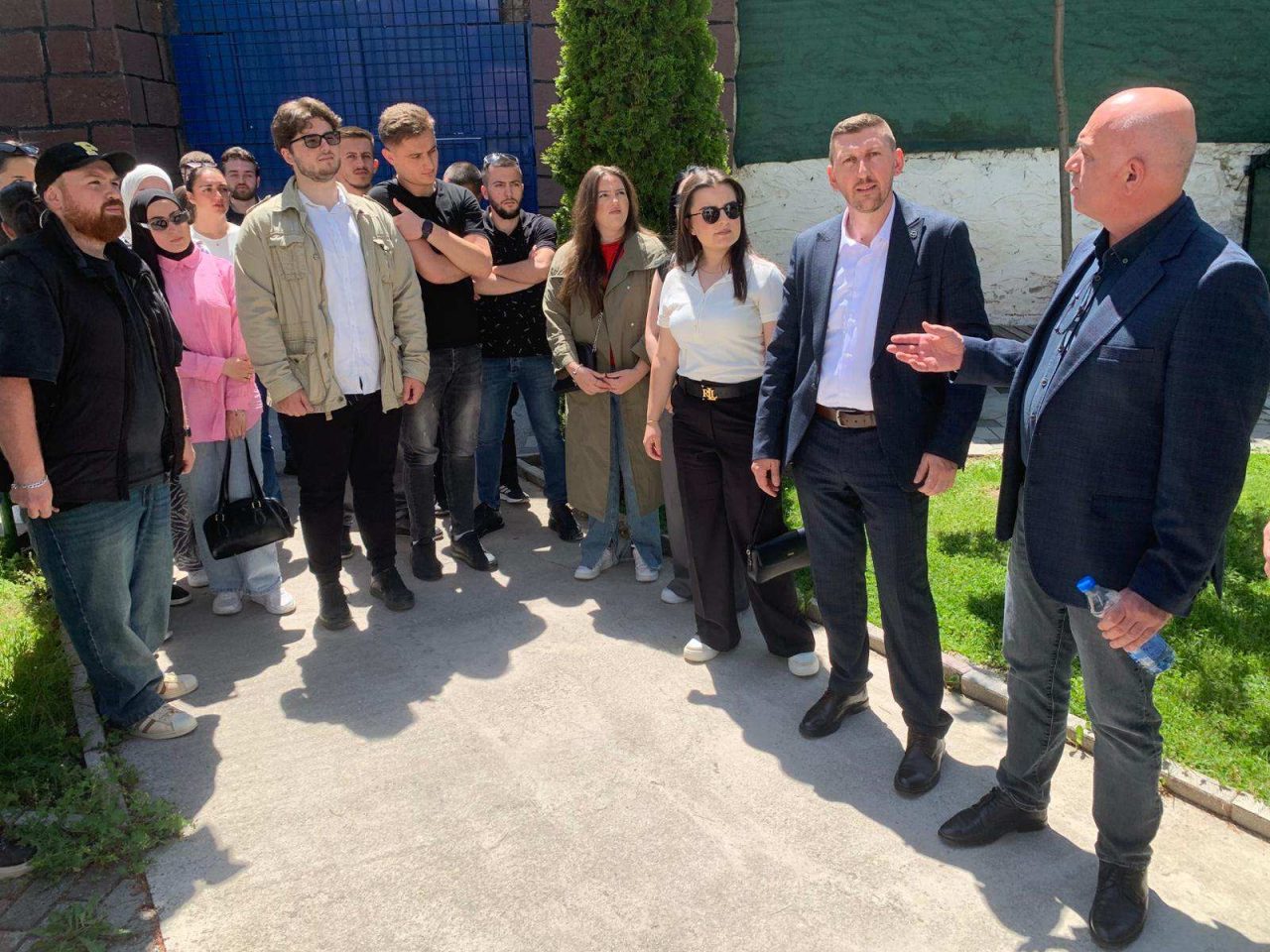
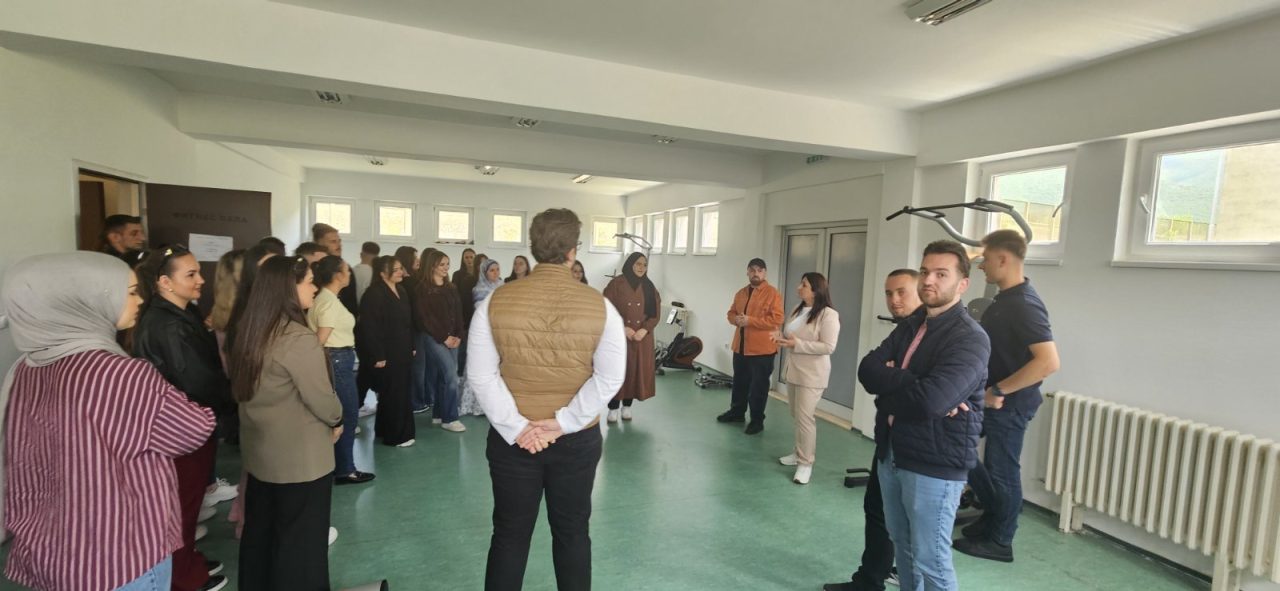
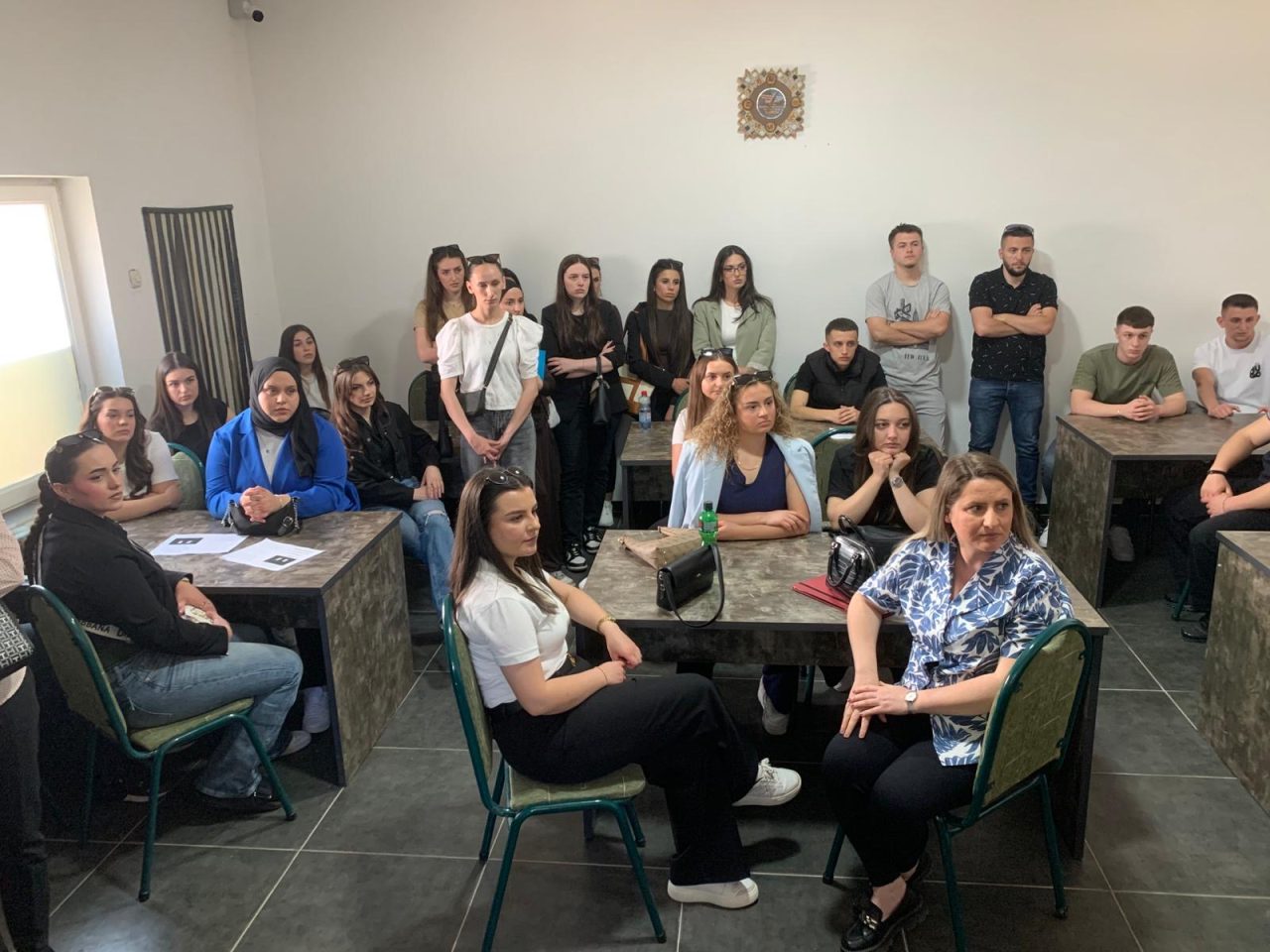
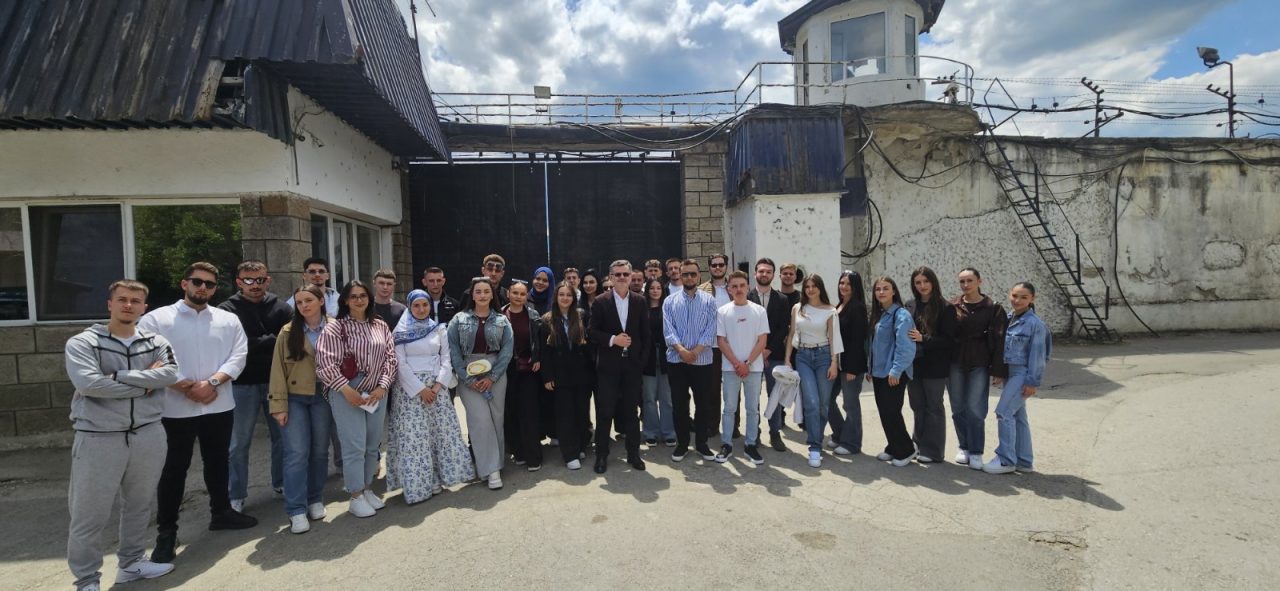
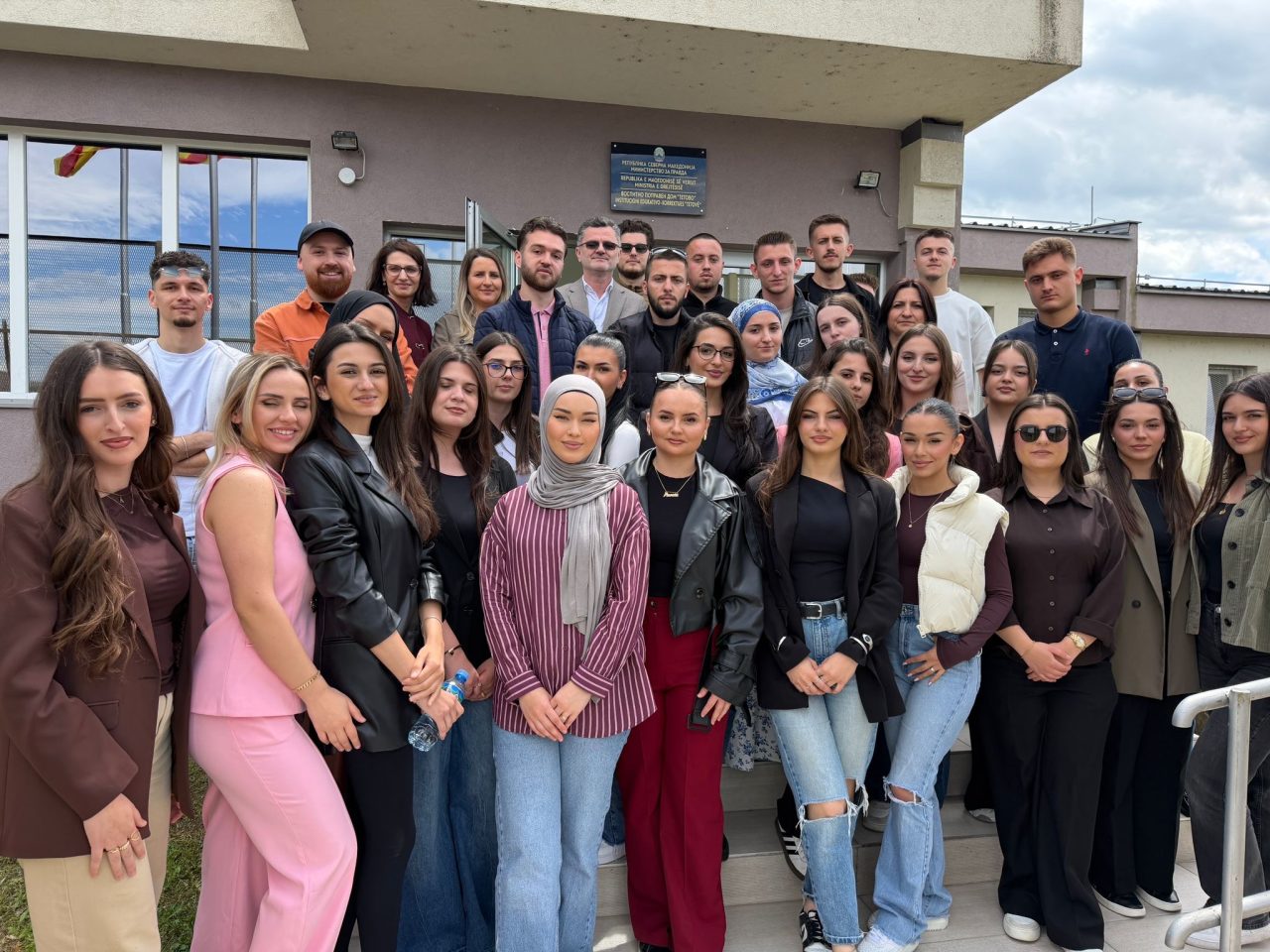
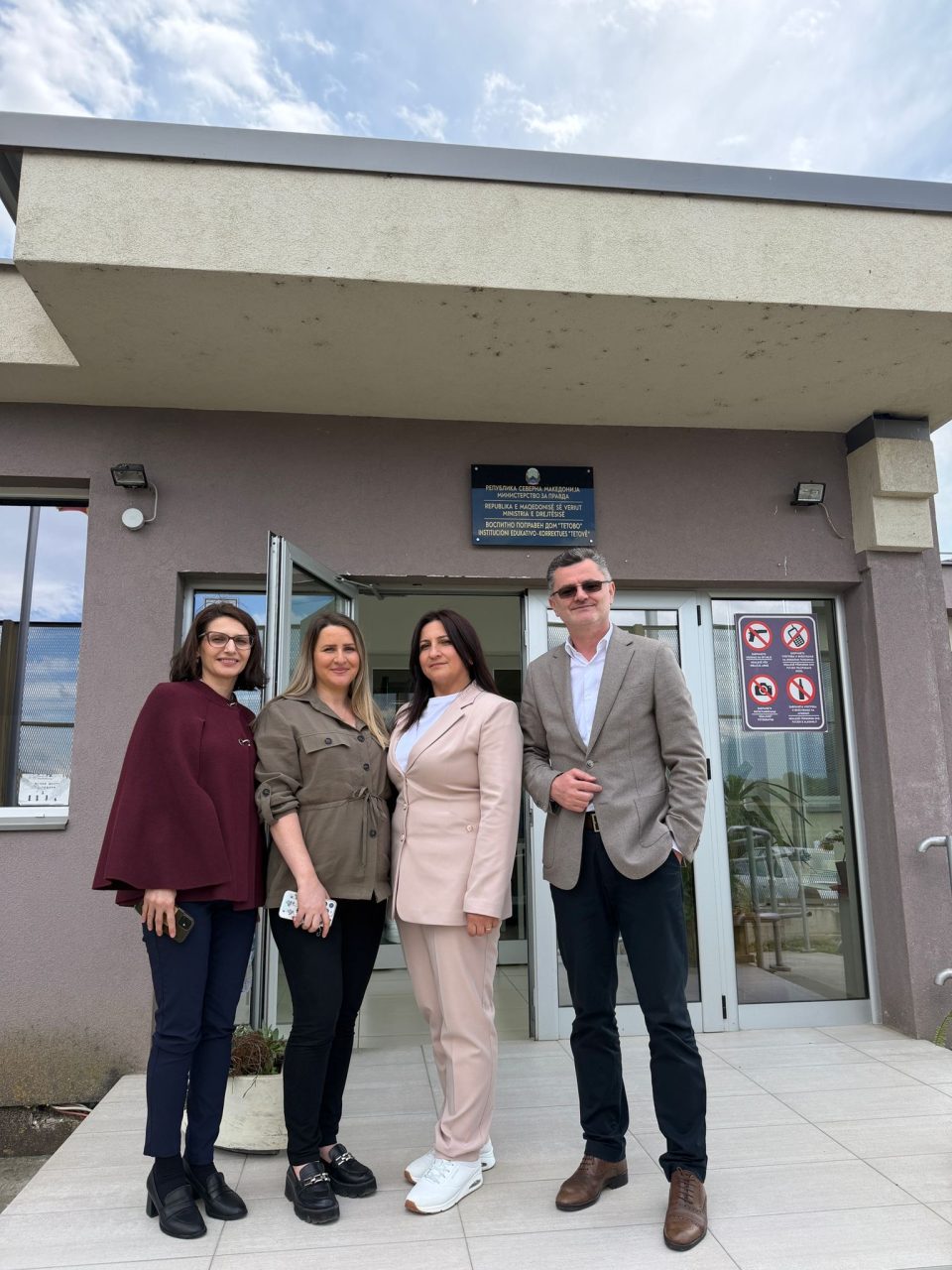
Students of the study programs in Legal Studies and Criminalistics of the Faculty of Law, and students of the Psychology study program of the Faculty of Philosophy, carried out study visits during the month of May to the Educational-Correctional Institution Tetovo (Vollkovia), the Tetovo Prison, and the Idrizovo Correctional Institution in Skopje. The visits were conducted under the guidance of Prof. Dr. Afrim Osmani, Prof. Dr. Shaban Jakupi, Prof. Dr. Sheruze Osmani-Ballazhi, and Asst. Dr. Nazmije Shaqiri. The purpose of these study visits was to familiarize students with the functioning of correctional and educational-correctional institutions, the treatment of persons deprived of liberty, institutional conditions, as well as the process of resocialization and rehabilitation of juveniles and convicted persons. Students had the opportunity to gain close insight into the role and engagement of the professional team — psychologists, pedagogues, social workers, and other staff — in supporting and treating individuals placed in these institutions. As part of the visit to the Educational-Correctional Institution Tetovo (Vollkovia), an institution where the educational measure “Placement in an Educational-Reformatory Institution” is carried out for male and female juveniles who have come into conflict with the law, students became acquainted with the activities and programs aimed at resocialization, re-education, and the proper development of children. They were introduced to group and individual workshops of a psychological and educational nature, vocational training programs for qualification in various professions, as well as cultural, sports, and recreational activities that contribute to the development of positive habits and preparation for reintegration into society and the labor market.
As part of the visit to the Tetovo Prison and the Idrizovo Penitentiary and Correctional Institution in Skopje, students had the opportunity to become acquainted with the penitentiary system and the manner in which prison sentences are executed. At the Idrizovo Penitentiary and Correctional Institution, which is a closed-type institution for the execution of prison sentences for male and female inmates, students visited the open ward and the women’s ward, where they were welcomed by representatives of the resocialization sector. Representatives of the institutions provided detailed presentations on the organizational structure, the division of wards according to categories of convicted persons and types of criminal offenses, as well as the rights and obligations of convicted individuals. Students were informed about the right to education, employment, healthcare, contact with family, and participation in rehabilitation and resocialization programs.
Through active discussions with the directors and professional teams, students had the opportunity to ask questions related to the practical implementation of sentences, the role of the professional team in the resocialization process, as well as the challenges faced by convicted persons and correctional and educational-correctional institutions.
These visits represent an important practical and educational experience for the students, enabling them to connect theoretical knowledge with professional practice and to understand the importance of interdisciplinary cooperation in the treatment, rehabilitation, and social reintegration of persons deprived of liberty. The cooperation between the University of Tetova and the correctional and educational-correctional institutions is expected to continue in the future, with the aim of advancing the practical and professional experience of students.