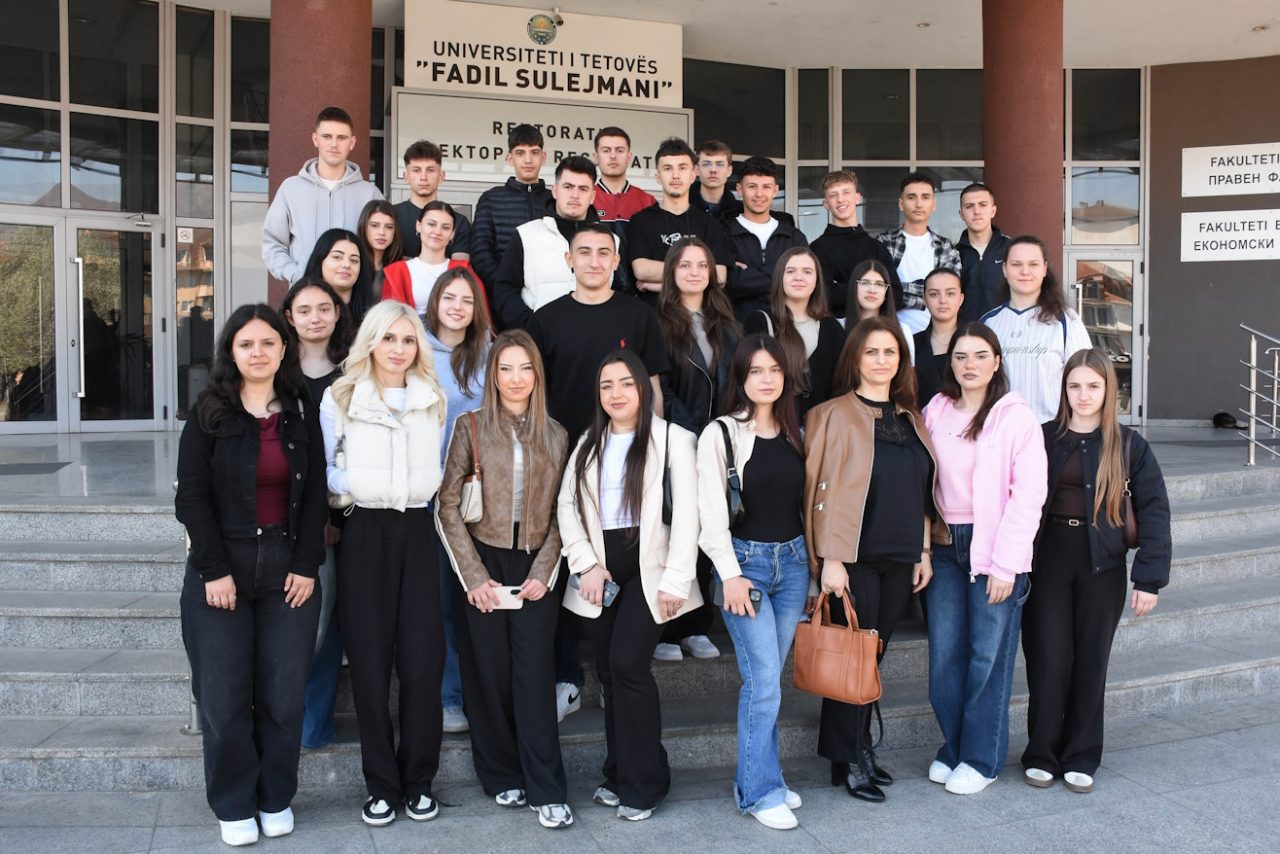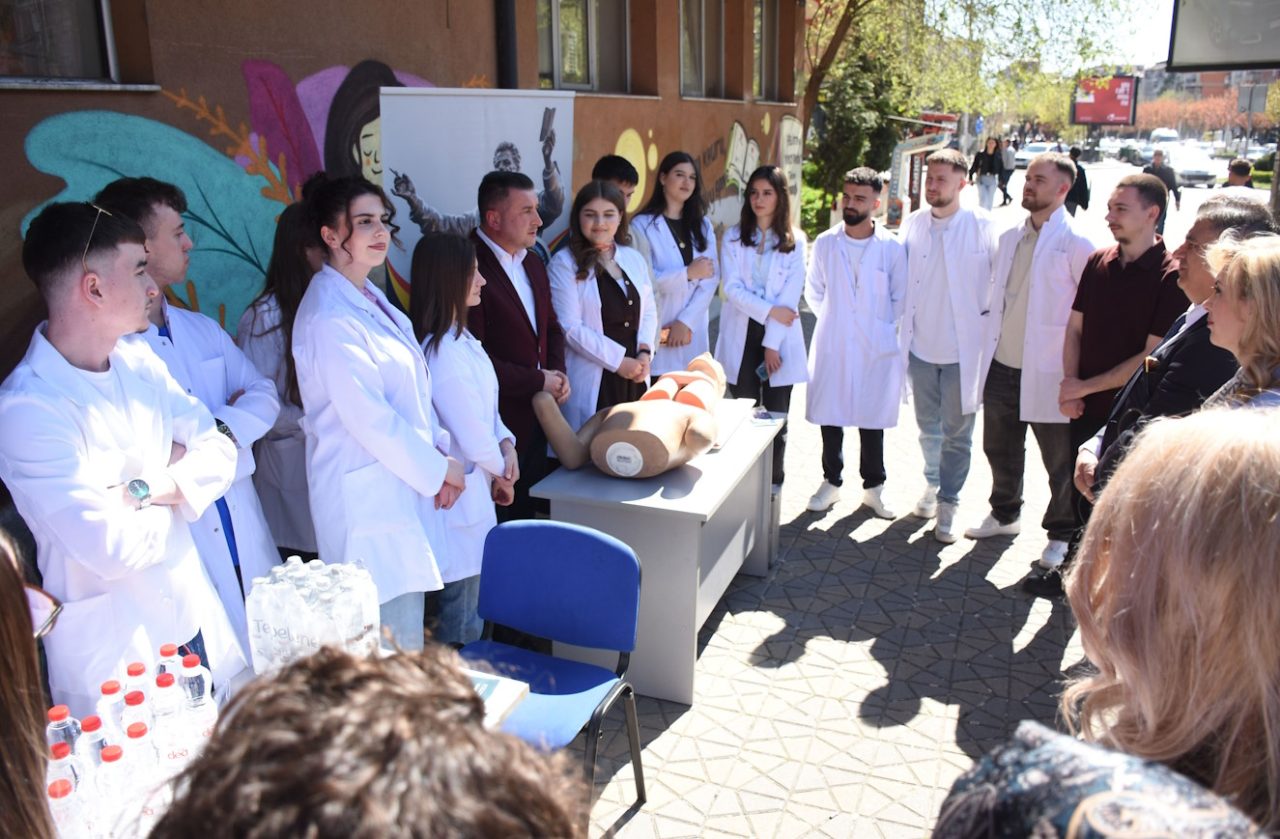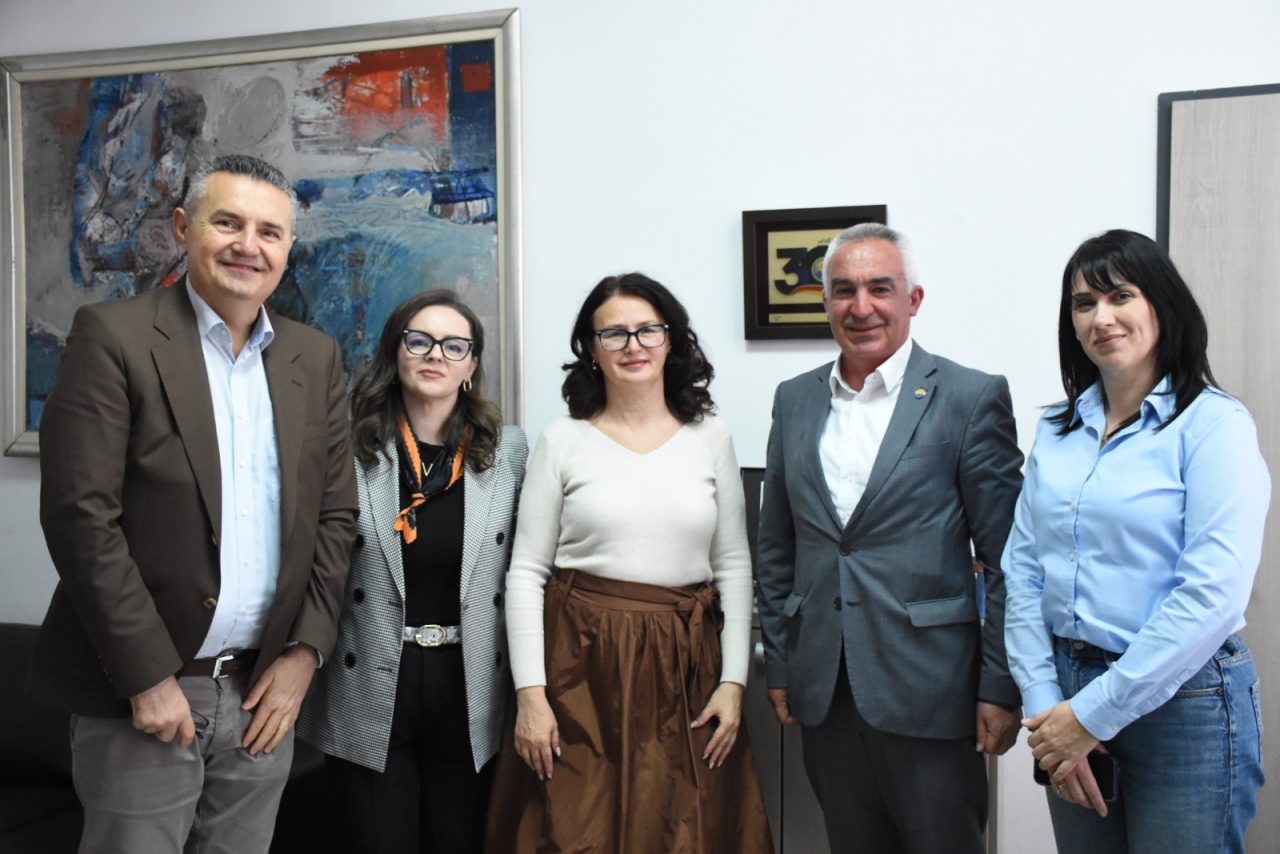
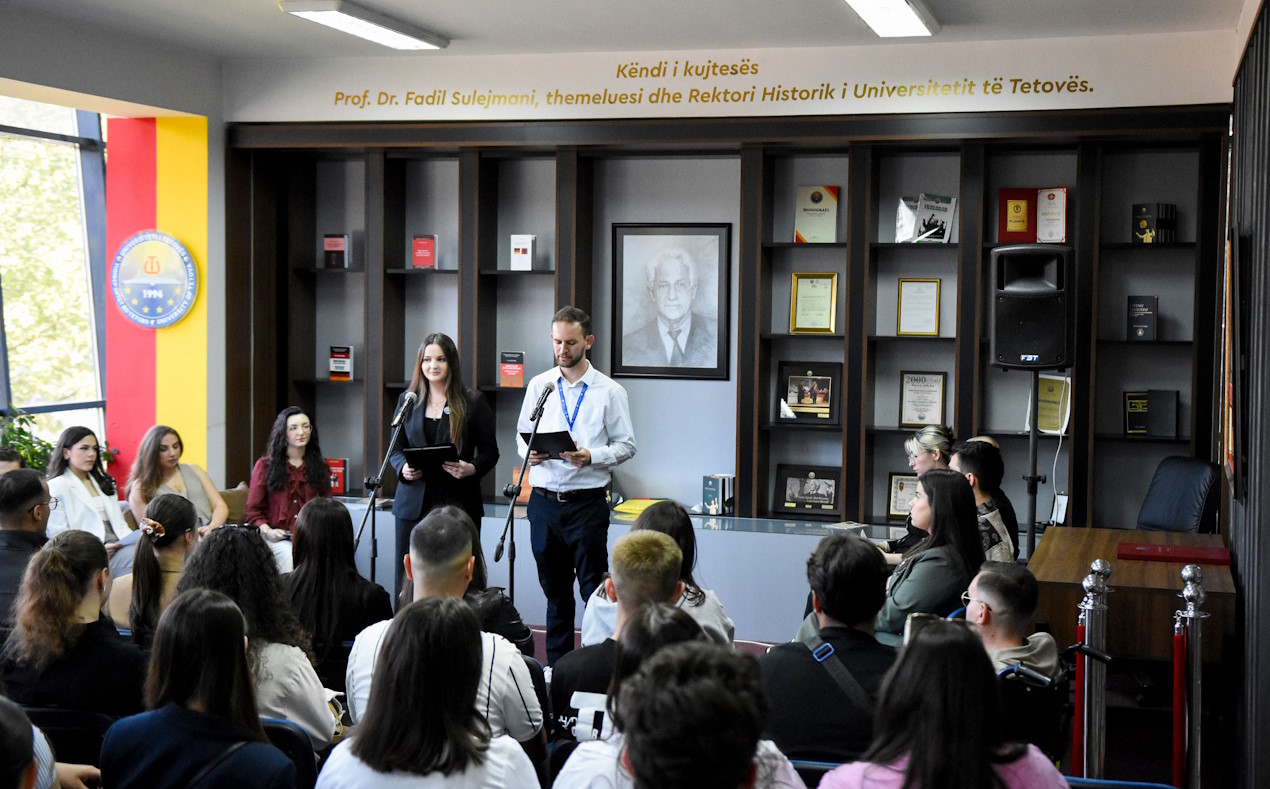
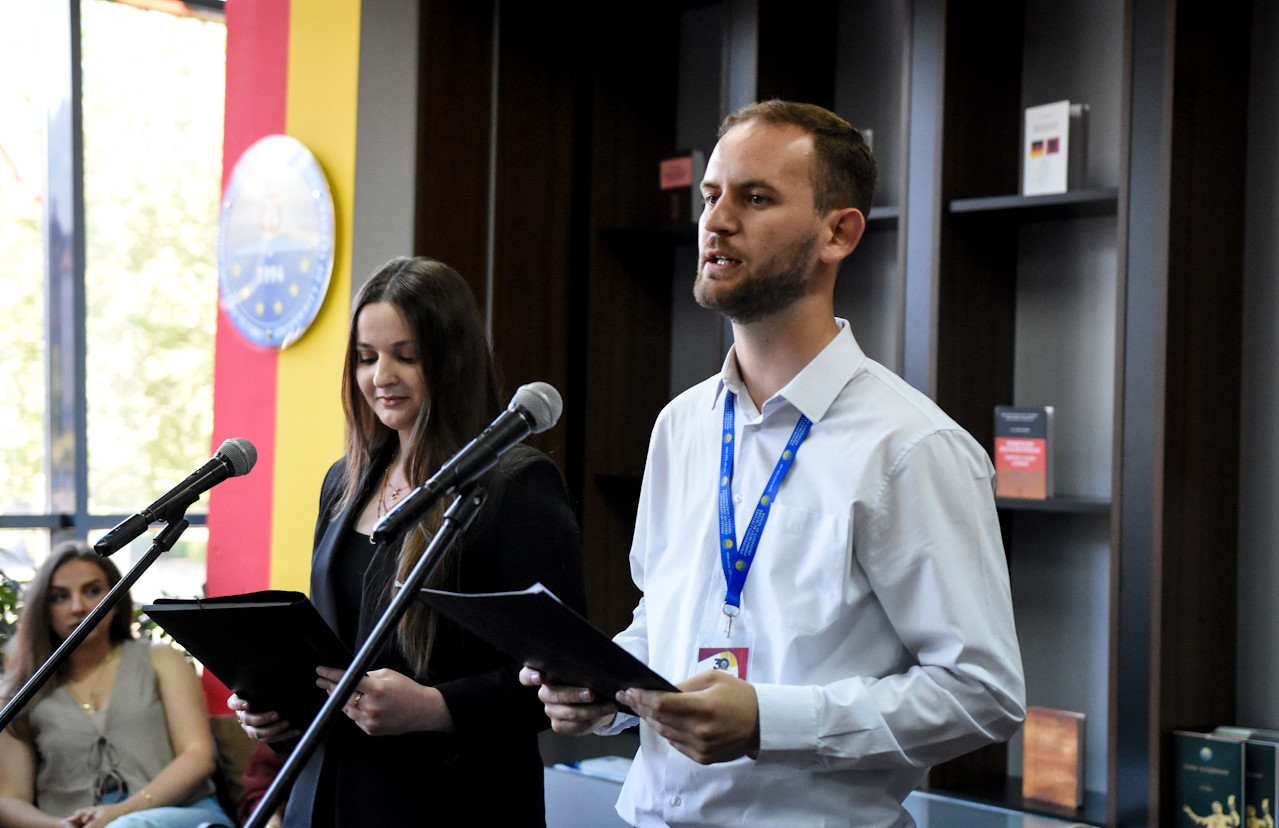
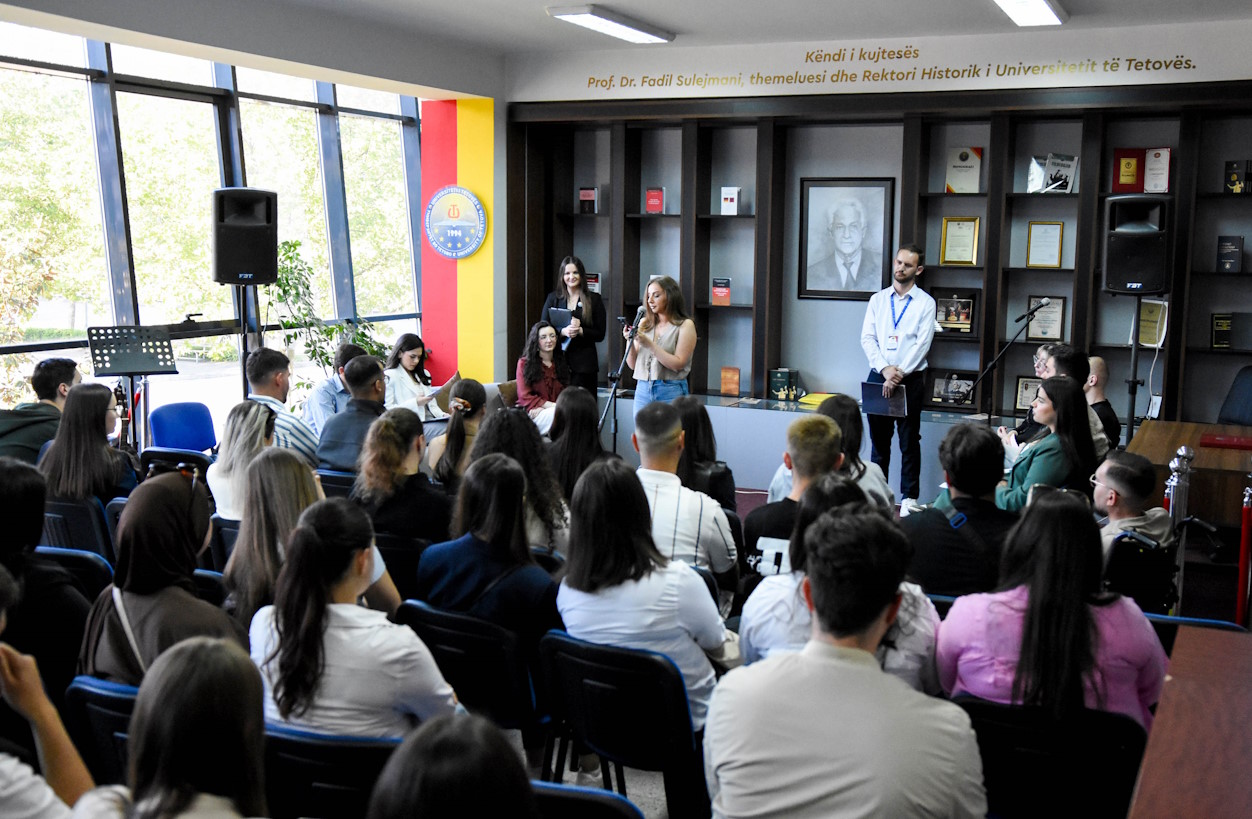
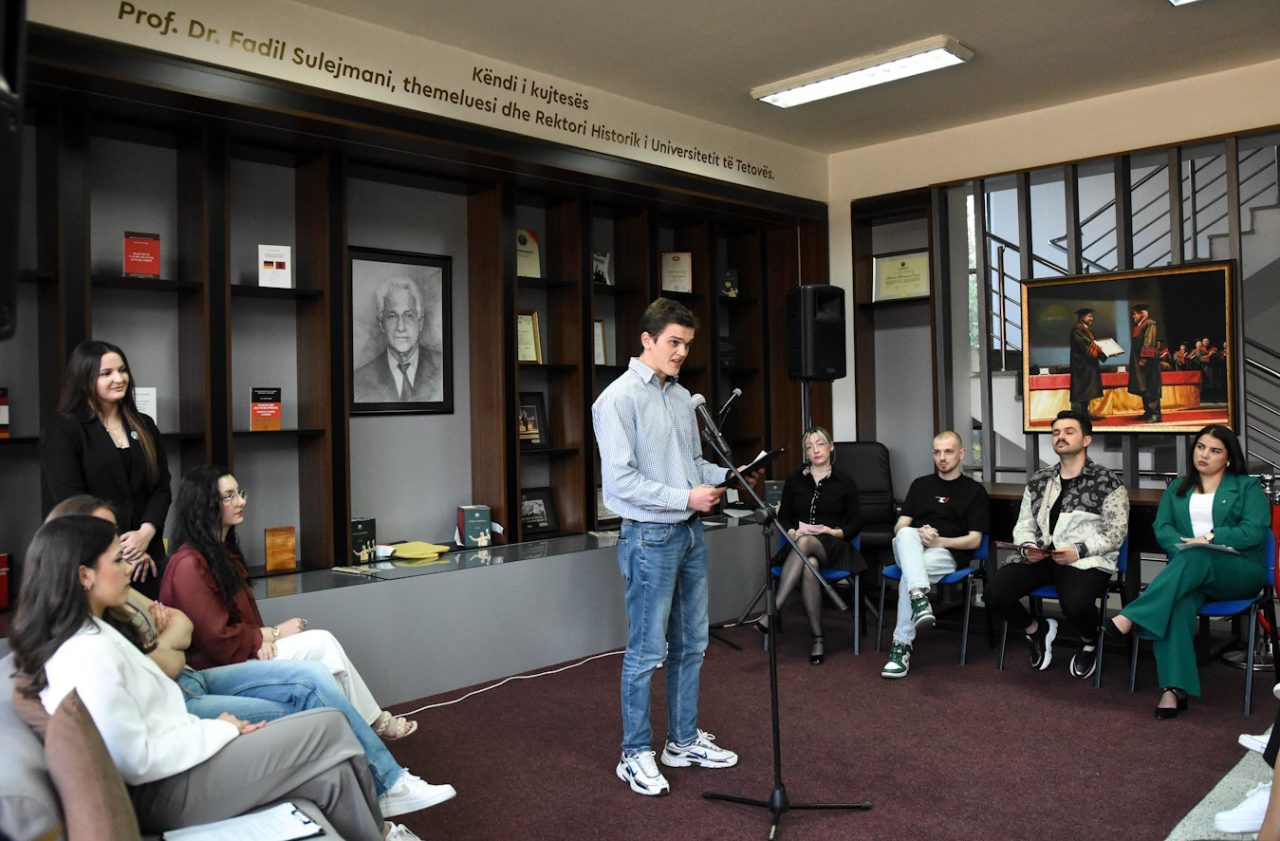
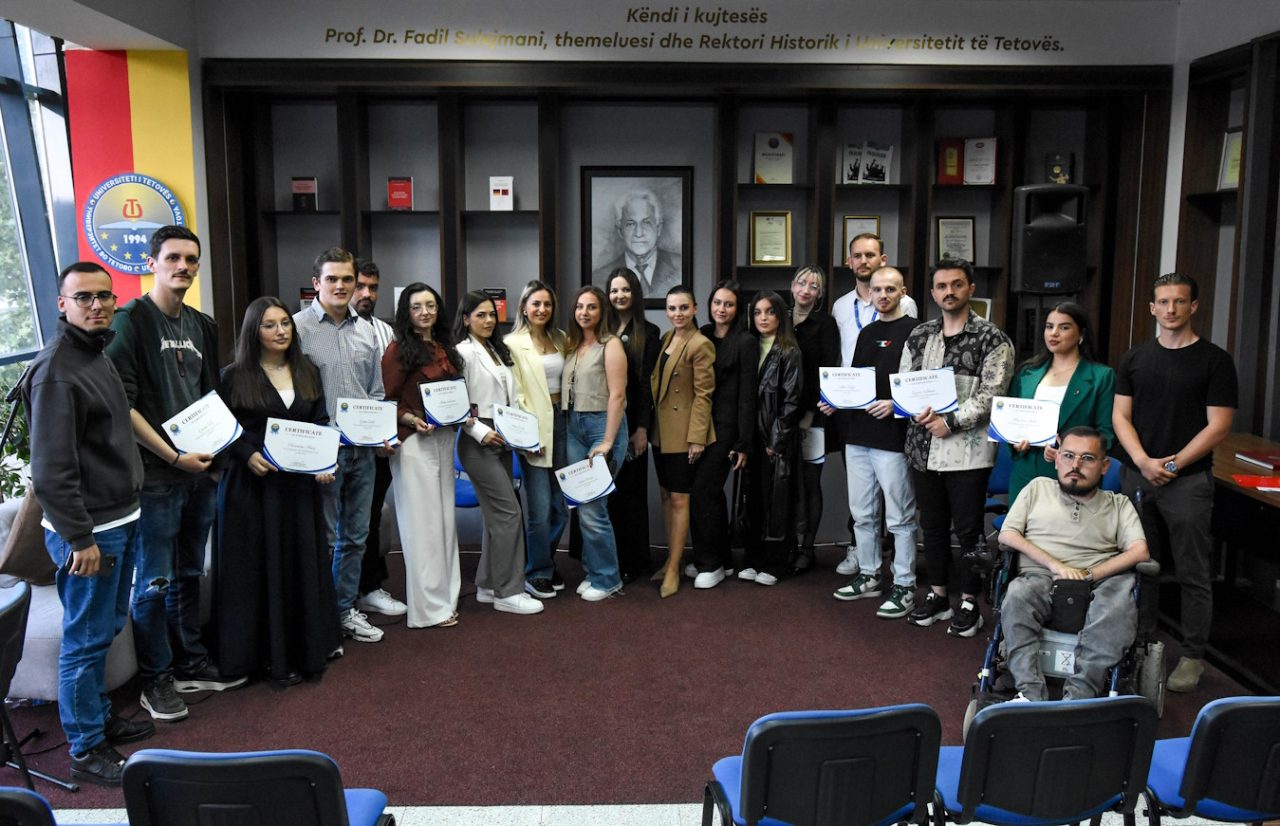
On May 14, 2025, at the Corner of Remembrance “Fadil Sulejmani”, the Student Parliament of the University of Tetova successfully organized the cultural event “Literary Hour” — a special evening dedicated to the expressive power of artistic language and its impact on the spiritual and cultural development of students. This event became an open stage for literary creativity and artistic interpretation.
Students from the Faculty of Philology, the Faculty of Arts, the Faculty of Medicine, and other academic units read poetry, prose, and theatrical pieces before the audience, showcasing a high level of sensitivity and artistic expression. In a warm and emotional atmosphere, attendees had the opportunity to experience a mosaic of feelings, reflections, and human messages through the written word.
Part of the performance were: Altina Sulemani with the prose piece “Unë përballë të tjerëve” (“Me against the othera”); Sibora Hoxha with the poem “Strugë” (“Struga”) and the prose “Dashuria që s’ka emër” (“A love without a name”); Amra Nesimi with “Nën zhurmën e bisedave” (“Under the noise of conversations”); Gzim Latifi with Andrei’s monologue from Anton Chekhov’s “Tri motrat” (“Three Sisters); Zana Reçi with the English-language poem “To Be Consumed”; Valon Nuhija with the poem “Pikëpresje” (“Semicolon”); Zurijet Sulejmani with the interpretation of Robert Burns’ “Fshatar i ndershëm ish im atë” (“My Father was a Farmer”); and Albulena Ademi with the prose piece “Nën hijen e dhimbjes, në dritën e mjekëve”. (“In the shadow of pain, in the light of doctors”).
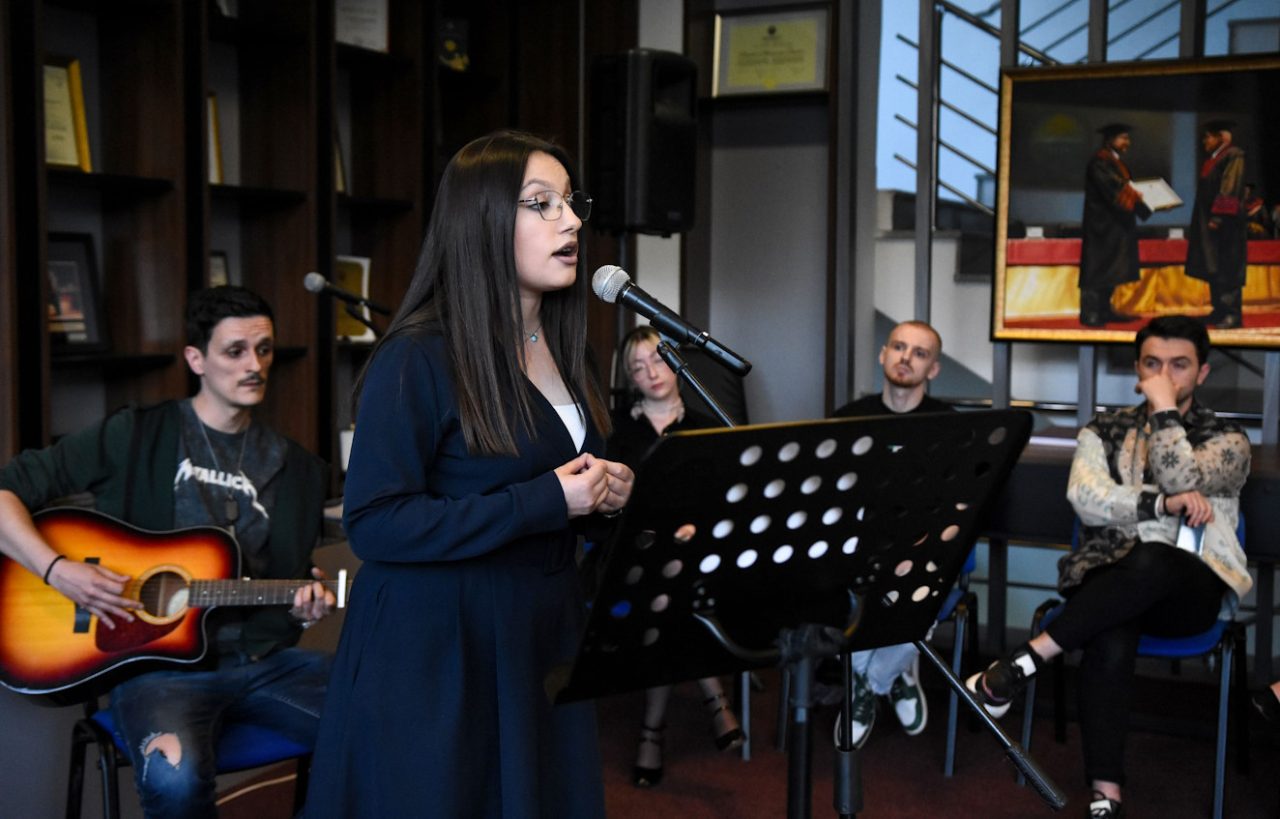
The evening concluded with an emotional musical performance by student Florentina Abazi, accompanied on guitar by Granit Vela, providing a fitting end to an event that encompassed art, emotion, and youthful spirit.
The University of Tetova expresses its gratitude to the Student Parliament for the professional organization and thanks all participating students for their tireless commitment to promoting artistic values. Events like these not only enrich the cultural life of the university but also foster critical thinking, creativity, and dialogue among young people—strengthening the cultural and spiritual identity of future generations.