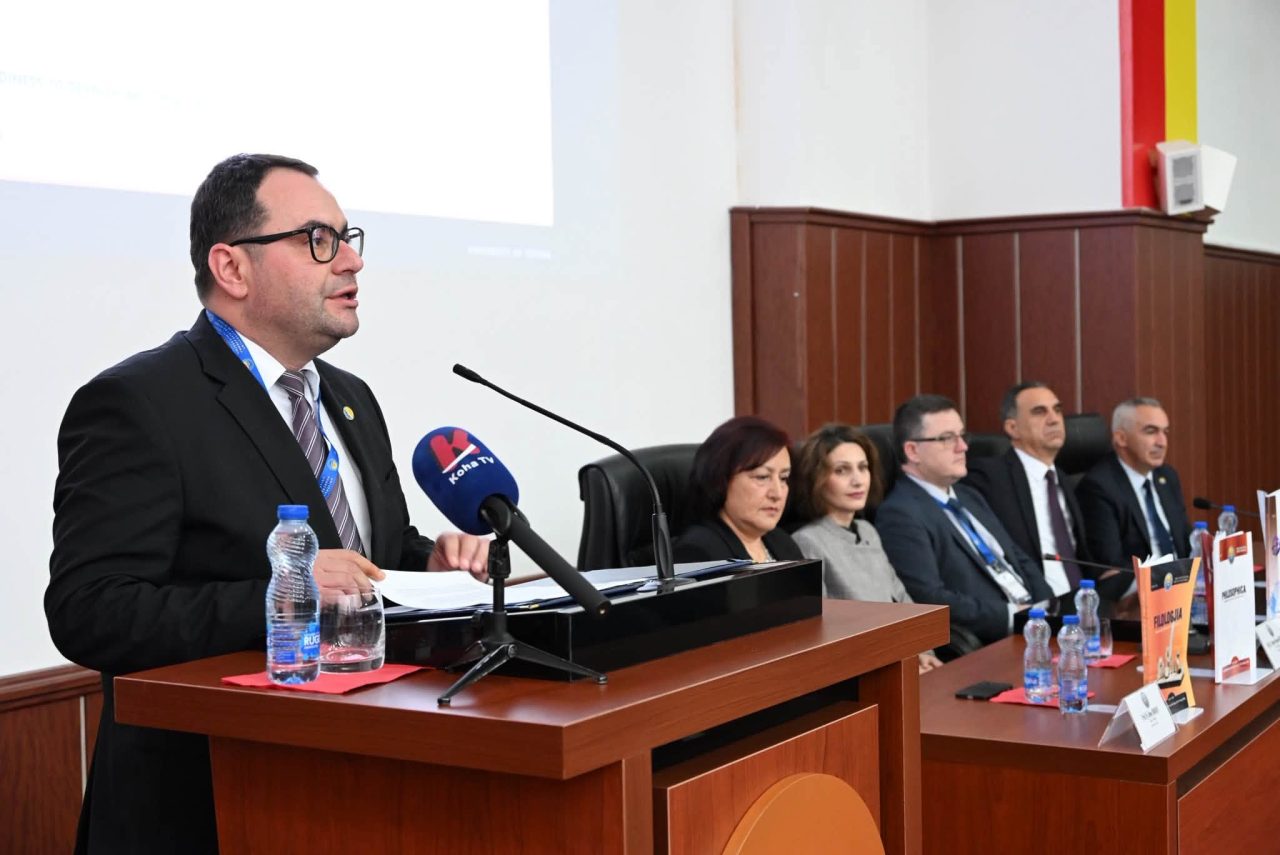
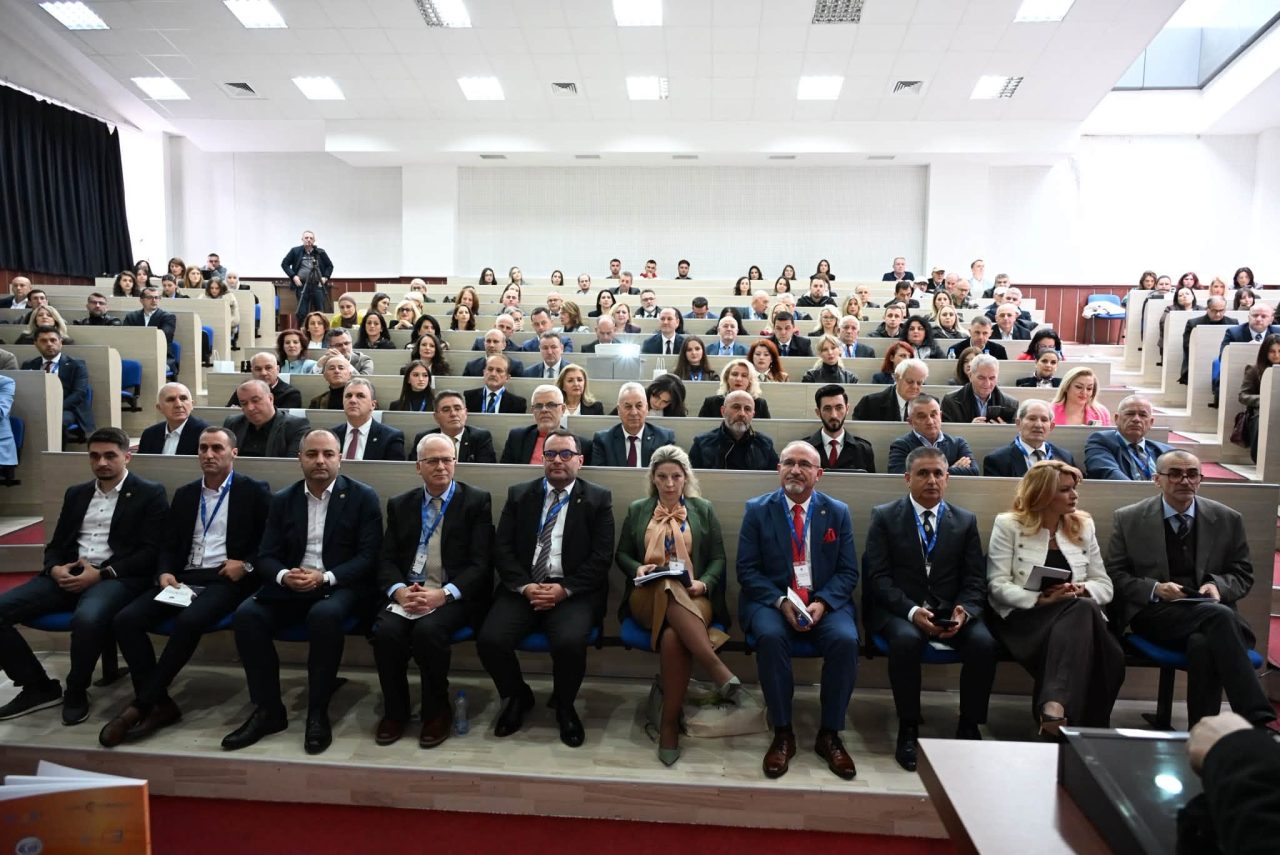
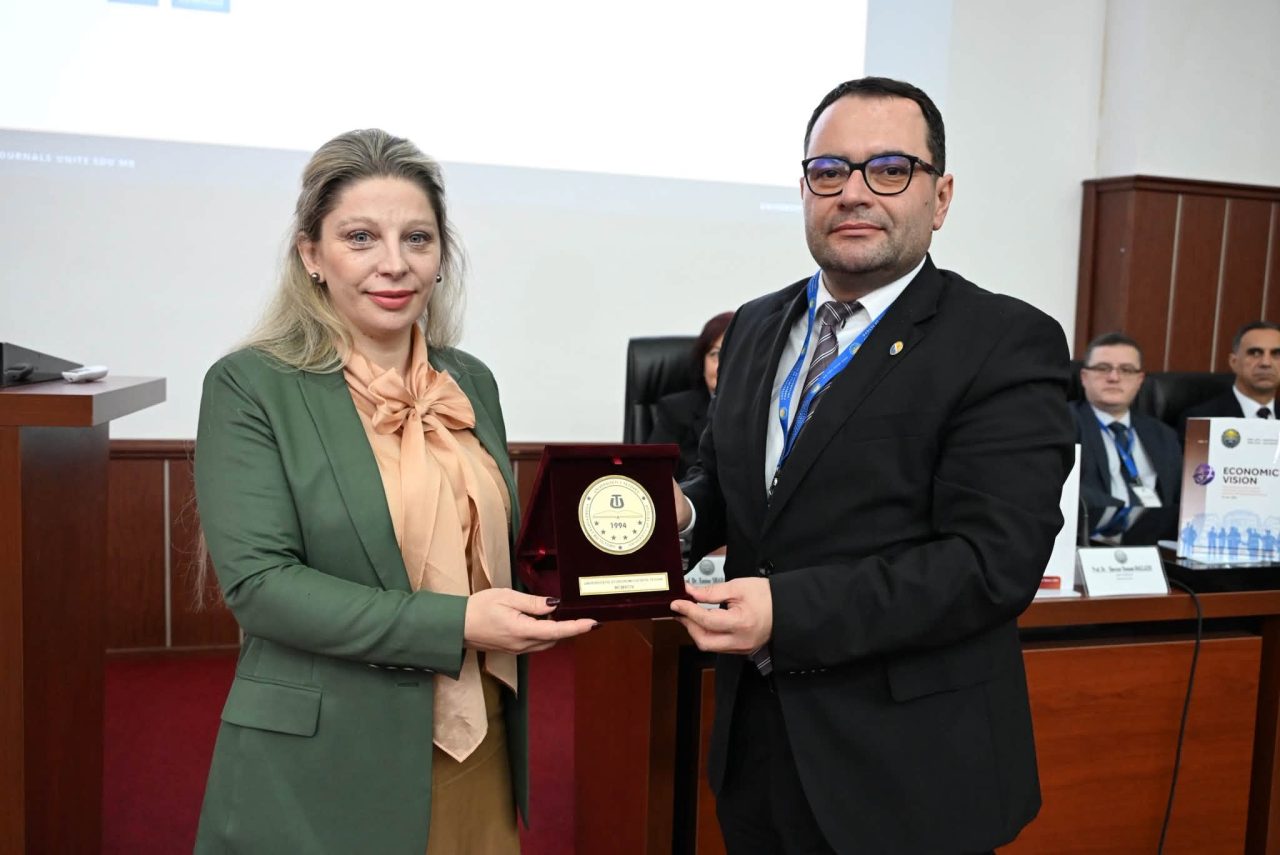
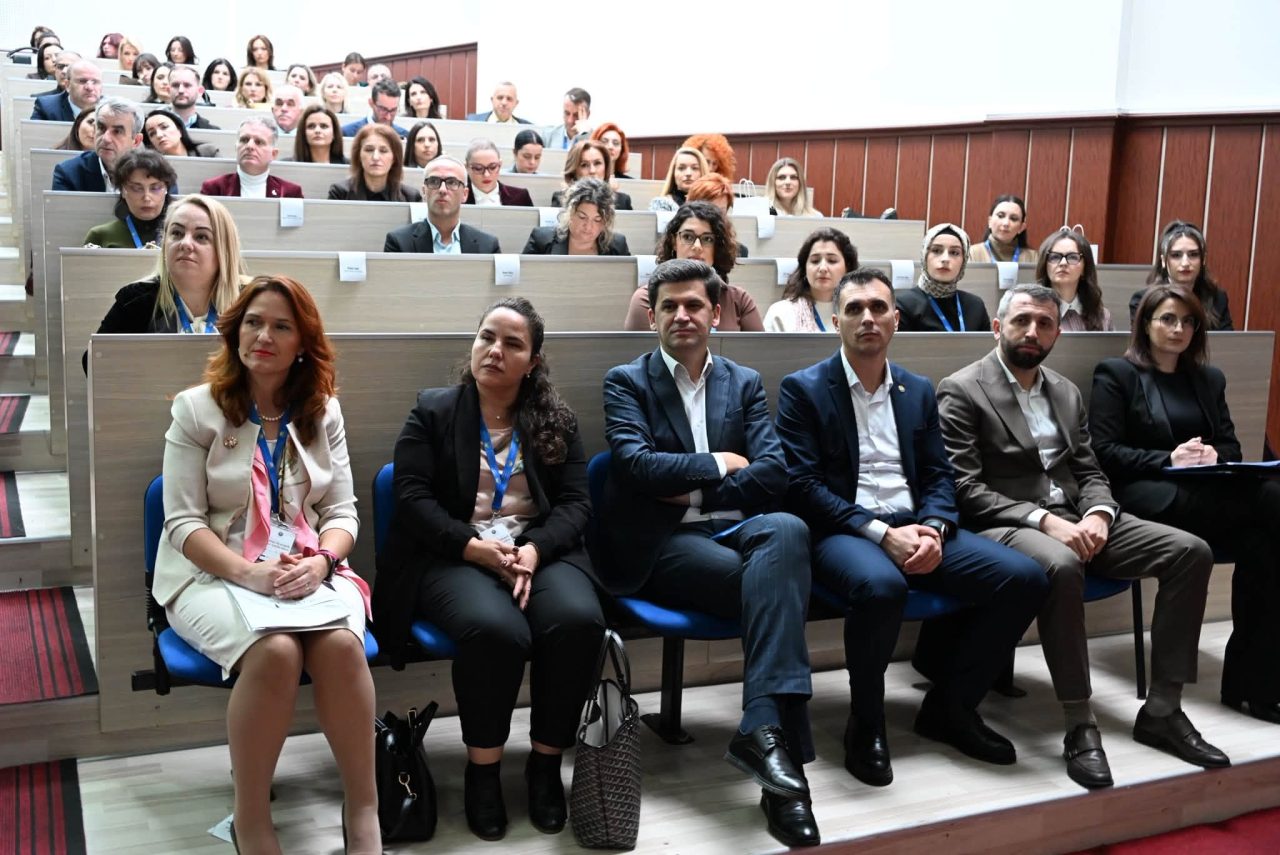
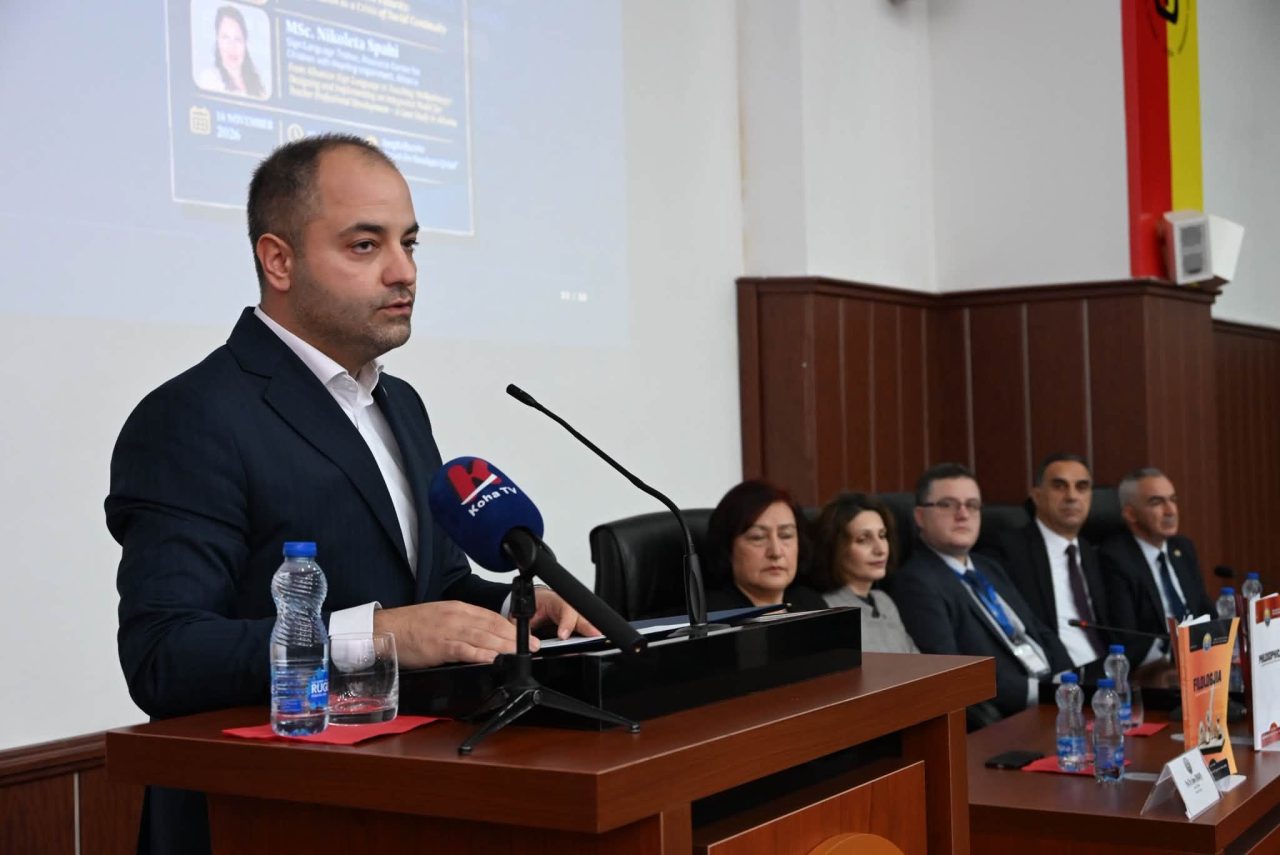
The solemn opening ceremony of the Second International Congress was held at the University of Tetova. This year’s congress is being held under the topic: “From Research to Application”. The event brought together representatives of institutions, professors, and researchers, providing an important platform for the exchange of knowledge, experiences, and the latest scientific achievements.
The Congress focuses on the connection between scientific research and the practical application of its findings, as well as the role of science in the development and advancement of various academic and social fields. The Congress was officially opened by the Rector of the University of Tetova, Prof. Dr. Kushtrim Ahmeti, who emphasized that the advancement of science and the fostering of a research culture are integral parts of the University of Tetova’s institutional mission.
According to him, a university is not merely an institution where knowledge is imparted and academic qualifications are obtained, but a space where critical thinking is nurtured, established beliefs are challenged, new ideas are developed, and scientific research becomes an instrument for understanding and improving the reality that surrounds us.
“In a world undergoing extraordinary changes at an unprecedented pace, this responsibility is becoming increasingly important. Today, our societies are facing profound technological, economic, political, and cultural transformations. The development of artificial intelligence, demographic changes, challenges to democracy, social inequalities, and developments in international relations require more than immediate responses. They call for sustainable knowledge, well-founded analyses, and academic institutions capable of offering long-term perspectives.
“This is precisely where the importance of scientific research lies. Science should not be limited to identifying and explaining problems. It must create opportunities for solving them, influence the development of public policies, improve institutional practices, and contribute to human and social development. Therefore, the topic of this Congress, “From Research to Application”, reflects a fundamental direction: moving from the production of knowledge towards its responsible use and tangible impact. However, the application of knowledge should not be understood solely in technological or economic terms. In the social sciences and humanities, the impact of research often manifests itself in deeper ways: through strengthening democratic institutions, protecting human rights, improving education, developing legal culture, and fostering a more just and inclusive society. A study that helps improve education policies, an analysis that sheds light on an important legal issue, or research that contributes to preserving historical memory and cultural identity all represent significant forms of applying scientific knowledge”, emphasized the Rector of the University of Tetova, Prof. Dr. Kushtrim Ahmeti.
During the ceremony, the Vice-Rector for Science, Prof. Dr. Agon Memeti, presented the Congress programme, providing a detailed overview of the scientific activities scheduled to take place over the two days of proceedings. He announced that this year’s edition of the Congress features 168 research papers, organized into 20 scientific sessions and divided into five main academic fields.
“This year’s Congress begins its proceedings with 168 research papers, organized into 20 scientific sessions covering five main academic fields. Of these, six sessions are dedicated to pedagogy, four each to philology, law, and philosophy and arts, while two focus on economics and business. This division, based on the thematic relevance of the papers, enables more specialized discussions and the direct exchange of research findings. This thematic diversity is accompanied by empirical studies, theoretical and comparative analyses, historical research, qualitative approaches, and quantitative models. The interdisciplinary dimension of the Congress lies precisely in the opportunity to examine the same phenomenon from multiple perspectives”, stated Vice-Rector Prof. Dr. Agon Memeti.
One of the key highlights of his address was the presentation of a concrete example of how scientific research can be transformed into practical application: the RARS – Research Access and Resource Sharing platform, which is now operational. Vice-Rector Memeti explained that the idea behind the development of this platform originated from a study entitled “Research: A Necessity Priced as a Luxury”, which was accepted and presented in 2024 at the European Quality Assurance Forum, organized by the European University Association (EUA).
“The study addressed the economic and institutional barriers that limit access to scientific research resources, proposing a digital model for collaboration. Today, we have transformed this research concept into an operational platform that enables the sharing of scientific data and resources, the identification of potential collaborators, the formation of research teams, and the coordination of joint projects”.
RARS aims to reduce financial and organizational barriers, encourage the shared use of resources, and create more equal opportunities for inter-institutional cooperation. Its value lies not only in its technological functionalities but also in its potential to establish a shared research infrastructure that facilitates the exchange of expertise and the development of new research initiatives. This is, essentially, what the transition from research to application means: identifying a problem, scientifically analyzing it, developing a solution, and putting that solution at the service of the research community. I believe this should be our shared direction: to build a university that not only generates knowledge but also creates the conditions for that knowledge to be shared, utilized, and translated into tangible impact”, emphasized the Vice-Rector for Science, Prof. Dr. Agon Memeti.
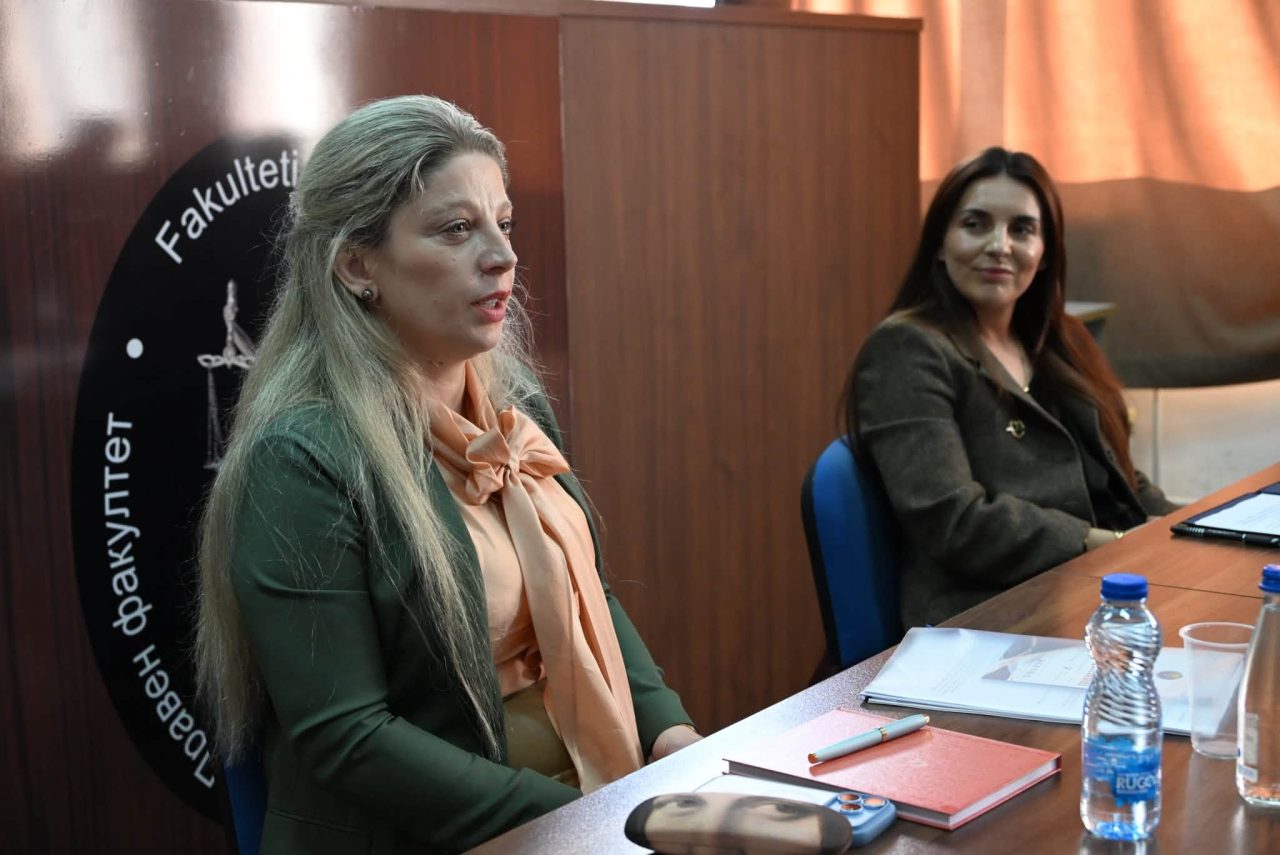
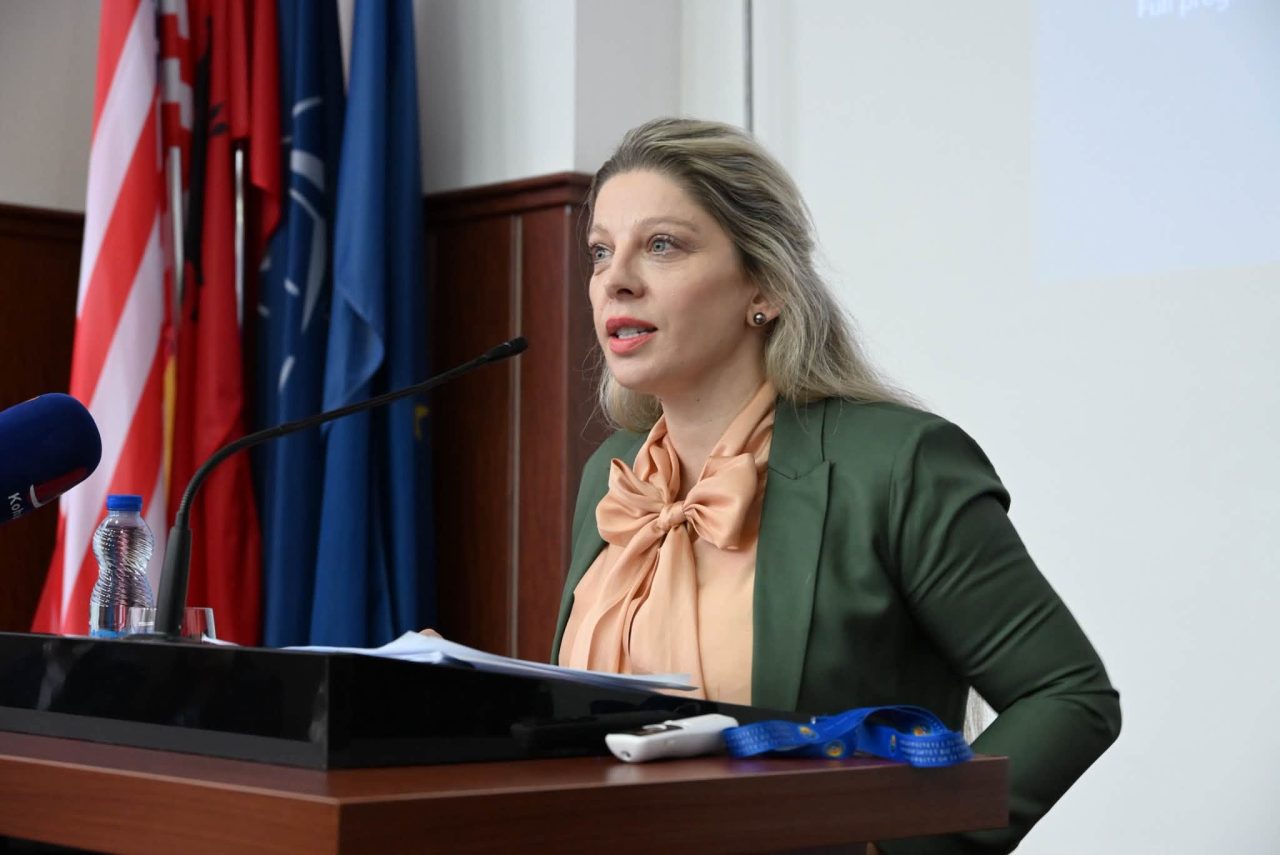
The Congress’s keynote lecture was delivered by Dr. Rudina Jasini, a Senior Researcher at the University of Oxford and a defense lawyer before the Kosovo Specialist Chambers. She presented the topic: “Beyond the Courtroom: What the Kosovo Specialist Chambers’ Judgment Means for the KLA Leadership, the Liberation Struggle, and Kosovo?” Her lecture addressed issues of legal and political significance, encouraging reflection and academic debate.
The Congress proceedings will continue tomorrow with thematic sessions and panel discussions. Researchers from the country, the region, and beyond will present their research findings and discuss the current challenges facing scientific research.
Beyond the presentation of academic papers, the Congress, taking place on November 18 and 19, 2026, aims to serve as a platform for exchanging experiences, establishing new professional connections, and strengthening cooperation among researchers from various academic fields. Its ultimate goal is to transform the ideas and findings presented into concrete joint initiatives and collaborative projects in the future.