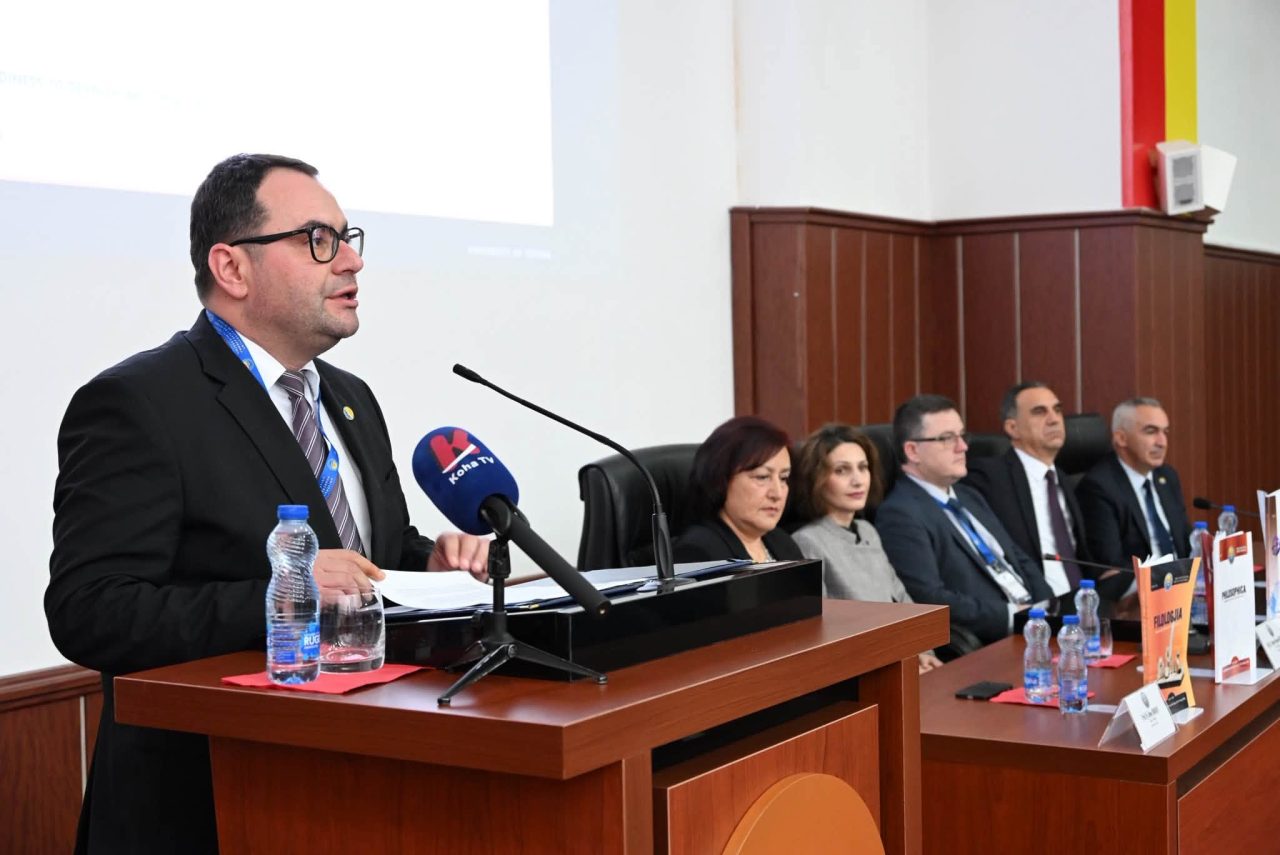
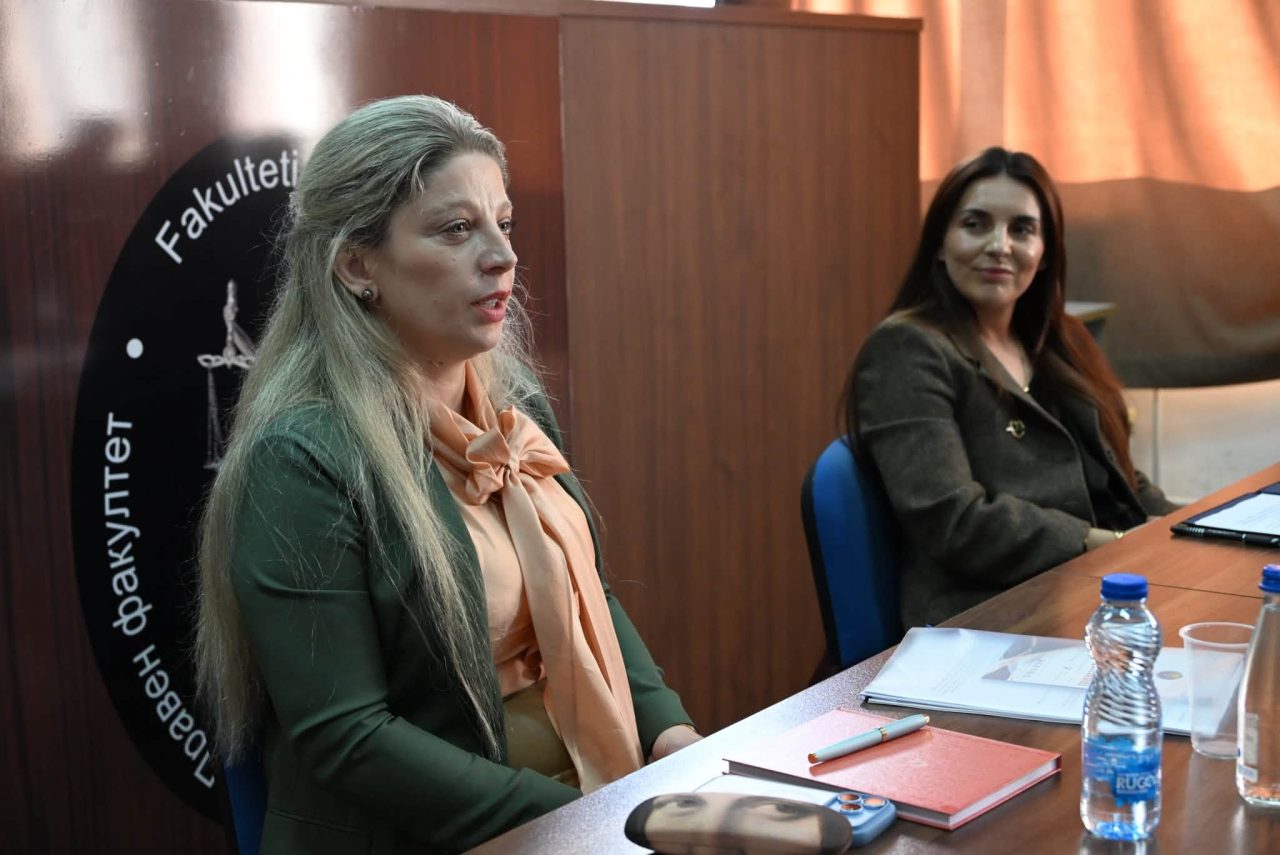
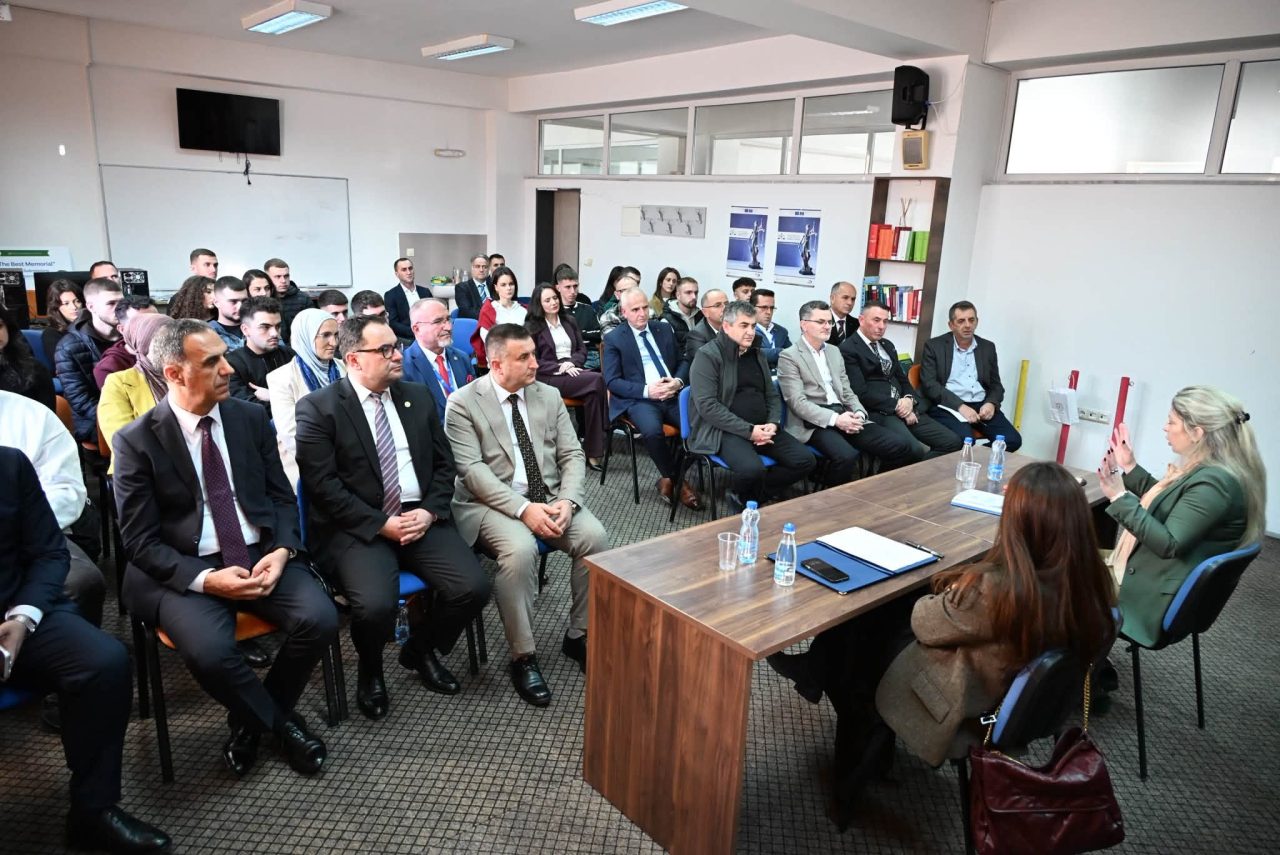
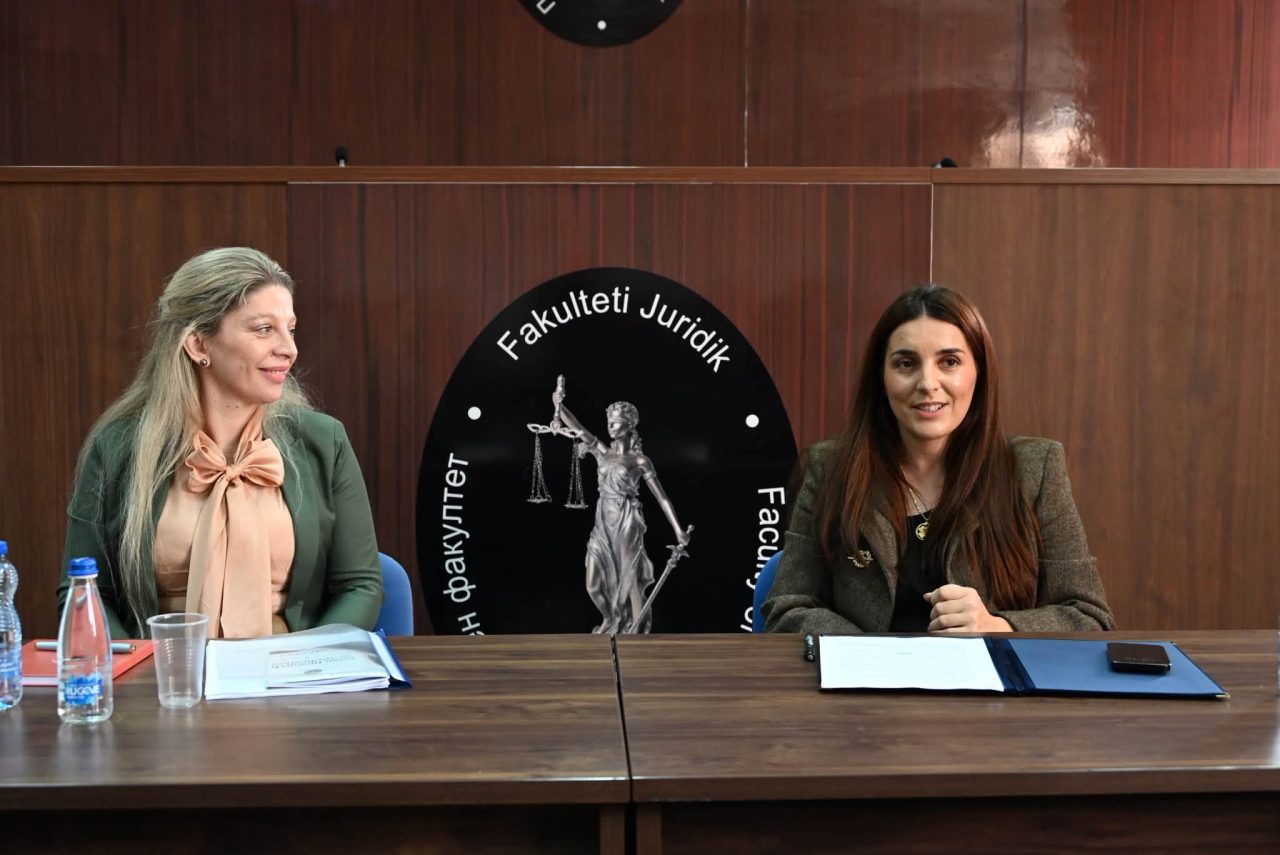
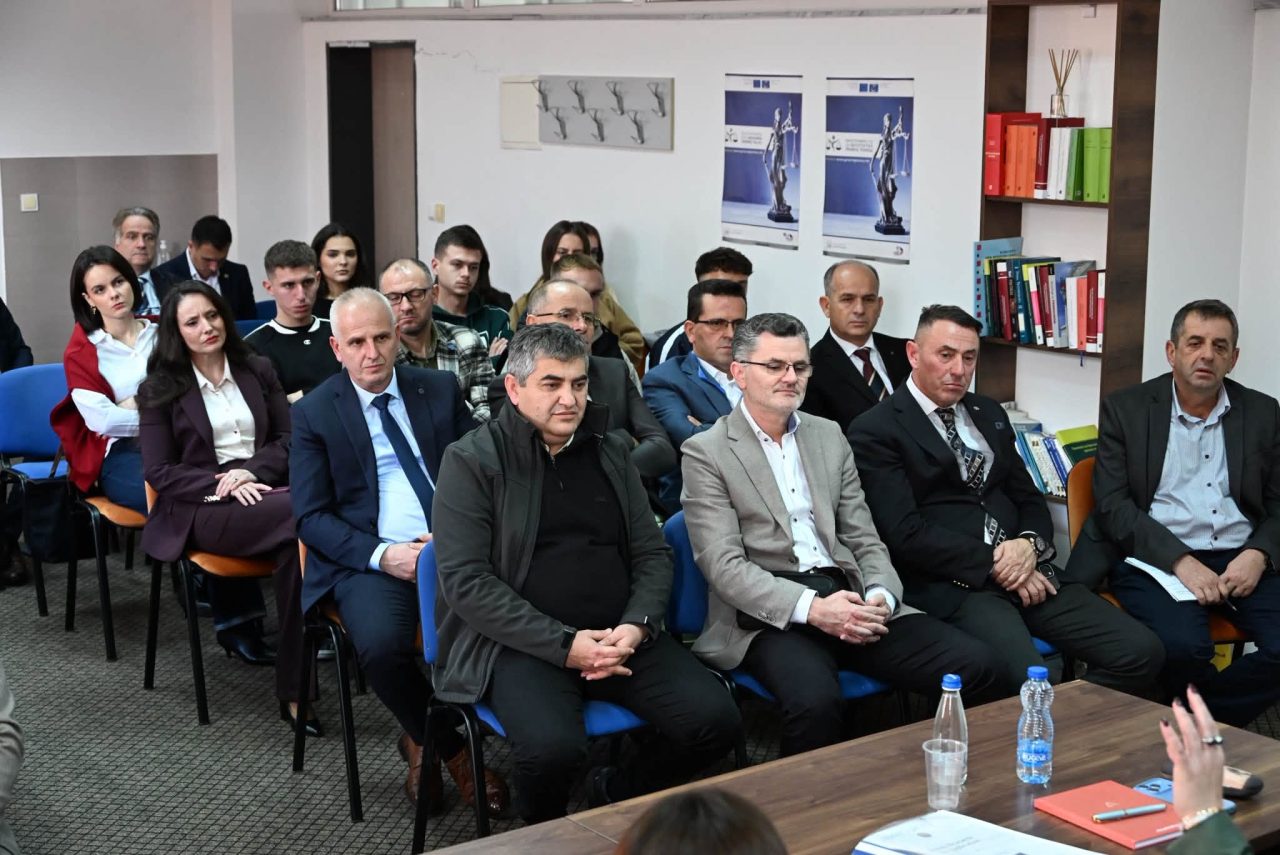
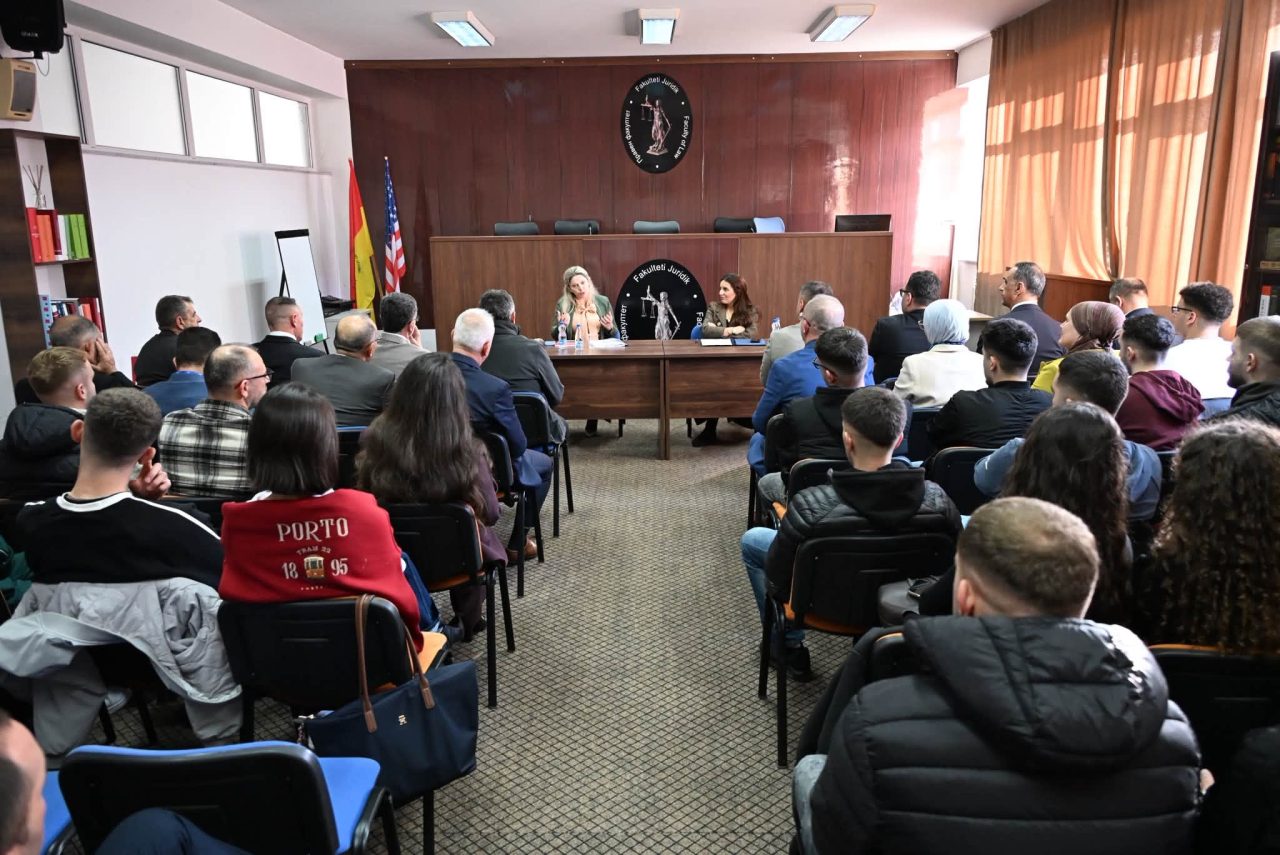
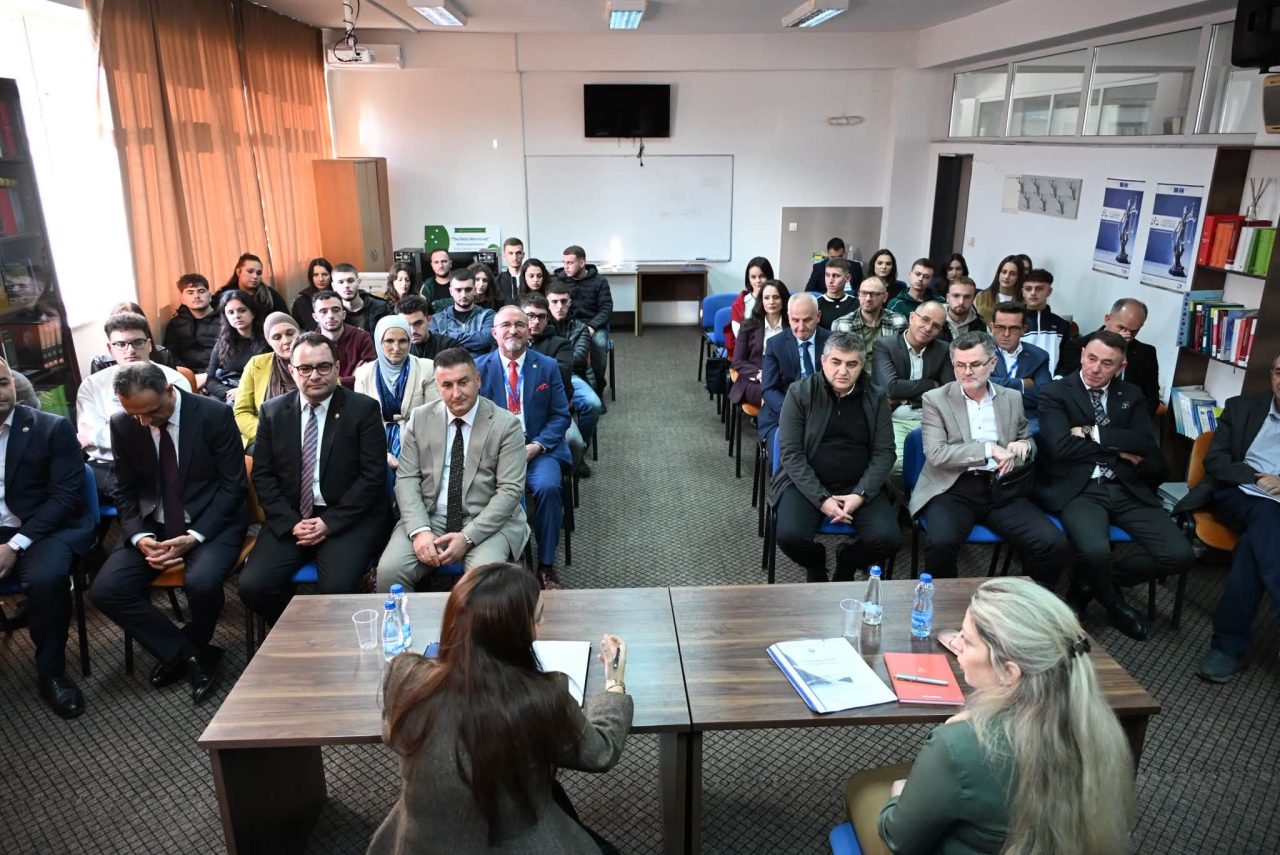
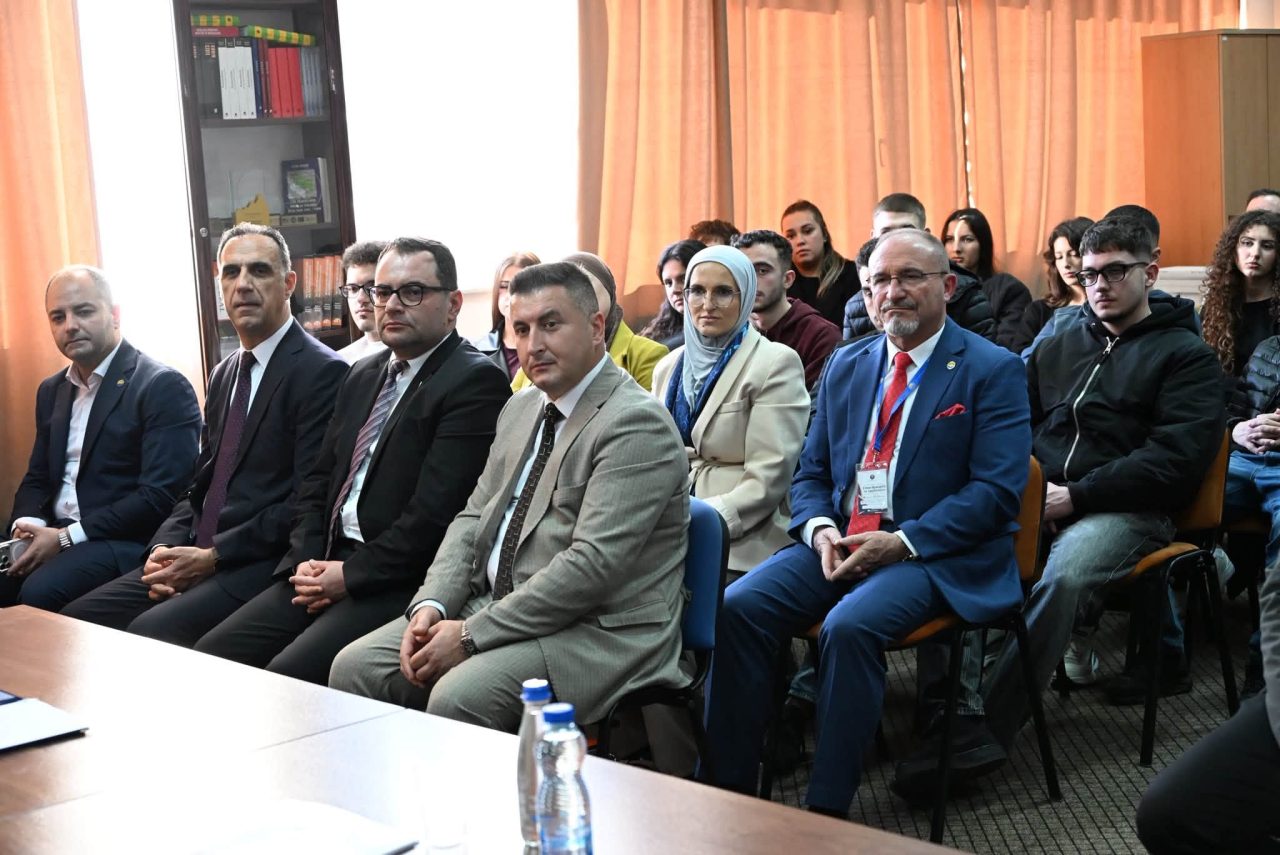
As part of the Second International Congress of the University of Tetova, on November 18, 2026, Dr. Rudina Jasini, Senior Research Fellow at the Faculty of Law of the University of Oxford and a defense lawyer before the Kosovo Specialist Chambers, delivered a lecture entitled “Beyond the Courtroom: What the Kosovo Specialist Chambers’ Judgment Means for the KLA Leadership, the Liberation Struggle, and Kosovo?” The lecture was initially delivered as part of the official opening ceremony of the Congress, while the discussion continued afterwards at the Legal Clinic of the University of Tetova.
One of the most significant moments of the meeting was the message Dr. Rudina Jasini conveyed to the University of Tetova, highlighting the historical and symbolic connection between the contribution of the Kosovo Liberation Army (KLA) and the role of the University of Tetova in defending this cause. “What the KLA did for Kosovo, today the University of Tetova, under your leadership, is doing for the defense of the KLA”, she stated, acknowledging the institution’s commitment to addressing and promoting issues related to Kosovo’s liberation war.
During the meeting with academic staff, researchers, and students, she addressed the legal and political dimensions of the judicial proceedings currently taking place in The Hague, focusing on their impact on international justice and on how Kosovo’s liberation war is portrayed in international public opinion. A particular part of her analysis was devoted to the allegations of organ trafficking, made public through Dick Marty’s report. She examined the role these allegations played in the processes leading up to the establishment of the Kosovo Specialist Chambers, as well as in the international handling of the KLA issue.
Drawing on her professional experience and expertise in international law, Dr. Rudina Jasini offered a critical assessment of the legal basis of the judicial proceedings against former leaders of the Kosovo Liberation Army (KLA). In this context, she raised questions about the legal shortcomings of the law underpinning the charges, arguing that certain legislative provisions raise serious concerns regarding the fundamental principles of international criminal justice and the guarantees of a fair trial.
Particular attention in her presentation was also devoted to the functioning of the judicial panel and the observance of the principle of impartiality throughout the proceedings. According to Dr. Rudina Jasini’s assessment, the manner in which the proceedings have been conducted has revealed issues that call into question whether the necessary distance between the judicial panel and the prosecution has been maintained. She emphasized that the court must ensure a fully independent and objective role, while any departure from this standard risk undermining procedural equality between the parties and the credibility of the proceedings.
In concluding her analysis, the Oxford University researcher also highlighted the importance of upholding the presumption of innocence, objectivity, and impartiality, particularly in proceedings that carry significant legal and historical weight for Kosovo. She stressed that any violation of these principles should not be viewed solely in terms of the individual rights of the accused, but also within the broader context of public trust in judicial institutions and their legitimacy. In this regard, the discussion surrounding the proceedings in The Hague extends beyond the boundaries of a judicial process, directly touching upon issues related to the interpretation of Kosovo’s history, its liberation war, and how it is perceived on the international stage.