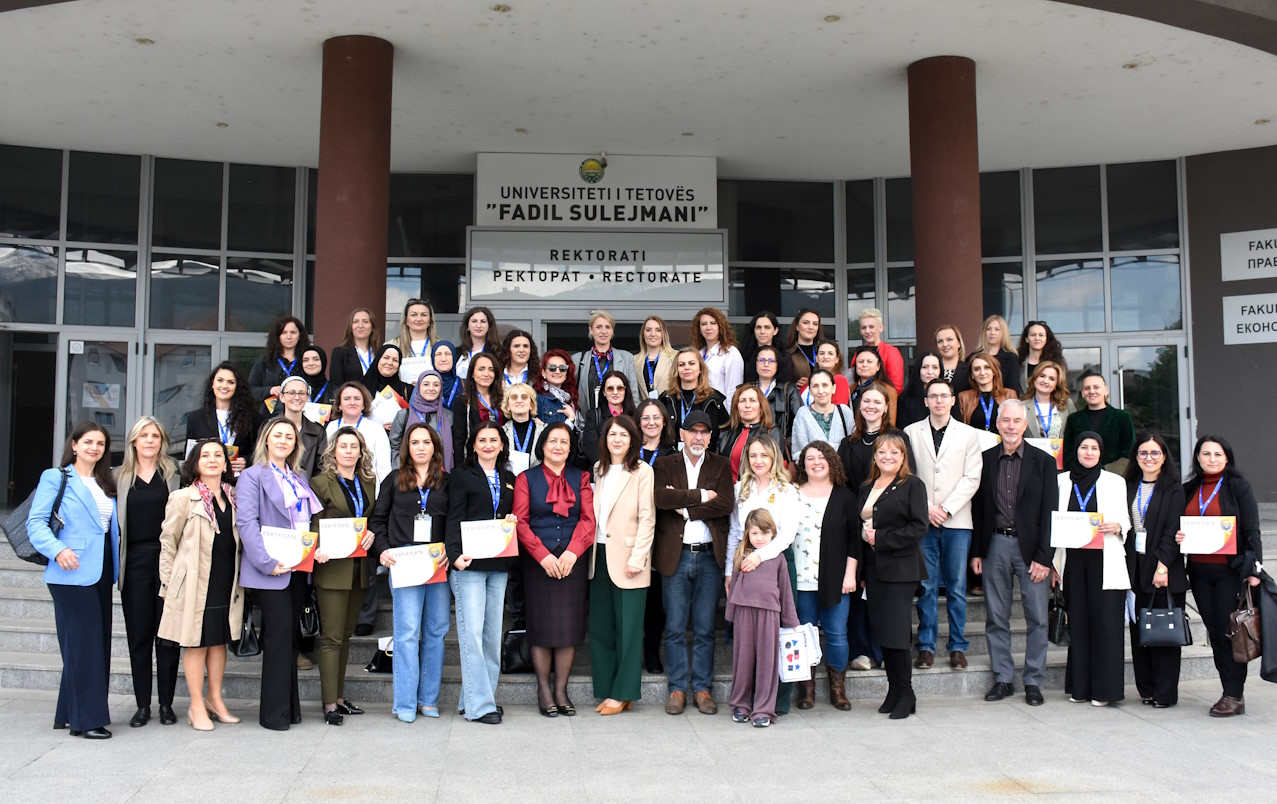
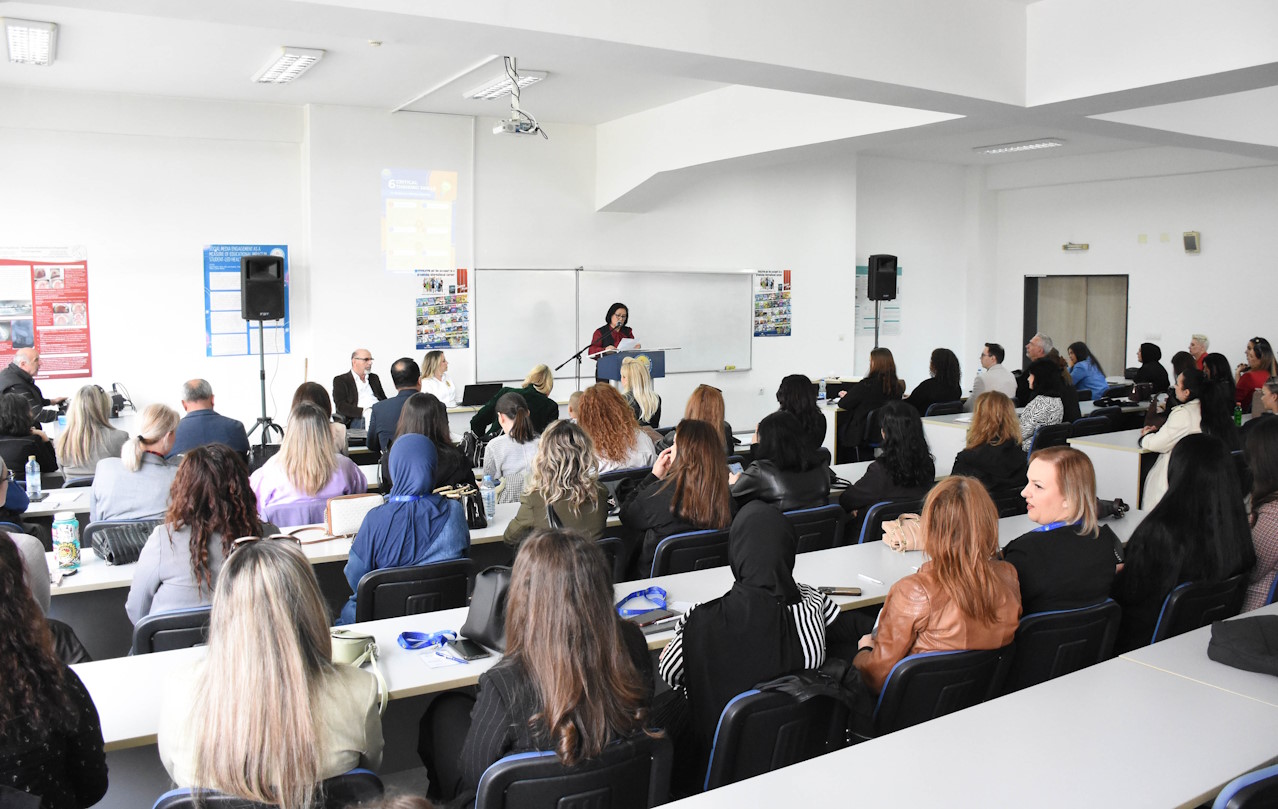
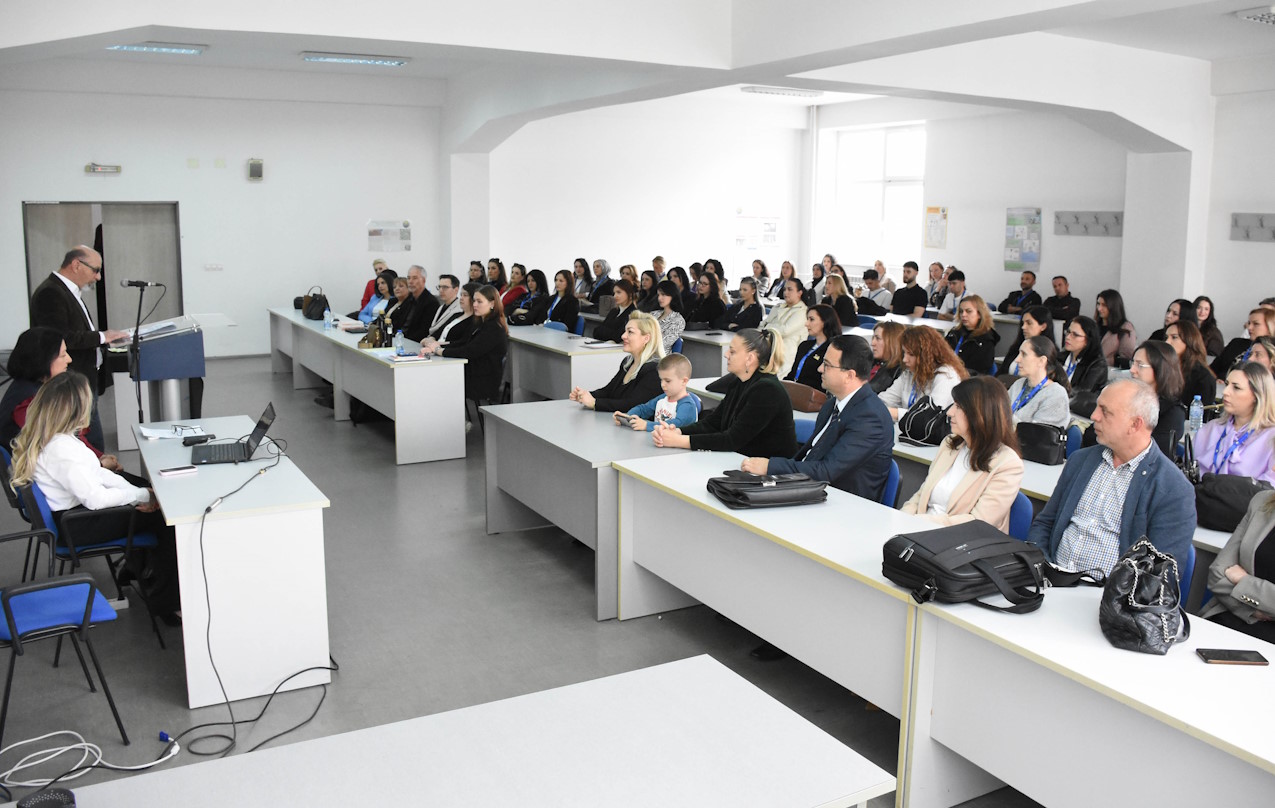
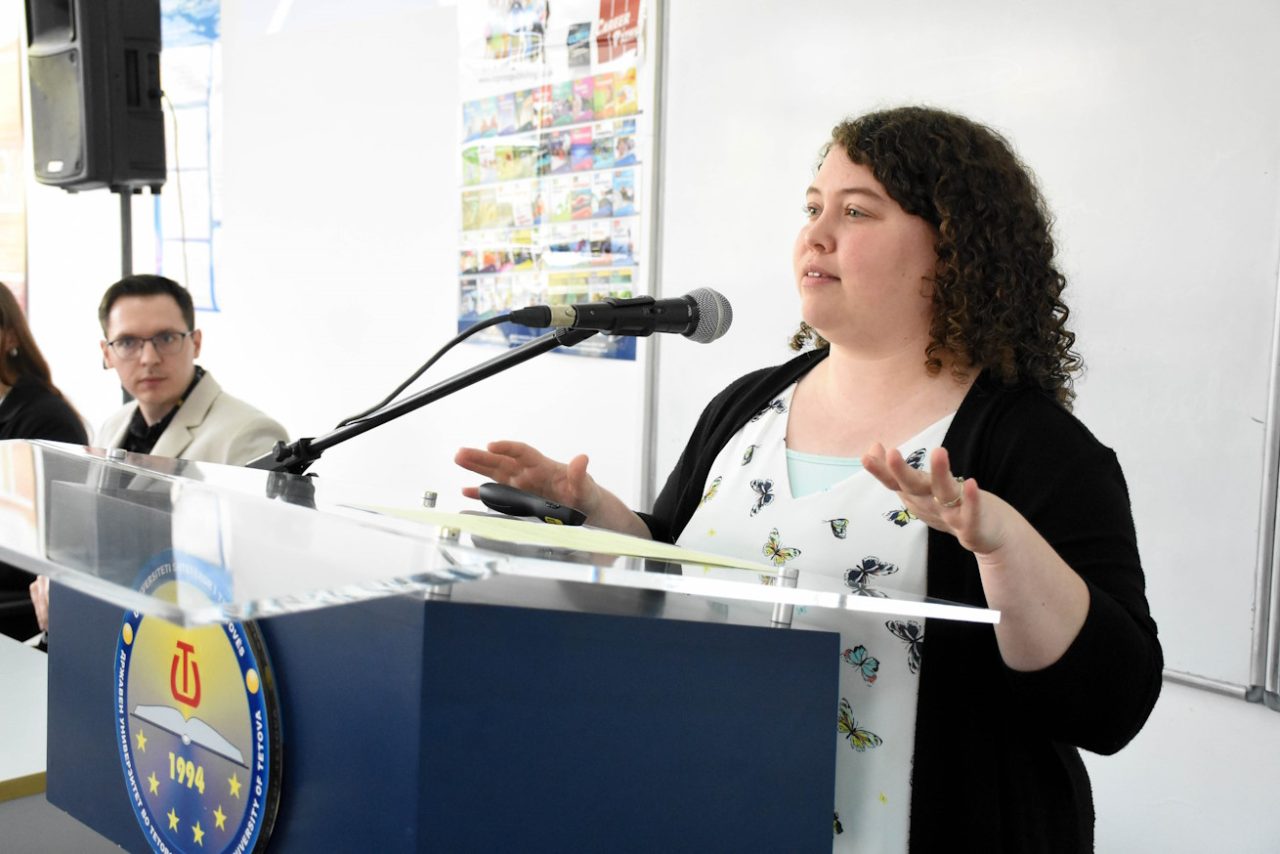
On April 23, 2026, at the Department of English Language at the University of Tetova, was organized a training titled “From Language to Thinking: Developing Critical Thinkers in the EFL Classroom”. This academic activity of particular importance was dedicated to the advancement of contemporary practices in English language teaching. The training brought together 67 English language teachers from Tetovo and the region, creating a professional space for the exchange of experiences and further pedagogical development.
In the opening of the event, the Dean of the Faculty of Philology, Prof. Dr. Emine Shabani, delivered a substantive speech in which she thoroughly addressed the relationship between language learning and the development of critical thinking in the context of contemporary challenges. She emphasized that learning a foreign language should not be reduced to the mechanical acquisition of vocabulary and grammatical structures, but should be transformed into a process that shapes students’ ways of thinking.
Focusing on the importance of critical thinking, Prof. Dr. Emine Shabani emphasized that through engagement with different texts and cultural perspectives, students develop the ability to analyze, compare, and reflect, moving beyond surface-level learning. She stressed that the role of the teacher is essential in guiding this process toward independent and well-argued thinking.
A significant part of the speech was dedicated to the growing impact of artificial intelligence on the learning process. Referring to studies conducted at prestigious international institutions, the Dean of the Faculty of Philology raised concern that the uncontrolled use of artificial intelligence tools may lead to a reduction in students’ cognitive engagement and a weakening of creative and analytical skills. According to her, reliance on ready-made answers risks creating a form of “metacognitive laziness,” making it more difficult to produce original ideas and develop independent thinking.
In this context, she emphasized the need for a balanced approach to technology, considering artificial intelligence as a supportive tool rather than a replacement for the thinking process. “Challenge yourself first, then use technology as support,” was one of her key messages, appealing for the preservation of intellectual engagement and human creativity.
Continuing the activity, Prof. Dr. Florim Ajdini underlined that building critical thinkers within English language teaching requires a clear shift from mechanical memorization toward the development of analytical, evaluative, and synthesis skills. He emphasized the importance of using Socratic open-ended questions, collaborative debates, real-life problems, and reflective tasks as key tools for fostering critical thinking.
A special cultural dimension was added to the activity through the artistic performance of a fragment from William Shakespeare’s “Macbeth”, performed by students of the English Department: Agnesa Rexhepi, Enisa Amzai, Elma Mazllami, and Iknura Bahtijareska. This activity was organized as part of the celebration of International English Language Day and Shakespeare Day, giving the event a distinct academic and cultural character.
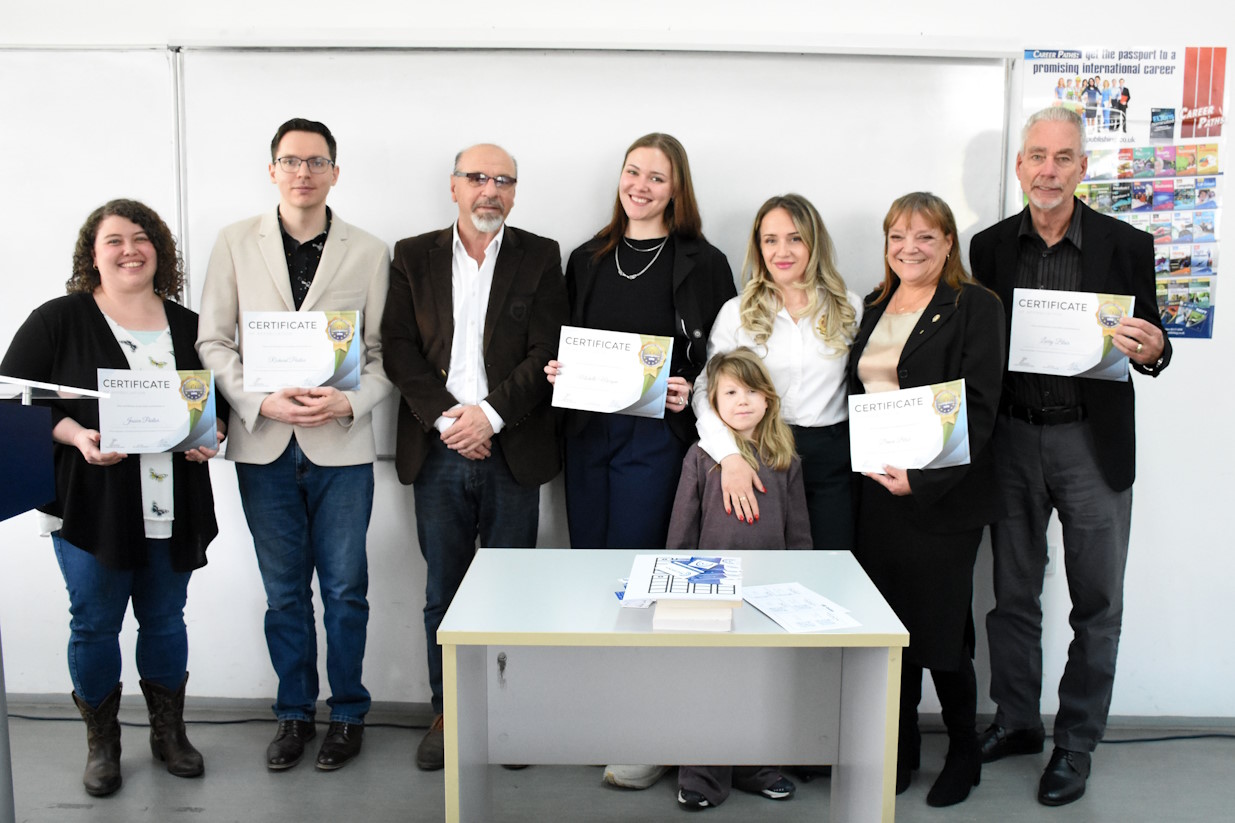
The training sessions were led by a team of American educators: Larry Blair, Dawn Blair, Richard Parlier, Jessica Parlier, as well as the Fulbright ETA at the University of Tetova, Michelle Morgan. Through an interactive and practice-oriented approach, the trainers presented concrete strategies and activities for developing critical thinking among learners of different age groups.
This training represents an important contribution to improving the quality of English language teaching and strengthening the role of critical thinking as an essential competence in contemporary education.